
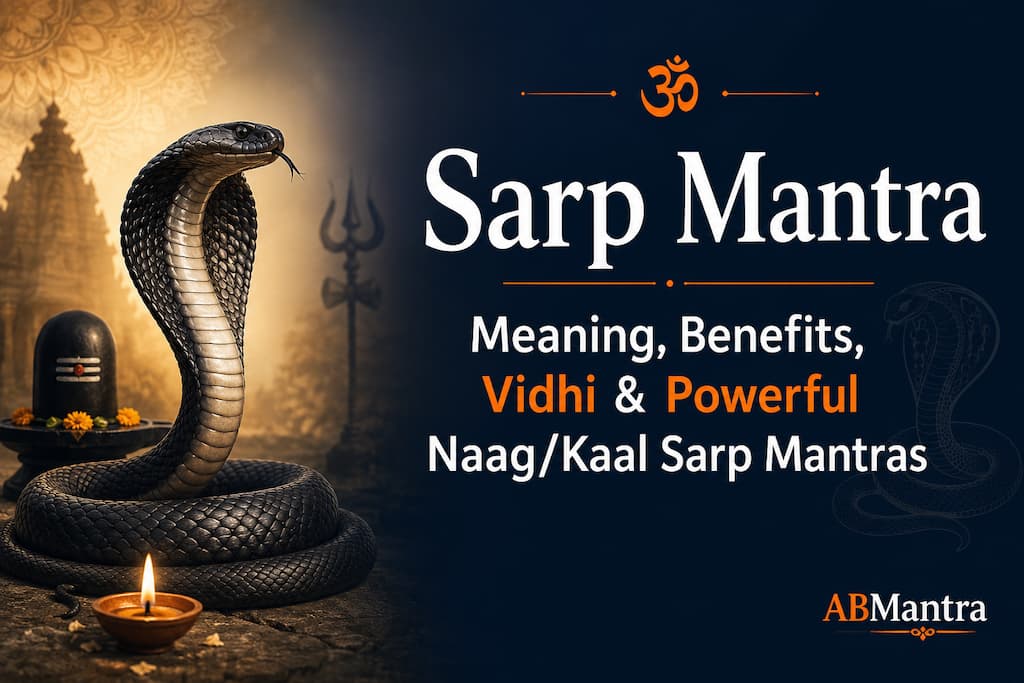

In Sanatan Dharma, the serpent is never treated as an ordinary creature. It is worshipped as Nag Devta, it rests around the neck of Lord Shiva, it forms the bed of Lord Vishnu (Sheshnag), and it appears as a shadow planet in the birth chart in the form of Rahu and Ketu. Because of this deep symbolic role, Hindu scriptures prescribe a set of chants collectively known as Sarp Mantra sacred sounds recited for protection, peace, and relief from serpent-related fears and doshas.
This guide brings together everything a seeker typically searches for under “sarp mantra” the general meaning, the different categories of sarp mantras, the exact chanting method, the right time to recite them, and the most commonly asked questions in one comprehensive, easy-to-follow resource.
What Is Sarp Mantra?
Sarp Mantra (सर्प मंत्र) literally means “serpent chant.” It is an umbrella term used for any Vedic or Puranic mantra that:
- Invokes Nag Devta (serpent deities) for blessings, protection, or forgiveness.
- Is recited to reduce the effect of Kaal Sarp Dosh, an astrological combination formed when all seven major planets sit between Rahu and Ketu in a horoscope.
- Is chanted as a protective shield against the fear of snakes, snakebite anxiety, or nightmares involving serpents.
- Is used during Nag Panchami worship and other snake-related rituals.
So, depending on context, “sarp mantra” can mean a general protection chant, a Nag Panchami worship mantra, or most commonly searched a Kaal Sarp Dosh Nivaran Mantra. This article covers all of these so you get the complete picture rather than just one narrow interpretation.
Why Do People Chant Sarp Mantra?
People turn to sarp mantra chanting for several practical and spiritual reasons:
- To calm the mind after a dream about snakes, which in Vedic belief often points to unresolved fear or karmic unrest.
- To seek protection from snakebite while living near fields, forests, or rural areas.
- To perform proper worship during Nag Panchami, honouring the serpent deities.
- To reduce the effects of Kaal Sarp Dosh in the birth chart repeated delays, financial instability, relationship friction, and a persistent feeling of being “stuck.”
- To pacify Rahu and Ketu, the two shadow planets symbolically represented as the head and tail of a serpent.
Understanding Kaal Sarp Dosh (Why It Matters Here)
Since most searches for “sarp mantra” are connected to this dosh, a short explanation helps.
Kaal Sarp Dosh forms when all seven classical planets (Sun, Moon, Mars, Mercury, Jupiter, Venus, Saturn) are placed between Rahu and Ketu on one side of the chart, with no planet on the other side. Vedic astrologers associate this placement with:
- Repeated obstacles despite genuine effort
- Delay in marriage or persistent relationship conflict
- Career setbacks and financial ups and downs
- Restlessness, anxiety, and disturbed sleep
- A recurring sense of “one step forward, two steps back”
There are twelve recognised types of Kaal Sarp Yoga (Anant, Kulik, Vasuki, Shankhpal, Padma, Mahapadma, Takshak, Karkotak, Shankhachur, Ghatak, Vishdhar, and Sheshnag), each named after a mythological serpent king and each said to influence life differently. Sarp mantras are the primary spiritual remedy recommended for all these variations.
Quick note before you begin: Not every horoscope with planets near Rahu-Ketu actually qualifies as Kaal Sarp Dosh the exact placement matters. It’s worth having a qualified Vedic astrologer confirm the dosh in your chart before starting an elaborate remedy, so you know you’re addressing the right thing from the start.
Types of Sarp Mantra (With Meaning)
Below are the sarp mantras most frequently recommended by Vedic scholars and astrologers. Chant only the version you resonate with quality of devotion matters more than quantity of mantras.
1. Naga Gayatri Mantra (General Protection & Blessings)
ॐ नाग देवाय विद्महे, विषदंताय धीमहि, तन्नो सर्प: प्रचोदयात्॥
Meaning: We meditate upon the serpent deity; we contemplate the one whose fangs carry venom; may that serpent power guide and illuminate our intellect.
Best for: General reverence toward Nag Devta, protection from fear, and Nag Panchami worship.
2. Rahu Beej Mantra (For Kaal Sarp Dosh Rahu Side)
ॐ भ्रां भ्रीं भ्रौं सः राहवे नमः॥
Meaning: Salutations to Rahu; may its shadow influence be pacified and turned favourable.
3. Ketu Beej Mantra (For Kaal Sarp Dosh Ketu Side)
ॐ स्रां स्रीं स्रौं सः केतवे नमः॥
Meaning: Salutations to Ketu; may its karmic and spiritual obstacles be dissolved.
4. Maha Mrityunjaya Mantra (Shiva’s Protective Chant, Widely Used for Sarp Dosh)
ॐ त्र्यम्बकं यजामहे सुगन्धिं पुष्टिवर्धनम्। उर्वारुकमिव बन्धनान् मृत्योर्मुक्षीय मामृतात्॥
Meaning: We worship the three-eyed Lord (Shiva) who nourishes and fills life with fragrance; may He liberate us from the bondage of fear and difficulty, just as a ripe cucumber separates easily from its vine.
Why it’s used: Since Nagraj (serpent king) is closely associated with Lord Shiva, this mantra is considered highly effective for overall protection, including relief connected to Kaal Sarp Dosh.
5. Om Namah Shivaya (Simplest Daily Sarp Mantra)
ॐ नमः शिवाय॥
Meaning: Salutations to Lord Shiva. Because Vasuki (the serpent) rests around Shiva’s neck, this simple five-syllable mantra is one of the easiest daily practices recommended alongside other sarp mantras.
6. Nag Panchami Puja Mantra
ॐ अनन्तं वासुकिं शेषं पद्मनाभं च कम्बलम्। शंखपालं धृतराष्ट्रं तक्षकं कालियं तथा॥ एतानि नव नामानि नागानां च महात्मनाम्। सायंकाले पठेन्नित्यं प्रातःकाले विशेषतः॥
Meaning: This shloka salutes the nine principal Naga deities Anant, Vasuki, Shesh, Padmanabh, Kambal, Shankhapal, Dhritarashtra, Takshak, and Kaliya and is traditionally recited both in the evening and, especially, in the morning during Nag Panchami.
7. Om Sarpebhyo Namaha (Snakebite/Field Protection Mantra)
ॐ नमोऽस्तु सर्पेभ्यो ये के च पृथिवीमनु। ये अन्तरिक्षे ये दिवि तेभ्यः सर्पेभ्यो नमः॥
Meaning: Salutations to all serpents those on earth, those in the sky, and those in the heavens. This Vedic shanti mantra (from the Yajurveda tradition) is traditionally recited by people living in rural or agricultural areas as a protective chant against snakebite.
Correct Vidhi (Method) to Chant Sarp Mantra
Following a disciplined method increases both focus and the traditional benefit associated with mantra chanting.
- Wake up early and bathe physical and mental cleanliness is considered the first step in any mantra sadhana.
- Choose a quiet, clean space a temple corner or a dedicated puja area at home works well.
- Face north or east while sitting, and keep your spine upright.
- Light a diya and offer water, milk, or bilva leaves to a Shivling if performing the Kaal Sarp Dosh–related version.
- Use a Rudraksha mala and chant the mantra 108 times (one full round, or “mala”).
- Keep your voice steady and pronunciation clear speed is far less important than clarity and sincerity.
- Maintain consistency a fixed number of malas at the same time each day for 21 or 41 days is traditionally considered more effective than irregular chanting.
Best Time and Days to Chant Sarp Mantra
- Daily practice: Early morning (Brahma Muhurat) or during Rahu Kaal for Rahu/Ketu-specific mantras.
- Best weekdays: Mondays (associated with Shiva) and Saturdays (associated with Rahu-Saturn energy) are widely considered favourable.
- Best festivals/tithis: Nag Panchami, Maha Shivratri, and Amavasya are regarded as the most powerful occasions for sarp mantra sadhana.
- Duration: A 21-day, 41-day, or 108-day cycle of consistent chanting is commonly recommended by Vedic astrologers rather than a one-time recitation.
Benefits of Chanting Sarp Mantra
According to Vedic tradition and the astrologers who prescribe these remedies, regular and sincere chanting is believed to help with:
- Gradual reduction in repeated obstacles linked to Kaal Sarp Dosh
- Greater mental calm and reduced anxiety, especially after disturbing snake dreams
- A stronger sense of protection while travelling through rural, forested, or agricultural land
- Improved focus, discipline, and spiritual grounding through the practice itself
- Smoother progress in career, finances, and relationships over time, when combined with consistent effort
(These are traditional beliefs associated with the practice and should be treated as a spiritual and psychological support system rather than a guaranteed or scientifically verified outcome.)
Additional Remedies Alongside Sarp Mantra
Astrologers usually recommend combining mantra chanting with a few supporting practices:
- Offering milk, water, and bilva leaves to Lord Shiva, especially on Mondays
- Observing a fast on Nag Panchami or Mondays
- Donating black sesame seeds, food grains, or clothes to the needy
- Keeping a silver or copper Naga (serpent) idol at home or wearing it as a pendant
- Visiting a Shiva temple known for Kaal Sarp Dosh Puja, such as Trimbakeshwar near Nashik
- Feeding cows, birds, or ants regularly as an act of compassion tied to the remedy
Precautions While Chanting Sarp Mantra
- Learn the correct pronunciation before starting if unsure, listen to a qualified priest or scholar first.
- Avoid chanting in a hurried or distracted state; a few focused rounds are better than many careless ones.
- Do not treat mantra chanting as a replacement for medical attention in the case of an actual snakebite seek emergency medical help immediately in such situations.
- Consult a qualified astrologer to confirm whether Kaal Sarp Dosh actually exists in your chart before starting an elaborate remedy.
Frequently Asked Questions (FAQs)
What is the meaning of Sarp Mantra?
Sarp Mantra means “serpent chant” a Vedic or Puranic mantra recited to honour Nag Devta, seek protection, or reduce the effects of Kaal Sarp Dosh in a birth chart.
Which is the most powerful Sarp Mantra?
The Maha Mrityunjaya Mantra and the combination of Rahu-Ketu Beej Mantras are considered among the most powerful, since they address both spiritual protection and the specific planetary imbalance linked to Kaal Sarp Dosh.
How many times should Sarp Mantra be chanted?
Traditionally, 108 times (one mala) per sitting, repeated daily for 21, 41, or 108 days, is recommended for visible spiritual and mental benefit.
Can Sarp Mantra be chanted by anyone, or only by people with Kaal Sarp Dosh?
Anyone can chant these mantras for general protection, peace of mind, or Nag Panchami worship. The Kaal Sarp Dosh–specific versions are especially recommended for those whose horoscope shows this yoga.
What is the best day to start chanting Sarp Mantra?
Monday, Saturday, Nag Panchami, or Maha Shivratri are considered the most auspicious days to begin.
Is a Rudraksha mala necessary for chanting?
It is not compulsory, but a 108-bead Rudraksha mala is traditionally used to maintain count and improve concentration during the chant.
Does chanting Sarp Mantra completely remove Kaal Sarp Dosh?
Vedic tradition treats it as a gradual remedy that reduces the intensity of the dosh over time when combined with sincere practice, discipline, and, where advised, additional pujas not as an instant or guaranteed fix.
Conclusion
Sarp Mantra is far more than a single chant it is a tradition of devotion toward the serpent deities that offers protection, calm, and a structured way to work through the challenges associated with Kaal Sarp Dosh. Whether you are chanting the simple Om Namah Shivaya, the protective Maha Mrityunjaya Mantra, or the specific Rahu-Ketu Beej Mantras, what matters most is consistency, correct pronunciation, and sincere intent. Combined with the supporting remedies mentioned above, a disciplined sarp mantra practice is regarded by Vedic tradition as a meaningful path toward stability, courage, and peace of mind.
For a personalised reading of your chart and confirmation of Kaal Sarp Dosh, consult a qualified Vedic astrologer before starting an elaborate remedy plan.
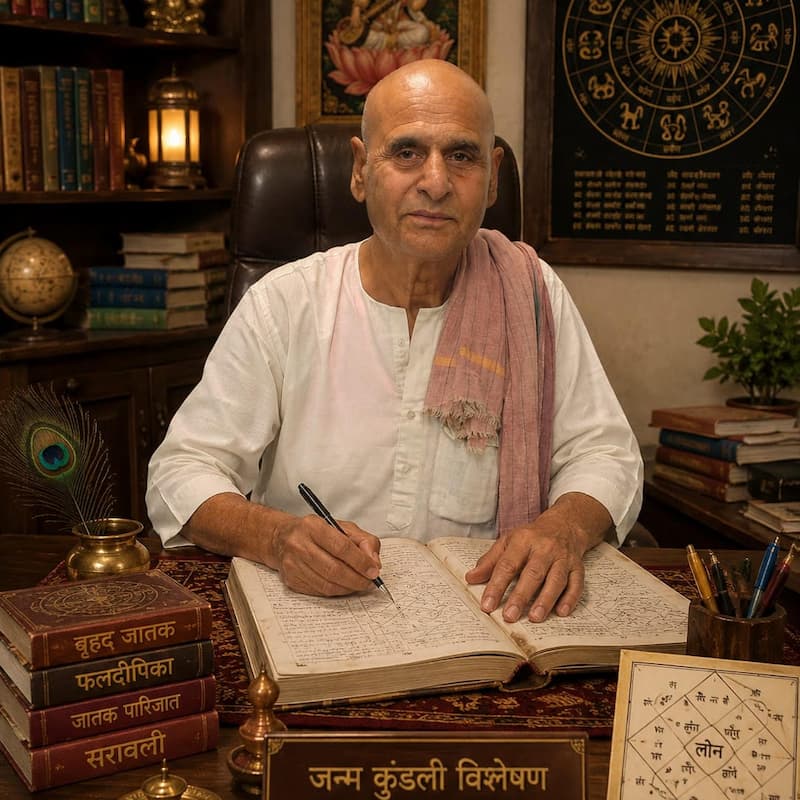
Narendra Kumar Chaubey is a Jyotisha Acharya with over 30 years of experience, based in Bihar and serving clients across India in Vedic astrology, mantra shastra, Vastu and ritual practice.
He completed his formal training at Kameshwar Singh Darbhanga Sanskrit University (KSDSU), one of India’s oldest and most respected institutions for Vedic and Sanskrit scholarship, where he studied Jyotisha shastra, mantra vidya and related classical sciences. KSDSU’s tradition of rigorous Sanskrit education — tracing directly to the Mithila region’s centuries-old pandit lineage — forms the foundation of his practice.
Over three decades, Narendra Kumar Chaubey has worked with thousands of individuals and families across Bihar and across India, offering guidance in:
- Kundli (birth chart) analysis — identifying karmic patterns, planetary periods and life path guidance through classical Jyotisha
- Palmistry (Hasta Samudrika) — reading the hand according to the classical Samudrika Shastra tradition
- Vastu Shastra — assessment and correction of living and working spaces according to directional and elemental principles
- Mantra and Pooja vidhi — performing and guiding all categories of puja, havan, and mantra sadhana for personal, family and business situations
- Predictive Jyotisha — transit analysis, muhurta (auspicious timing) selection and remedial guidance
He works across four languages — Sanskrit, Hindi, English and Bhojpuri — making classical knowledge accessible to practitioners across educational backgrounds and regions.
His writing for ABMantra brings the precision of classical Vedic training to practical mantra guidance: not general advice but specific prescriptions grounded in shastra, lineage and 30 years of direct practice with real situations.