

Getting the house keys and locking in an auspicious date feels exciting until you realize your family pandit is already booked for that morning, lives in another city, or quoted a dakshina far outside your budget. Plenty of families also prefer keeping the first entry intimate, much like how earlier generations welcomed prosperity into a new home on their own. Below, you will find the exact samagri list with household quantities, a practical 10-day preparation timeline, and a straightforward vidhi that takes roughly 60 to 90 minutes, along with clear guidance on what to do if the milk boiling ritual hits a snag.
When to call a priest instead: You are planning an elaborate Vastu Shanti with a full Navagraha havan, or re-entering a property after fire, flood, or major structural rebuilding. Those ceremonies involve longer Vedic procedures where a trained pandit is recommended.
Griha Pravesh Puja Samagri List Without Pandit
The quantities listed here work comfortably for a family of four to six people. Pick up your supplies at least two days before the muhurat so nobody has to rush to the market on puja morning. If you live in an apartment with strict smoke rules, feel free to skip the optional havan section, as a simple griha pravesh is complete with the diya, mantras, and milk offering.
| Item | Quantity | Used for |
|---|---|---|
| Puja basics | ||
| Ganesh idol or framed photo | 1 | First worship to clear obstacles |
| Lakshmi photo or idol | 1 | Worshipped alongside the milk and kheer bhog |
| Wooden chowki with red or yellow cloth | 1 + 1 metre | Clean altar base for deities |
| Haldi and kumkum (roli) | 50 g each | Tilak and entrance swastik |
| Akshat (whole unbroken rice) | 250 g | Kalash base, doorway swastik, and offerings |
| Moli / kalava | 1 roll | Tying around the kalash neck and family wrists |
| Durva grass | 21 blades | Traditional offering to Lord Ganesh |
| Fresh flowers and garlands | 1 plate + 2 garlands | Altar decoration and main door |
| Diya, cow ghee, and cotton wicks | 2 diyas, 200 g ghee | Main lamp (and small havan, if performed) |
| Agarbatti or dhoop and camphor | 1 pack each | Evening or morning aarti |
| Supari and betel (paan) leaves | 5 each | Kalash and deity offerings |
| Gangajal | 1 small bottle | Purifying the kalash water and sprinkling rooms |
| Kalash and main entrance | ||
| Copper or brass kalash | 1 | Carried inside during the first step |
| Mango leaves (or ashoka leaves) | 5 for kalash + 1 door toran | Kalash neck and entrance garland |
| Whole coconut with husk | 1 | Placed over the mango leaves on the kalash |
| Clean coin | 1 | Placed inside the kalash water |
| Rangoli colours or rice flour | 1 set | Drawing auspicious patterns at the threshold |
| Milk boiling ritual | ||
| New vessel (patila) compatible with your stove | 1 | Boiling milk (check the induction note below) |
| Full-cream milk | 1 litre | Overflow ritual and preparing kheer |
| Rice, sugar or jaggery, green cardamom | 2 tbsp, 4 tbsp, 2 pods | Cooking the first sweet bhog |
| Bhog and aarti | ||
| Seasonal fruits | 5 varieties | Naivedya offering |
| Traditional sweets (laddoo or peda) | 250 g | Bhog and family prasad |
| Puja thali, small bell, and lota of water | 2, 1, 1 | Aarti and achaman (water sipping) |
| Optional havan | ||
| Small havan kund, mango wood samidha, havan samagri | 1, 1 bundle, 250 g | Brief fire offering (skip in flats with sensitive smoke alarms) |
Griha Pravesh Checklist India: 10 Days to Puja Morning
Whenever a home puja feels stressful, the cause is usually utility readiness rather than ritual complexity. Getting the house functional beforehand lets everyone focus calmly on the prayer.
7 to 10 days before
Lock in your auspicious date using a regional panchang or advice from family elders, traditionally steering clear of Chaturmas and Kharmas windows. Confirm that essential connections in the new flat or house are active: the electricity meter is running, overhead water tanks are filled, and the LPG cylinder or piped gas line is connected. Wrap up painting, deep cleaning, and pest control during this window so chemical odours clear out completely.
2 to 3 days before
Purchase all samagri items from the table above. Decide in advance who will carry the kalash across the threshold, who will watch the milk on the stove, and who will read the mantras aloud so there is no confusion at the door. If you are moving into a gated society, inform the resident welfare office about visitor parking and whether you plan to light a small havan.
The day before
Mop the floors with clean water, hang the mango-leaf toran above the main frame, and draw a fresh rangoli outside the door. Arrange the wooden chowki in your designated puja corner (many families prefer the north-east direction, though any clean, quiet corner works well in compact apartments). Test your new stove by heating water in the new milk vessel, then pack the milk, lighter, matchbox, and kalash together in one dedicated bag.
Puja morning
Take an early bath, wear fresh or traditional clothes, and switch on the lights across every room before the ceremony begins. Fill the kalash with clean water before leaving your old house or car so you can enter smoothly right at the muhurat.
Simple Griha Pravesh Vidhi at Home, Step by Step
- Mark the entrance. Draw a neat swastik on both sides of the main doorway using kumkum paste and press a few grains of unbroken akshat onto the wet tilak.
- Cross the threshold. The woman of the house, or the couple walking side by side, holds the water-filled kalash and steps inside with the right foot first while the family chants Om Shri Ganeshaya Namah.
- Establish the kalash. Set the idols or photos of Ganesh and Lakshmi on the covered chowki. Add a few drops of gangajal, the coin, a whole supari, and akshat into the kalash, arrange five mango leaves around the rim, and rest the coconut on top tied with moli. While pouring the water, recite this invocation:
नर्मदे सिन्धु कावेरि जलेऽस्मिन् सन्निधिं कुरु॥
Narmade Sindhu Kaveri jale’smin sannidhim kuru.
- Offer prayers to Lord Ganesh. Light the ghee diya, apply haldi and kumkum tilak to Ganesh, offer akshat, durva grass, flowers, and a sweet, and chant ॐ गं गणपतये नमः (Om Gam Ganapataye Namah) 11 times. If you would like additional verses for this step, check our Ganesh mantra guide.
- Recite the Vastu prayer. Chant the Rigvedic verse below three times, then walk through every room of the home sprinkling a few drops of kalash water with a flower or mango leaf.
यत्त्वेमहे प्रति तन्नो जुषस्व शं नो भव द्विपदे शं चतुष्पदे॥
yat tvemahe prati tan no juṣasva śaṃ no bhava dvipade śaṃ catuṣpade.
This short hymn explains why an ordinary family can conduct its own griha pravesh without feeling incomplete. In Griffith’s translation, the opening verse asks the Guardian of the Homestead to “bring no disease, and give us happy entrance” (Rigveda 7.54, Griffith), making it a direct household blessing spoken at your own threshold.
- Perform the milk boiling ritual. Walk into the kitchen and boil the milk until it rises over the vessel rim, following the steps detailed in the next section.
- Offer bhog and perform aarti. Place the freshly cooked kheer, fruits, and sweets before Ganesh and Lakshmi, then wave the camphor flame while ringing the bell. You can also include a short prayer from our Lakshmi mantra page during this offering.
- Optional havan. If your ventilation permits, offer small pinches of ghee and havan samagri into the kund 11 or 21 times while saying Om Gam Ganapataye Svaha. Keep balcony doors open or skip this step entirely in apartments fitted with smoke detectors.
- Share prasad and the first meal. Distribute sweets and kheer to family members, guests, or neighbours, and eat your first home-cooked meal together. Many families also keep the ghee lamp burning through the day and stay overnight in the new home.
Milk Boiling Ritual in Griha Pravesh: Meaning, Method and What If It Goes Wrong
Boiling milk marks the very first act of cooking inside a new kitchen. Across North India it is affectionately known as doodh ubalna, while Tamil households celebrate it as paal kaachal. Rather than turning the flame down early, families let the milk foam up and spill slightly over the rim as a visual prayer for abundance, symbolizing a kitchen that will never run short of nourishment. Because this tradition evolved as a household custom passed across generations rather than a rigid rule in Vastu treatises, minor details vary warmly from one family to another.
In most homes, the woman of the house ignites the burner for the first time after a brief prayer to Goddess Annapurna or Lakshmi. Pour the litre of full-cream milk into the new vessel and allow it to reach a rolling boil without stirring it down. Once the foam spills gently over the edge, lower the heat, stir in the washed rice, sugar or jaggery, and crushed cardamom pods, and simmer until thick kheer is ready for the altar.
One practical kitchen detail trips up dozens of urban families every month: copper and brass pots will not heat on an induction cooktop, since induction coils require a magnetic base such as stainless steel or cast iron. Modern apartments frequently come equipped with built-in induction hobs instead of traditional gas burners, leaving families stranded at the muhurat when their decorative brass patila stays completely cold. Furthermore, several touch-sensor induction stoves automatically cut power the moment spilled milk touches the glass surface. Pick a heavy-bottomed steel vessel if you use induction, or keep a portable single-burner gas stove handy for the ceremony, and verify both the evening before.
If the milk refuses to boil over, splatters onto the floor, or scorches slightly at the bottom, do not treat it as a bad omen. No classical scripture attaches misfortune to how milk behaves on a stove. Simply turn down the burner, wipe the counter calmly, and finish preparing the kheer. While some regional customs prefer seeing the milk spill toward the east, a spill toward any other direction does not diminish the sincerity of your prayer.
Letting the milk rise is an expression of gratitude; worrying over spill angles only adds unnecessary stress to a joyful morning.
In several household griha pravesh sessions where a family performs the entry on their own, the biggest hiccup happens right at the stove rather than during the prayer. Families prepare the kalash and recite the Vastoshpati verse calmly, then get flustered when an induction plate fails to heat a brass vessel or cuts power on a slight milk spill. Keeping a steel pot ready, testing the stove the evening before, and offering the kheer peacefully with gratitude keeps the entire morning calm and focused.
Common Myths About Griha Pravesh Without a Pandit
The foundational Vedic hymn for entering a new home consists of short verses spoken directly by the householder to Vastoshpati, the guardian spirit of the dwelling (Rigveda 7.54). While calling a priest makes sense for an elaborate Vastu Shanti or Navagraha havan, a simple entry puja has always been within a family’s own hands.
Classical Vastu texts focus on architectural proportions, soil testing, room placement, and doorway orientation, as seen in Brihat Samhita chapter 53 (Iyer’s 1884 translation) and Matsya Purana chapters 252 to 257. Boiling milk is a cherished domestic folk custom. In M. Ramakrishna Bhat’s translation of Brihat Samhita (53.95), Varahamihira notes simply that a home is auspicious when it brings gladness to the people living in it.
Three Traditional Types of Griha Pravesh
| Type | When It Applies | Is a Pandit Required? |
|---|---|---|
| Apurva | Entering a newly constructed home for the very first time | Optional for the simple home vidhi above |
| Sapurva | Moving back into your own house after extended travel or renovation | Usually not needed |
| Dwandwa | Re-entering a home after fire, flood, or major structural rebuilding (also observed by some families when moving into a resale house) | Recommended for peace-of-mind rituals |
Put simply: a brand-new home, a returning home, or a rebuilt home.
गृह प्रवेश में दूध उबालने की रस्म: बिना पंडित घर पर कैसे करें
अगर शुभ मुहूर्त पर पंडित जी उपलब्ध नहीं हो पा रहे हैं, तो बिल्कुल परेशान न हों। घर की वरिष्ठ महिला या पति-पत्नी साथ मिलकर दाहिना पैर पहले रखते हुए जल से भरा कलश लेकर गृह प्रवेश करें। इसके बाद रसोई में नए बर्तन में दूध उबालें और उसे थोड़ा उफनने दें, जिसे घर में अन्नपूर्णा और लक्ष्मी के आगमन का शुभ संकेत माना जाता है। फिर उसी दूध में चावल और गुड़ या शक्कर डालकर खीर तैयार करें और सबसे पहले गणेश जी तथा लक्ष्मी जी को भोग लगाएं। यदि किसी कारण दूध न उफने या नीचे गिर जाए, तो मन में कोई शंका न लाएं और शांत भाव से पूजा संपन्न करें।
Griha Pravesh Without Pandit: Frequently Asked Questions
We could not book a pandit on our muhurat date. Is performing griha pravesh ourselves valid?
What if the milk does not overflow or spills onto the floor during the ritual?
How should we do the milk boiling ritual if our new flat only has an induction cooktop?
Our rental agreement requires shifting luggage before the muhurat. Does that spoil the griha pravesh?
Is griha pravesh necessary when moving into a rented flat?
Can we perform a small havan inside a high-rise apartment without triggering smoke alarms?
Final Check Before Your Griha Pravesh Morning
If you are handling the ceremony yourself and want zero last-minute surprises, test the one step that catches most families off guard. Place your new milk vessel on the stove tonight, heat a little water to confirm compatibility, and pack the pot, milk, and kalash together in one bag so your morning entry stays relaxed and memorable.
- Rishi Vasishtha, Rigveda 7.54 (Vastoshpati hymn), tr. R.T.H. Griffith, 1896. English text | Sanskrit text
- Varahamihira, Brihat Samhita, Chapter 53 “On House-building (Vastu-vidya)”, tr. N. Chidambaram Iyer, 1884 (Chapter 52 in some editions). Read on Wisdom Library
- Varahamihira, Brihat Samhita 53.95, tr. M. Ramakrishna Bhat, Motilal Banarsidass.
- Matsya Purana, Chapters 252 to 257 (Vastu Vidya); see Kushal Kalita, The Matsya Purana: A Critical Study, 2018. Read on Wisdom Library
- Grihapravesha, overview of the rite and its three types. Wikipedia
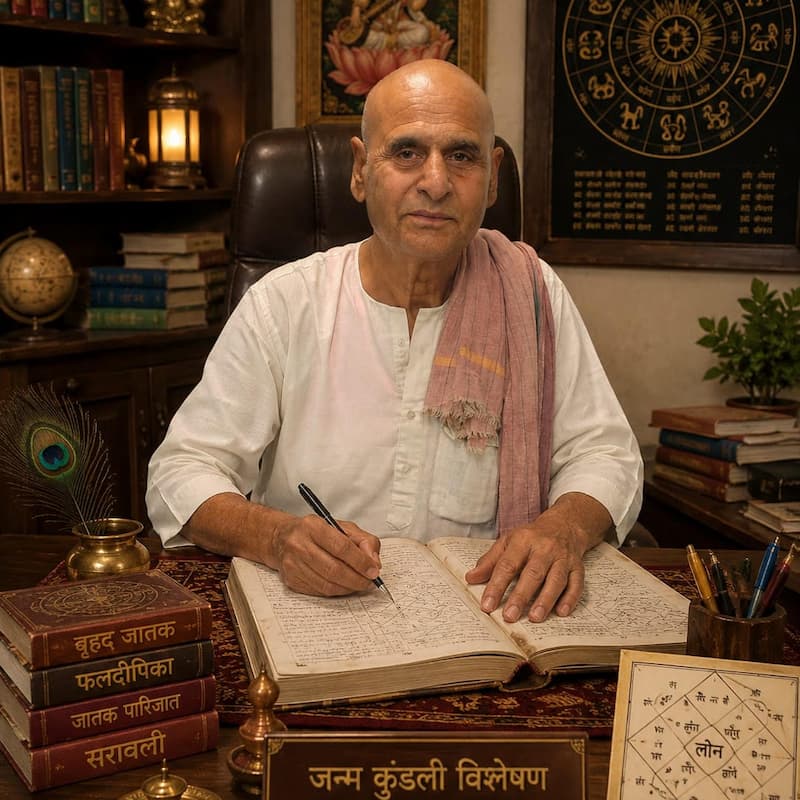
Narendra Kumar Chaubey is a Jyotisha Acharya with over 30 years of experience, based in Bihar and serving clients across India in Vedic astrology, mantra shastra, Vastu and ritual practice.
He completed his formal training at Kameshwar Singh Darbhanga Sanskrit University (KSDSU), one of India’s oldest and most respected institutions for Vedic and Sanskrit scholarship, where he studied Jyotisha shastra, mantra vidya and related classical sciences. KSDSU’s tradition of rigorous Sanskrit education tracing directly to the Mithila region’s centuries-old pandit lineage forms the foundation of his practice.
Over three decades, Narendra Kumar Chaubey has worked with thousands of individuals and families across Bihar and across India, offering guidance in:
- Kundli (birth chart) analysis: Identifying karmic patterns, planetary periods and life path guidance through classical Jyotisha
- Palmistry (Hasta Samudrika): Reading the hand according to the classical Samudrika Shastra tradition
- Vastu Shastra: Assessment and correction of living and working spaces according to directional and elemental principles
- Mantra and Pooja vidhi: Performing and guiding all categories of puja, havan, and mantra sadhana for personal, family and business situations
- Predictive Jyotisha: Transit analysis, muhurta (auspicious timing) selection and remedial guidance
He works across four languages Sanskrit, Hindi, English and Bhojpuri making classical knowledge accessible to practitioners across educational backgrounds and regions.
His writing for ABMantra brings the precision of classical Vedic training to practical mantra guidance: not general advice but specific prescriptions grounded in shastra, lineage and 30 years of direct practice with real situations.
For more info follow on:
