
Fri, 2 October
The day before the fast. Bath in the morning, then the last meal – fish or meat in some traditions, sattvic food in others. No eating after sunset.
Sat, 3 October
The full fast – no food, no water from Nahai Khai sunset through the following morning. Ashtami tithi begins 10:29 PM on 2 October.
Sun, 4 October, morning
After the Navami sunrise. The fast is broken with the Jitiya puja, then the parana meal – usually sattvic food, jharna (jaggery water), or fruit.
2 Oct, 10:29 PM IST
Ashtami tithi ends approximately 5:52 AM on 4 October (India)
Bihar, Jharkhand, Purvanchal (eastern UP), Nepal
The vrat is specific to these regions. It is not widely observed in West Bengal, Maharashtra or South India.
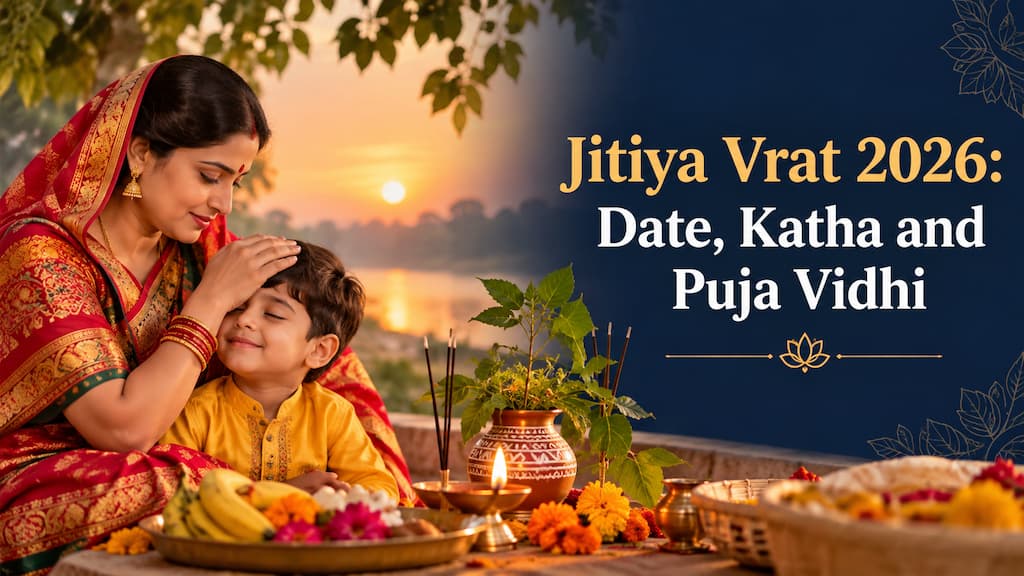
The women who search “jitiya kab hai” every September are not looking for a theological treatise. They are mothers. They are daughters-in-law keeping a vrat their mothers kept, and their grandmothers kept before them, in a chain that goes back through the villages of Bihar and Jharkhand and eastern UP without a clear beginning. The fast is 24 hours without water. The reason, if you ask them, is simple: my children should live long. The story behind the fast is worth knowing. It explains why this specific fast, on this specific day, has lasted as long as it has.
जितिया क्यों मनाई जाती है (Why Jitiya Is Observed)
Jitiya is the short name for Jivitputrika Vrat. The full name breaks down as: Jivit (living, alive) + Putra (son/child) + ika (relating to) + Vrat (vow/fast). The fast a mother keeps for the continued life of her child.
It is observed on Krishna Ashtami of Ashwin month because this is the day, according to the tradition, when Jimutavahana performed his great sacrifice. The story is told on the fast day itself. Mothers gather in the evening, listen to the katha, perform the puja, and maintain the fast through the night. The story is not background reading. It is part of the vrat. A Jitiya fast without the katha is considered incomplete.
Jitiya Vrat Katha: The Complete Stories
Katha 1: The Sacrifice of Jimutavahana
Jimutavahana was a prince of the Gandharvas, the celestial musicians. He was extraordinarily generous. Over time he gave away everything he had, including his entire kingdom, until he had nothing left and became a forest-dweller.
One day he came upon an old woman sitting beside a large flat stone, weeping. He stopped and asked what was wrong. She was a Naga woman, one of the serpent people. Her son Shankhapal was next in line to be sacrificed. The Nagas had an old treaty with Garuda, the divine eagle: they sent one of their own to the stone every day to be eaten. It had been this way for generations. Her son’s turn had come.
Jimutavahana told the woman to send her son away. He himself lay down on the stone and covered himself with the red cloth that marked the sacrifice.
When Garuda arrived and began to eat, he noticed something. The being on the stone was not crying out. Not begging. Not asking for mercy. Garuda stopped. He asked who this was and why a human had come in place of a Naga.
Jimutavahana told him: he had no children of his own to protect, so his life was worth less than a mother’s child. Garuda had never heard anything like this. He stopped eating.
At that moment Shankhapal came back. He had heard what happened and could not stay away. Garuda looked at both of them. He understood what kind of act this had been. He healed Jimutavahana’s wounds and declared that the daily sacrifice would end.
Lord Yamraj himself came and gave Jimutavahana a long, full life. Because Jimutavahana had been willing to die for another mother’s son, mothers ever since have kept this fast in his name, praying for the same protection for their own children. The vrat is named for what was saved that day: jivit (living) + putra (son).
Katha 2: The Eagle and the Jackal (Cheel aur Siyarni)
This is the story most commonly told at Jitiya. It is a folk katha, shorter and more direct than the Jimutavahana story, and it carries the practical teaching of the vrat: the fast must be kept sincerely. Breaking it in secret is still breaking it.
A female eagle (Cheel) and a female jackal (Siyarni) were neighbours in the same forest. Both had young children. They were friends.
When Jitiya came, the eagle kept the full nirjala fast. She told her children she would not eat or drink until the following morning. She sat through the day and the night.
The jackal also announced she was fasting. But she was hungry. When no one was looking, she went down to the river and ate some fish. Then she came back and continued to pretend.
In the year that followed, the jackal’s children started dying. One by one. Despite everything she did, she kept losing them.
The eagle’s children all lived. They grew healthy.
The jackal went to the eagle. She admitted what she had done. The eagle said: the goddess does not need to see you. She already knows. The vrat that is broken even once, even in secret, does not protect.
The jackal kept the full vrat the following year. Her children lived.
This story is why the clay figurines of an eagle and a jackal are made and worshipped on Jitiya day. The eagle represents sincerity and the reward it brings. The jackal represents what happens when you keep a vrat in form but not in fact. Both figures are part of the puja. The jackal is not excluded from worship, because the story ends with her redemption, not her punishment. She is the one who learned.
Jitiya is a Mithila tradition. My mother kept it. Her mother kept it. In the village where I grew up, the three days of Jitiya were unmistakable: the smell of fish frying on Nahai Khai evening, then the silence of the fast day, then the sound of the parana meal being prepared before sunrise on the fourth morning. The fast is harder than it looks on paper. A full day and night without water, in October, after the monsoon when the weather is still warm, is a genuine physical test.
What I have observed over decades: the mothers who keep this vrat consistently, year after year, carry a particular quality of resolve in the rest of their lives. This may not be a spiritual phenomenon. It may simply be that a person who can go 24 hours without water, deliberately, for a specific intention, has demonstrated to themselves that they are capable of sustained effort for what they love. That demonstration matters.
From the Jyotisha angle, the Ashwin Krishna Ashtami date is worth noting. Ashwin is the month that follows the monsoon. The dark fortnight of Ashwin corresponds to Pitrupaksha, the fortnight of ancestor worship. Jitiya falls in this same period, which means the vrat for living children sits within the fortnight that honours the dead. The placement is not accidental. The tradition understood that keeping children alive requires constant attention to the forces that would take them away. Pitrupaksha and Jitiya together form a bracket: honouring what has passed and protecting what remains.
Jitiya Puja Vidhi: What to Do Each Day
| Day | Name | What happens | Food and water |
|---|---|---|---|
| Day 1 2 Oct 2026 |
Nahai Khai (नहाय खाय) |
Morning bath. Puja of the sun and the vrat deity. The last meal of the fast period is eaten before sunset. In Bihar and Jharkhand many families eat fish or meat on Nahai Khai as the hearty pre-fast meal. Others keep it sattvic. After sunset: nothing. | Eat normally until sunset. No food or water after sunset. |
| Day 2 3 Oct 2026 |
Jitiya / Nirjala Vrat (जितिया) |
Full nirjala fast: no food, no water, no bathing. In the evening: puja with the clay eagle and jackal figurines, oil lamp, flowers, seasonal fruit, and jaggery. The Jitiya Vrat Katha is told or heard at the puja. Mothers sit together, share the stories, observe together. | Nothing. Not even water. |
| Day 3 4 Oct 2026 |
Parana (पारना) |
After sunrise on Navami: the puja is completed. Mothers break the fast. Traditional parana meal includes jharna (jaggery mixed in water as the first sip), then proper food: kheer, puri, fruits, sattvic dishes. The clay figurines are immersed in water (visarjan) after the parana. | Fast broken after morning puja. Eat as normal from then. |
The Jitiya Mantra
Meaning: I bow (Namah) to Jeevatputra – the one who keeps children alive (Jeevat = living/alive, Putra = son/child). This is the primary mantra chanted during Jitiya puja before the clay figurines and during the katha. Chant 108 times on the vrat day, particularly during the evening puja. Some traditions also chant:
जियत रहे मोर लाल, जियत रहे (Jiyat rahe mor lal, jiyat rahe) – “May my child live, may they live” – the folk prayer that mothers in Mithila and Bhojpuri-speaking areas repeat throughout the fast day. It is not a formal mantra but it carries the same intention as Om Jeevatputraya Namah.
What to Offer at Jitiya Puja
The Jitiya puja is simple and specific. You need: clay figurines of the eagle (Cheel) and the jackal (Siyarni), an oil lamp, marigold flowers, seasonal fruits (banana, guava, ber), jaggery, and clean water for offering even though the fasting woman does not drink it herself. In some families, the figurines are made fresh each year by the women of the house. In others they are bought from potters who sell them specifically for Jitiya.
The figurines are placed on a clean surface, flowers and fruit offered, the lamp lit, and the katha told or heard. After the parana on Day 3, the figurines are taken to a river or tank and immersed. The tradition holds that they should not be kept from year to year.
What People Get Wrong About Jitiya Vrat
Error 1: “Jitiya is only for sons.”
The name Jivitputrika does contain Putra (son), and historically the vrat was primarily observed for sons. In practice across Bihar and Jharkhand today, mothers observe the vrat for all their children, daughters included. The folk tradition has moved beyond the grammatical gender of the festival’s name. Ask any mother in these states whether she fasts only for her sons, and the answer will settle this question.
Error 2: “You can drink water once during the fast.”
The katha of the eagle and the jackal exists specifically to make this clear. The jackal broke her fast secretly when no one was looking, and suffered for it. The tradition is unambiguous: Jitiya is a nirjala vrat. No water. The story that is told at the puja is the teaching about exactly this. Breaking it even once, even in private, breaks the vrat.
Error 3: “Nahai Khai means just taking a bath.”
Nahai Khai literally means “bathe and eat.” It is the full meal day before the fast, not simply a bath ritual. The meal on Nahai Khai is important because it is the last food the fasting woman will eat for the next 24-plus hours. Many families prepare a substantial meal specifically for this day. The bath and the eating together constitute the first day of the three-day observation.
Error 4: “Jitiya is the same as Chhath Puja.”
They are different fasts with different stories, different deities, different rituals and different timings. Both are observed in Bihar and both involve long fasts. Chhath is a Surya (Sun) festival with specific Arghya (water offering) rituals at sunset and sunrise. Jitiya is about Jimutavahana and the Jivitputrika tradition, observed in Ashwin Krishna Paksha. The only thing they share is the geographical region and the seriousness of the fast.
- DrikPanchang – Jivitputrika Vrat 2026 date and timing: Ashtami tithi calculations for 3 October 2026; tithi start (10:29 PM, 2 October) and end times for India
- Somadeva, Katha Sarit Sagara (Ocean of Streams of Story, 11th century) – Vetala Pachavimshati section, Story 25: the Jimutavahana narrative in its classical Sanskrit literary form. English translation by C.H. Tawney (1880) available at archive.org – Katha Sarit Sagara Vol. 1
- Wikipedia – Jivitputrika: the vrat’s regional distribution (Bihar, Jharkhand, eastern UP, Nepal Terai); the Ashwin Krishna Ashtami date basis; both the Jimutavahana and eagle-jackal katha traditions
- BhaktiBharat – Jitiya 2026: Hindi language source confirming the Ashwin Krishna Ashtami date and the alternate names (Jivitputrika, Jiutiya Vrat)
- PanchangBodh – Jivitputrika Vrat 2026: the three-day structure (Nahai Khai, nirjala fast, parana), the two katha traditions explained together
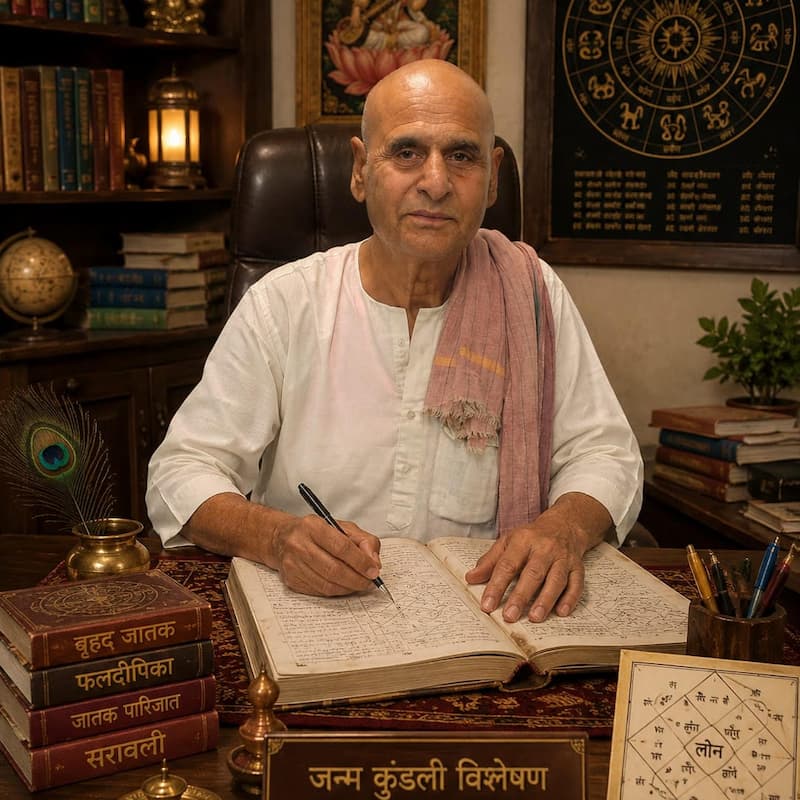
Narendra Kumar Chaubey is a Jyotisha Acharya with over 30 years of experience, based in Bihar and serving clients across India in Vedic astrology, mantra shastra, Vastu and ritual practice.
He completed his formal training at Kameshwar Singh Darbhanga Sanskrit University (KSDSU), one of India’s oldest and most respected institutions for Vedic and Sanskrit scholarship, where he studied Jyotisha shastra, mantra vidya and related classical sciences. KSDSU’s tradition of rigorous Sanskrit education tracing directly to the Mithila region’s centuries-old pandit lineage forms the foundation of his practice.
Over three decades, Narendra Kumar Chaubey has worked with thousands of individuals and families across Bihar and across India, offering guidance in:
- Kundli (birth chart) analysis: Identifying karmic patterns, planetary periods and life path guidance through classical Jyotisha
- Palmistry (Hasta Samudrika): Reading the hand according to the classical Samudrika Shastra tradition
- Vastu Shastra: Assessment and correction of living and working spaces according to directional and elemental principles
- Mantra and Pooja vidhi: Performing and guiding all categories of puja, havan, and mantra sadhana for personal, family and business situations
- Predictive Jyotisha: Transit analysis, muhurta (auspicious timing) selection and remedial guidance
He works across four languages Sanskrit, Hindi, English and Bhojpuri making classical knowledge accessible to practitioners across educational backgrounds and regions.
His writing for ABMantra brings the precision of classical Vedic training to practical mantra guidance: not general advice but specific prescriptions grounded in shastra, lineage and 30 years of direct practice with real situations.
For more info follow on: