
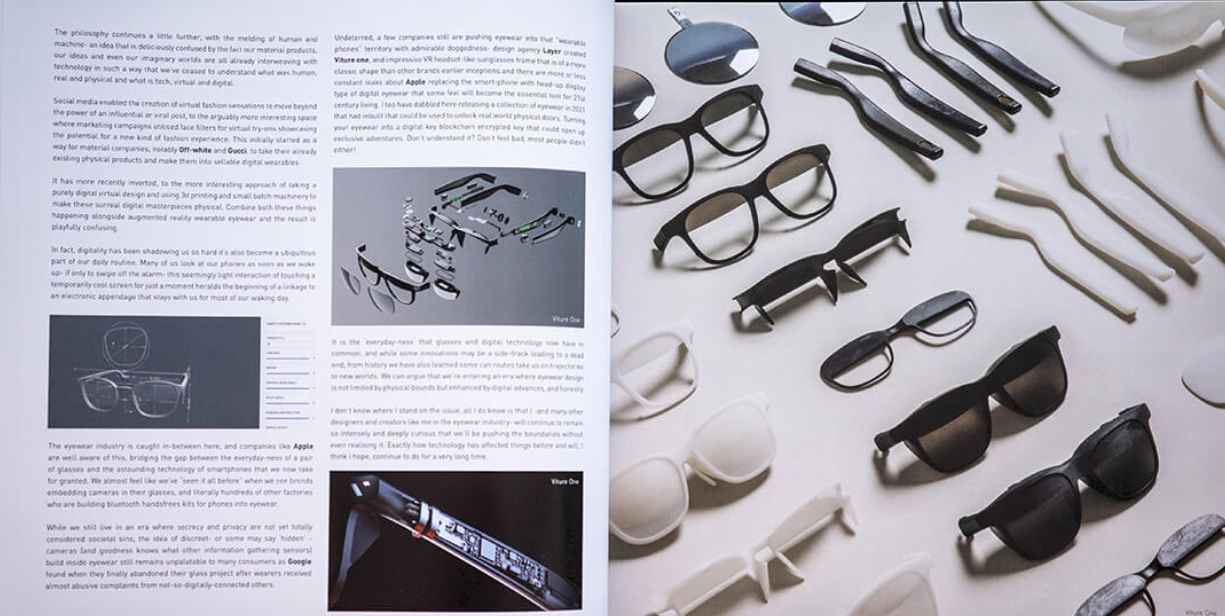

There’s a peculiar moment that happens in every optical shop: someone tries on frames they’re sure will look amazing based on the display model, only to see their own reflection and wonder what went wrong. The frames that looked sophisticated on the mannequin somehow emphasize every feature they wished were less prominent.
This disconnect between expectation and reality isn’t about bad taste or unfortunate face structure—it’s about geometry. The relationship between your facial proportions and frame shapes follows principles that, once understood, transform eyewear shopping from frustrating guesswork into an art form where you can reliably predict what will flatter.
The best frames don’t just sit on your face—they work with your facial architecture to create visual balance, draw attention to your best features, and either complement or intentionally contrast with your natural lines.
Why Face Shape Actually Matters
The face shape framework isn’t just optical shop marketing. It’s based on fundamental principles of visual balance and proportion. Human brains are exquisitely tuned to notice symmetry and proportion in faces—we process facial geometry unconsciously within milliseconds of meeting someone.
Eyewear occupies prime real estate on your face: the geometric center, the first place people’s eyes go during conversation. Frames create lines and shapes that interact with your facial structure, either enhancing natural balance or creating awkward visual discord.
The goal isn’t to hide or correct your face shape—you’re not flawed and don’t need fixing. Rather, it’s to create intentional visual effects: either complementing your natural lines for harmonious effect, or creating deliberate contrast for striking impact.
Identifying Your Face Shape
Pull your hair completely back from your face. Stand in front of a mirror in good lighting. Look at the overall outline and answer these questions:
Width-to-Length Ratio: Is your face noticeably longer than wide (long), about as long as wide (balanced), or noticeably wider than long (short)?
Jaw Definition: Is your jawline strongly angular (angular), gently curved (soft), or barely defined (weak)?
Forehead-to-Chin Width: Is your forehead wider than your chin (triangle), similar width (balanced), or narrower than your chin (inverted triangle)?
Cheekbones: Are they the widest part of your face (prominent), or are forehead and jaw similar width to cheeks (balanced)?
These observations place you in one of six general categories: oval, round, square, rectangular, heart-shaped, or diamond.
The Frame Selection Framework
For Oval Faces
Characteristics: Balanced proportions, gently curved jawline, forehead slightly wider than chin.
What Works: Square or rectangular frames add definition, geometric frames create interesting contrast, oversized frames work well, cat-eye shapes complement natural curves.
What to Avoid: Overly decorative frames that distract from naturally balanced features.
Style Note: Oval faces have the luxury of choosing frames based primarily on personal style preferences rather than corrective geometry.
For Round Faces
Characteristics: Face width and length similar, soft jawline, full cheeks, curved lines dominating.
What Works: Rectangular frames with clear angles add definition, frames wider than deep create horizontal lines that elongate, geometric shapes add angles, high-set temples draw eyes upward.
What to Avoid: Round frames reinforce rather than contrast the face shape, small frames that sit entirely within the cheek area.
Style Note: Don’t fear angles and geometry. The contrast between angular frames and soft facial curves creates appealing visual interest.
For Square Faces
Characteristics: Strong angular jawline, forehead and jaw similar width, defined cheekbones.
What Works: Round or oval frames contrast with angular facial structure, cat-eye shapes add upward movement and soft curves, thin metal frames provide definition without adding bulk.
What to Avoid: Geometric frames with sharp angles compete with facial angles, heavy thick frames that add visual weight.
Style Note: Your natural facial structure reads as strong and defined. Soft frame shapes create appealing contrast without sacrificing your face’s inherent strength.
For Rectangular (Oblong) Faces
Characteristics: Face noticeably longer than wide, often with high forehead or long chin.
What Works: Deep frames that cover more vertical space, frames with decorative temples that add visual width, oversized frames that balance face length, aviators and wayfarers that add width.
What to Avoid: Small narrow frames that emphasize length, tall vertical frame shapes, thin wire frames that don’t create enough visual presence.
Style Note: Don’t be afraid of bold, statement frames. Your face length provides good proportions for carrying dramatic eyewear.
For Heart-Shaped Faces
Characteristics: Wide forehead, prominent cheekbones, narrow pointed chin.
What Works: Frames wider at bottom than top (cat-eye, aviator shapes), light-colored or rimless upper frames with defined lower rims, round or oval frames, delicate frames.
What to Avoid: Heavy top bars or browline frames that emphasize forehead, frames much wider than cheekbones.
Style Note: The goal is creating balance between your upper and lower face. Look for frames that are visually heavier at the bottom.
For Diamond Faces
Characteristics: Narrow forehead and chin, wide cheekbones, face widest at cheeks.
What Works: Cat-eye shapes that follow and enhance cheekbone line, oval frames that soften angles, rimless or semi-rimless frames, frames with distinctive brow-line details.
What to Avoid: Narrow rectangular frames that emphasize cheekbone width, heavy frames that overwhelm delicate forehead and chin proportions.
Style Note: Diamond faces are relatively rare and strikingly distinctive. Embrace frames that highlight rather than hide this interesting facial geometry.
Beyond Shape: The Other Variables That Matter
Skin Tone and Coloring: Warm skin undertones pair beautifully with warm frame colors (browns, golds, amber). Cool undertones complement cool frame colors (black, silver, blue, purple).
Hair Color and Style: Your hair frames your face just as glasses do. Dark, heavy hair can balance bold frames. Fine, light hair often looks better with delicate frames.
Personal Style and Lifestyle: Understanding eyeglasses for face shape optimization matters less if recommended styles clash with your personal aesthetic or lifestyle needs. The geometry provides a starting point, not absolute rules.
Eye Size and Spacing: Large eyes can carry larger frames; smaller eyes sometimes get lost behind oversized lenses. Wide-set eyes can handle frames with prominent nose bridges.
Nose Size and Shape: Bridge design affects how frames interact with your nose. High bridges can minimize prominent noses; low bridges balance flatter nose profiles.
The Art of Breaking the Rules
Understanding the face shape framework empowers you to break rules intentionally for effect. Once you know what creates balance, you can choose to create deliberate imbalance for striking, fashion-forward looks.
Round faces “shouldn’t” wear round glasses according to conventional wisdom—but matching frame shape to face shape creates cohesive, soft, approachable looks. Square faces “shouldn’t” wear geometric frames—but doubling down on angles creates bold, edgy, memorable aesthetics.
The difference between accidentally awkward and intentionally striking comes down to commitment and context. Bold choices executed confidently read as style.
The Professional Difference
While understanding these principles helps enormously, eyewear fitting has subtleties that are hard to learn without experience. Frame sizing involves not just face shape but measurements like pupillary distance, segment height, vertex distance, and pantoscopic tilt.
This is where professional optical services provide value beyond selling you frames. Expert opticians understand how to balance aesthetic goals with optical requirements, how different frame materials affect fit and appearance, and how to adjust frames for optimal positioning.
The investment in quality frames and professional fitting pays returns every day you wear them. Glasses that look good and feel comfortable get worn.
Finding Your Signature Style
The ultimate goal isn’t just finding frames that “work”—it’s discovering eyewear that expresses your personality and makes you feel confident. Some people prefer classic, understated frames that never call attention to themselves. Others want bold, distinctive eyewear that makes a statement.
Both approaches are equally valid. The face shape framework simply ensures that whatever style you choose actually flatters rather than fights your facial structure.
The best glasses are the ones you forget you’re wearing because they feel so naturally right. They become part of how you see yourself and how others see you. Finding that perfect match between your face, your style, and frame geometry turns necessity into opportunity—and functional vision correction into personal expression.

Rishabh Kumar is ABMantra’s writer for finance, technology and career content. He has over four years of experience translating complex financial and technical topics into plain language that everyday Indians can read, understand and act on.
Rishabh comes from a business family background in Delhi and developed an early interest in personal finance after watching relatives make avoidable financial mistakes due to a lack of accessible information. That experience shapes the way he writes — always starting from the reader’s confusion rather than the writer’s knowledge. He covers personal loans, investment basics, insurance, forex, income tax, and digital tools with a consistent focus on the Indian financial landscape, Indian regulations, and products that are actually available to Indian consumers.
At ABMantra, Rishabh also covers technology topics — apps, digital payments, online safety, and tech trends — always for an intelligent non-technical audience. He believes that most technology writing either talks down to readers or assumes too much prior knowledge, and tries to find the middle ground in everything he writes.
Areas of expertise: Personal Finance, Investments, Loans, Forex, Income Tax, Digital Tools, Career Guidance