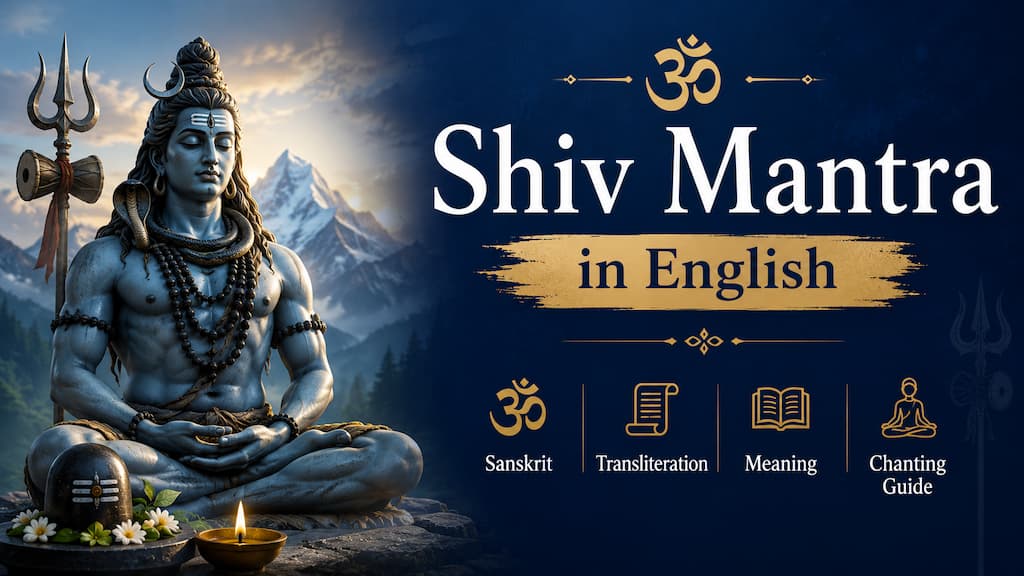

If you want to chant Lord Shiva’s mantras but can’t read Devanagari script, you need the Shiv mantra in English the exact Sanskrit sound written in Roman letters so you can pronounce it correctly, along with its real meaning so you know what you’re actually saying. That’s exactly what this guide gives you: every major Shiva mantra written in English transliteration, its Sanskrit original, a clear word-for-word meaning, and the correct way to chant it.
Quick Answer: The Most Important Shiv Mantra in English
Om Namah Shivaya pronounced “Aum Nuh-muh Shi-vuh-yuh” meaning “I bow to Shiva.” It is the five-syllable Panchakshara mantra, the most widely chanted Shiva mantra in the world, and it can be recited by anyone, at any time, without any special initiation.
If you only remember one thing from this page, remember this mantra and its meaning. Everything below builds on it.
What Does “Shiv Mantra in English” Actually Mean?
A mantra is a Sanskrit sound formula. “In English” here doesn’t mean translating the sound itself mantras lose their vibrational structure when translated word-for-word into English. It means:
- Transliteration writing the Sanskrit sound using the English (Roman) alphabet, so you can read and pronounce it even if you don’t know Devanagari script.
- Meaning in English understanding what the Sanskrit words actually convey, so your chanting is informed rather than mechanical.
Both are covered for every mantra in this article.
Next Read:
15+ Shiv Mantras in English
1. Panchakshari Mantra Om Namah Shivaya
Sanskrit: ॐ नमः शिवाय
English transliteration: Om Namah Shivaya
Meaning: “I bow to Shiva” / “Salutations to the auspicious one.”
This five-syllable mantra (na-mah-shi-va-ya) is said to correspond to the five elements earth, water, fire, air, and space. It requires no special qualification, time, or ritual. It is the default starting point for anyone new to Shiva mantra chanting.
2. Mahamrityunjaya Mantra The Great Death-Conquering Mantra
Sanskrit: ॐ त्र्यम्बकं यजामहे सुगन्धिं पुष्टिवर्धनम् । उर्वारुकमिव बन्धनान् मृत्योर्मुक्षीय मामृतात् ॥
English transliteration: Om Tryambakam Yajamahe Sugandhim Pushtivardhanam, Urvarukamiva Bandhanan Mrityor Mukshiya Maamritat
Meaning: “We worship the three-eyed one (Shiva), who is fragrant and nourishes all beings. May he liberate us from the bondage of death, for the sake of immortality, just as a ripe cucumber is easily severed from its vine.”
Traced to the Rigveda (RV 7.59.12), this is one of the oldest and most revered Shiva mantras, traditionally chanted for protection from illness, accidents, and fear of death.
3. Shiva Gayatri Mantra (Rudra Gayatri)
Sanskrit: ॐ तत्पुरुषाय विद्महे महादेवाय धीमहि तन्नो रुद्रः प्रचोदयात् ॥
English transliteration: Om Tatpurushaya Vidmahe Mahadevaya Dhimahi Tanno Rudrah Prachodayat
Meaning: “We meditate on the Supreme Being. We contemplate the Great God. May Rudra (Shiva) illuminate and guide our intellect.”
Chanted for clarity of thought and wise decision-making, structured on the same pattern as the classical Gayatri Mantra.
4. Rudra Mantra
Sanskrit: ॐ नमो भगवते रुद्राय ॥ English transliteration: Om Namo Bhagavate Rudraya Meaning: “Salutations to Lord Rudra (the fierce, transformative form of Shiva).”
A short, direct mantra invoking Shiva’s power to dissolve obstacles and negative patterns.
5. Shiva Panchakshari Stotram Line (Nagendraharaya)
Sanskrit: नागेन्द्रहाराय त्रिलोचनाय भस्माङ्गरागाय महेश्वराय ॥
English transliteration: Nagendraharaya Trilochanaya Bhasmangaragaya Maheshvaraya
Meaning: “To the one who wears the king of serpents as a garland, the three-eyed one, whose body is covered in sacred ash, to the great Lord.”
A descriptive verse from the Shiva Panchakshara Stotram, used in devotional recitation to meditate on Shiva’s form and symbolism.
6. Shiva Dhyana Mantra (Forgiveness Mantra)
Sanskrit: करचरणकृतं वा कायजं कर्मजं वा श्रवणनयनजं वा मानसं वापराधम् । विहितम् अविहितं वा सर्वमेतत् क्षमस्व जय जय करुणाब्धे श्री महादेव शम्भो ॥
English transliteration: Karacharanakritam Vaa Kaayajam Karmajam Vaa Shravananayanajam Vaa Maanasam Vaaparaadham, Vihitam Avihitam Vaa Sarvametat Kshamasva Jaya Jaya Karunaabdhe Shree Mahadeva Shambho
Meaning: “Whatever wrong I have done knowingly or unknowingly through my hands, feet, body, speech, ears, eyes, or mind please forgive me, O ocean of compassion, glorious Mahadeva.”
Recited to seek forgiveness for conscious and unconscious mistakes and to purify the mind before deeper meditation.
7. Shiva Moola Mantra
Sanskrit: ॐ श्री महादेवाय नमः ॥
English transliteration: Om Sri Mahadevaya Namah
Meaning: “Salutations to the great god, Mahadeva.”
A simple root mantra suitable for daily worship, especially when lighting a diya or offering water at home.
8. Om Namo Bhagavate Rudraya (Extended Devotion Mantra)
Already covered above (#4) repeated here in longer sadhana practice for 108 or 1,008 repetitions during intensive periods like Shravan month.
9. Nilakantha Mantra (Poison-Bearer Mantra)
Sanskrit: ॐ नीलकण्ठाय नमः ॥
English transliteration: Om Neelakanthaya Namah
Meaning: “Salutations to the blue-throated one” referring to the story of Shiva consuming poison to protect the universe.
Chanted for courage and resilience, honouring Shiva’s role as protector who absorbs hardship for the greater good.
10. Om Namaste Astu Bhagavan (Shiva Stotram Verse)
Sanskrit: नमस्ते अस्तु भगवन् विश्वेश्वराय महादेवाय त्र्यम्बकाय त्रिपुरान्तकाय त्रिकालाग्निकालाय कालाग्निरुद्राय नीलकण्ठाय मृत्युञ्जयाय सर्वेश्वराय सदाशिवाय श्रीमन्महादेवाय नमः ॥
English transliteration: Namaste Astu Bhagavan Vishveshvaraya Mahadevaya Tryambakaya Tripurantakaya Trikalagnikalaya Kalagnirudraya Nilakanthaya Mrityunjaya Sarveshvaraya Sadashivaya Sriman Mahadevaya Namah
Meaning: “Salutations to you, O Lord of the universe, the three-eyed one, destroyer of the three cities (Tripura), the one beyond the three times (past, present, future), the fire of time itself, the blue-throated conqueror of death, the lord of all, the eternally auspicious great god.”
A longer devotional stotram line summarising Shiva’s cosmic attributes; often chanted during Maha Shivratri.
11–15. Ekadasha Rudra Beej Mantras (The Eleven Forms of Rudra)
Shiva is worshipped in eleven Rudra forms, each with its own short beej (seed) mantra. A few of the most commonly chanted:
| Rudra Form | Sanskrit | English Transliteration | Purpose |
| Kapali | ॐ हुं हुं शत्रुस्तम्भनाय हुं हुं ॐ फट् | Om Hum Hum Shatrustambhanaya Hum Hum Om Phat | Neutralising opposition/enemies |
| Pingala | ॐ श्रीं ह्रीं श्रीं सर्वमङ्गलाय पिङ्गलाय ॐ नमः | Om Shreem Hreem Shreem Sarva Mangalaya Pingalaya Om Namah | Overall auspiciousness |
| Bhima | ॐ ऐं ऐं मनोवाञ्छित सिद्धये ऐं ऐं ॐ | Om Aim Aim Mano Vanchita Siddhaye Aim Aim Om | Fulfilment of sincere wishes |
| Virupaksha | ॐ रुद्राय रोगनाशाय आगच्छ राम् ॐ नमः | Om Rudraya Roganashaya Agachha Ram Om Namah | Relief from illness |
| Ahirbudhnya | ॐ ह्रां ह्रीं हुं समस्त ग्रह दोष विनाशाय ॐ | Om Hraam Hreem Hum Samasta Graha Dosha Vinashaya Om | Reducing planetary doshas |
These are traditionally chanted in a fixed sequence during Maha Rudra Yajna or intensive Shivratri sadhana, often under the guidance of a priest.
How to Pronounce Shiv Mantras Correctly in English Transliteration
Because Sanskrit is phonetic (each letter has one consistent sound), a few rules make English transliteration much easier to read correctly:
- “a” sounds like the u in “but” (not like the a in “cat”)
- “aa” sounds like the a in “father”
- “i” sounds like the i in “sit”
- “sh” is a soft sound, as in “shiva”
- “h” after a consonant (like in “Namah”) is a soft, breathed sound don’t drop it
- Keep each syllable even in length; don’t rush the ending of a mantra
Om Namah Shivaya, syllable by syllable: Om (aum, a long, resonant hum) na (short “nu”) mah (short “muh” with a breathed h) shi (as in “ship”) va (between “va” and “wa”) ya (as in “yes”)
If you’re ever unsure of pronunciation, listening to a trained priest or a reliable Vedic chanting recording alongside this transliteration is the fastest way to correct your accent.
How to Chant Shiv Mantra: Step-by-Step Vidhi
- Bathe and wear clean clothes before sitting for mantra practice.
- Choose a quiet corner, ideally facing north or east.
- Sit with your spine straight, either on the floor or a chair comfort matters more than posture perfection.
- Light a diya or incense if performing it as part of daily puja.
- Use a Rudraksha mala to count repetitions; a full round is 108 chants.
- Chant clearly and at a steady pace clarity of pronunciation matters more than speed.
- End with a short period of silence, allowing the mind to settle after the final repetition.
Best Time and Days to Chant Shiv Mantra
- Brahma Muhurta (roughly 90 minutes before sunrise) is considered the most spiritually favourable time.
- Monday is Shiva’s dedicated day in the Hindu calendar and is widely considered auspicious for chanting.
- Maha Shivratri and the month of Shravan are the most powerful periods for extended or intensive mantra sadhana.
- If early morning isn’t practical, any quiet, distraction-free time you can repeat consistently is genuinely more valuable than a “perfect” time you can’t sustain.
Benefits of Chanting Shiv Mantra
Vedic tradition and generations of practitioners associate regular Shiva mantra chanting with:
- A calmer, steadier mind and reduced anxiety through rhythmic, focused repetition
- Greater mental clarity and confidence before important decisions or life events
- A structured daily practice that builds discipline and consistency
- A felt sense of protection and spiritual grounding, especially during difficult periods
- Deeper devotional connection to Lord Shiva for those following a bhakti (devotional) path
These are traditional and experiential benefits rather than clinically proven medical outcomes, and mantra practice should complement not replace appropriate medical or professional care when needed.
Can Non-Hindus or Beginners Chant These Mantras?
Yes. None of the mantras listed above (except the specialised Ekadasha Rudra sequence, best done under guidance) require initiation from a guru. Sanskrit mantras are traditionally treated as universal sound vibrations rather than the property of any one community sincerity, correct pronunciation, and respect for the tradition are what matter, not your religious background.
Frequently Asked Questions
1. What is the most powerful Shiv mantra in English?
Om Namah Shivaya is the most widely chanted and universally accessible; Mahamrityunjaya Mantra is considered the most powerful for protection and healing specifically.
2. How do I pronounce Om Namah Shivaya correctly?
“Aum Nuh-muh Shi-vuh-yuh” keep the “a” sounds short (like “but,” not “cat”), and don’t drop the soft “h” in “Namah.”
3. How many times should I chant a Shiv mantra daily?
108 times (one full mala round) is the traditional standard, though even 11 or 21 sincere repetitions daily are considered meaningful.
4. Can I chant Shiv mantra without a guru or initiation?
Yes, for common mantras like Om Namah Shivaya, Mahamrityunjaya, and the Shiva Gayatri Mantra. The Ekadasha Rudra sequence is best learned under a knowledgeable priest.
5. What is the difference between Om Namah Shivaya and Mahamrityunjaya Mantra?
Om Namah Shivaya is a simple, five-syllable salutation suitable for daily, unrestricted chanting. Mahamrityunjaya Mantra is a longer Rigvedic verse specifically associated with protection from illness, fear, and untimely death.
6. What is the best time to chant Shiv mantra?
Early morning (Brahma Muhurta) and Monday evenings are considered most auspicious, with Maha Shivratri as the single most powerful occasion.
7. Is it necessary to know Sanskrit to chant these mantras?
No English transliteration, as given above, is enough to pronounce the mantra accurately. Understanding the meaning deepens the practice but isn’t a prerequisite to begin.
Conclusion
Chanting Shiv mantra in English transliteration makes one of Hinduism’s most enduring spiritual practices accessible to anyone, regardless of whether they can read Devanagari script. Start with Om Namah Shivaya, understand its meaning, chant it consistently, and let your practice naturally expand toward the Mahamrityunjaya Mantra, the Shiva Gayatri Mantra, and beyond. What matters most across every tradition and every mantra on this list is sincerity, correct pronunciation, and consistency over time.
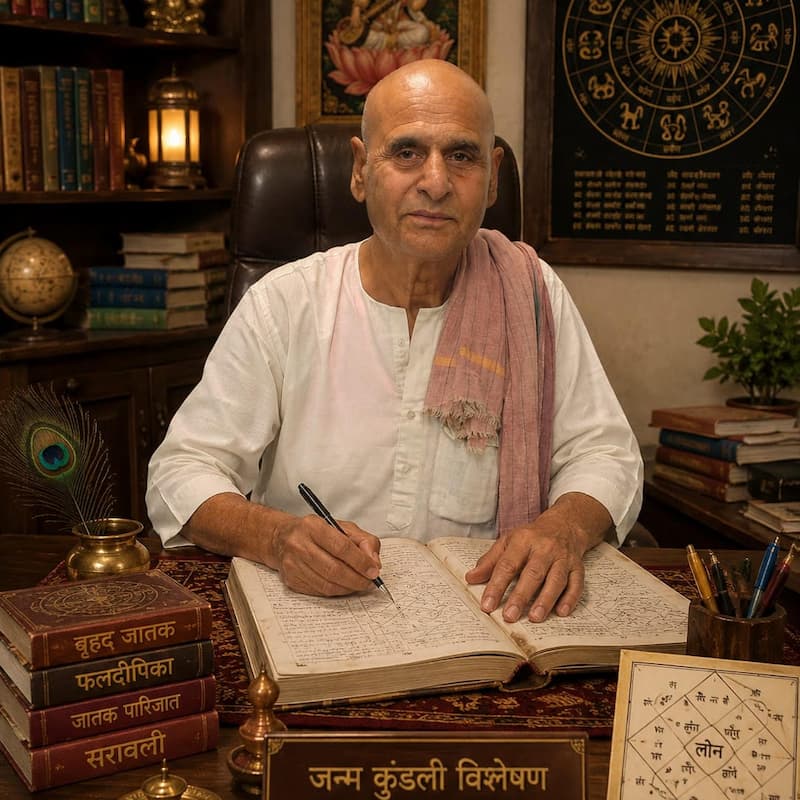
Narendra Kumar Chaubey is a Jyotisha Acharya with over 30 years of experience, based in Bihar and serving clients across India in Vedic astrology, mantra shastra, Vastu and ritual practice.
He completed his formal training at Kameshwar Singh Darbhanga Sanskrit University (KSDSU), one of India’s oldest and most respected institutions for Vedic and Sanskrit scholarship, where he studied Jyotisha shastra, mantra vidya and related classical sciences. KSDSU’s tradition of rigorous Sanskrit education tracing directly to the Mithila region’s centuries-old pandit lineage forms the foundation of his practice.
Over three decades, Narendra Kumar Chaubey has worked with thousands of individuals and families across Bihar and across India, offering guidance in:
- Kundli (birth chart) analysis: Identifying karmic patterns, planetary periods and life path guidance through classical Jyotisha
- Palmistry (Hasta Samudrika): Reading the hand according to the classical Samudrika Shastra tradition
- Vastu Shastra: Assessment and correction of living and working spaces according to directional and elemental principles
- Mantra and Pooja vidhi: Performing and guiding all categories of puja, havan, and mantra sadhana for personal, family and business situations
- Predictive Jyotisha: Transit analysis, muhurta (auspicious timing) selection and remedial guidance
He works across four languages Sanskrit, Hindi, English and Bhojpuri making classical knowledge accessible to practitioners across educational backgrounds and regions.
His writing for ABMantra brings the precision of classical Vedic training to practical mantra guidance: not general advice but specific prescriptions grounded in shastra, lineage and 30 years of direct practice with real situations.
For more info follow on: