

Last checked: 18 October 2026 · Reviewed by Narendra Kumar Chaubey, Jyotisha Acharya
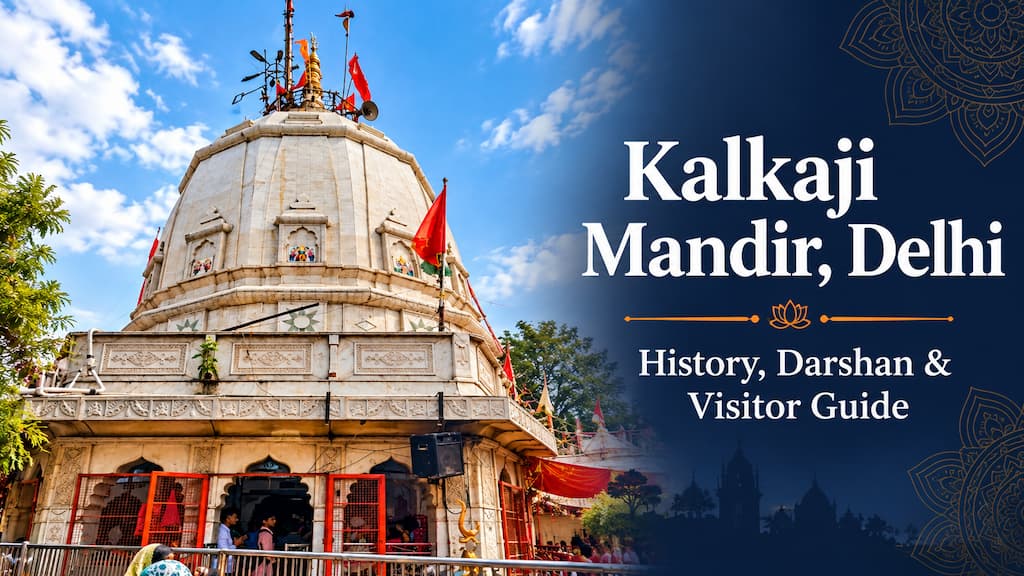
Kalkaji Mandir is one of the oldest and busiest Devi temples in Delhi. It stands on Suryakuta Parvat, a low spur of the Aravalli hills in South Delhi, across the road from Nehru Place, and the whole Kalkaji neighbourhood is named after it. The goddess here is Maa Kalka, a form of Kali. The temple is also known as Jayanti Peeth, and devotees call it a Manokamna Siddha Peeth, a place where a sincere prayer is believed to be answered.
This guide covers darshan and aarti timings, the legend and history of the temple, what you will see inside, a simple way to offer prayers, and practical tips for reaching the temple and avoiding the worst of the crowds.
Kalkaji Mandir video tour
Take a short walk through Kalkaji Mandir before you plan your visit.
Quick facts
| Item | Details |
|---|---|
| Deity | Maa Kalka (Kali) |
| Address | Ma Anandmayee Marg, Kalkaji, New Delhi (opposite Nehru Place) |
| Darshan | About 4:00 AM to 11:30 PM, with short closures for shringar and bhog |
| Entry fee | Free. No paid VIP darshan for regular visits |
| Nearest metro | Kalkaji Mandir (Violet and Magenta Line interchange) |
| Busiest times | Navratri, Tuesdays, Sundays and festival days |
| Photography | Not allowed inside the sanctum |
Kalkaji Mandir timings and aarti schedule
The temple opens before dawn and stays open until late at night, which makes it one of the easiest major temples in Delhi to visit after work. The doors close briefly for the goddess’s shringar (dressing) and for bhog, so plan around those windows.
| Ritual | Approximate time |
|---|---|
| Temple opens | 4:00 AM |
| Ganesh vandana and morning shringar (darshan closed) | Around 5:00 to 6:30 AM |
| Morning aarti | Between 5:30 and 7:00 AM, depending on season |
| Bhog break (darshan closed) | Around 3:00 to 4:00 PM |
| Evening shringar (darshan closed) | Around 7:00 to 8:30 PM |
| Evening (sandhya) aarti | Between 7:30 and 9:00 PM, depending on season |
| Shayan (shej) aarti and closing | 11:30 PM |
Aarti times shift with the season and with muhurat on festival days, so treat this table as a guide rather than a timetable. During Navratri the temple keeps much longer hours and the queue system changes.
Did you know
Unlike many temples, Kalkaji Mandir does not close during a solar or lunar eclipse.
The legend of Maa Kalka
The temple’s story comes from the Devi Mahatmya tradition. When the demons Shumbha, Nishumbha and their general Raktabija were tormenting the gods, the goddess took the form of Kaushiki to fight them. Raktabija had a boon that every drop of his blood that touched the ground would become a new demon. To stop him, Kali emerged from the goddess’s brow and drank his blood before it could fall.
Local tradition holds that Kali appeared at this very spot and chose to stay here as Kalka Devi, and devotees believe the image of the goddess is svayambhu (self-manifested). Because she lives on Suryakuta Parvat, she is also called Suryakuta Nivasini. A 1912 Delhi Gazetteer records the belief that the goddess was born at the temple site. Another popular story says the Pandavas and Kauravas worshipped Kalka Devi here during Yudhishthira’s reign, and that Krishna prayed here too. These are traditions passed down by priests and devotees rather than recorded history, but they explain why people consider the site far older than the building that stands on it.
History of the temple building
The present structure is much younger than the legends. According to historical records summarised on Wikipedia, the oldest surviving parts date to the 18th century:
- 1738: the earliest historical mention. Historian Laura Sykes records that Maratha forces plundered a fair at Kalka Devi near Okhla during their campaign against the Mughals, which shows the shrine was already a pilgrimage site before the present building.
- 1764 or later: the core of the present structure was built.
- Around 1783: Durga Singh enclosed the deity on three sides with red sandstone and marble railings and added Persian and Hindi inscriptions.
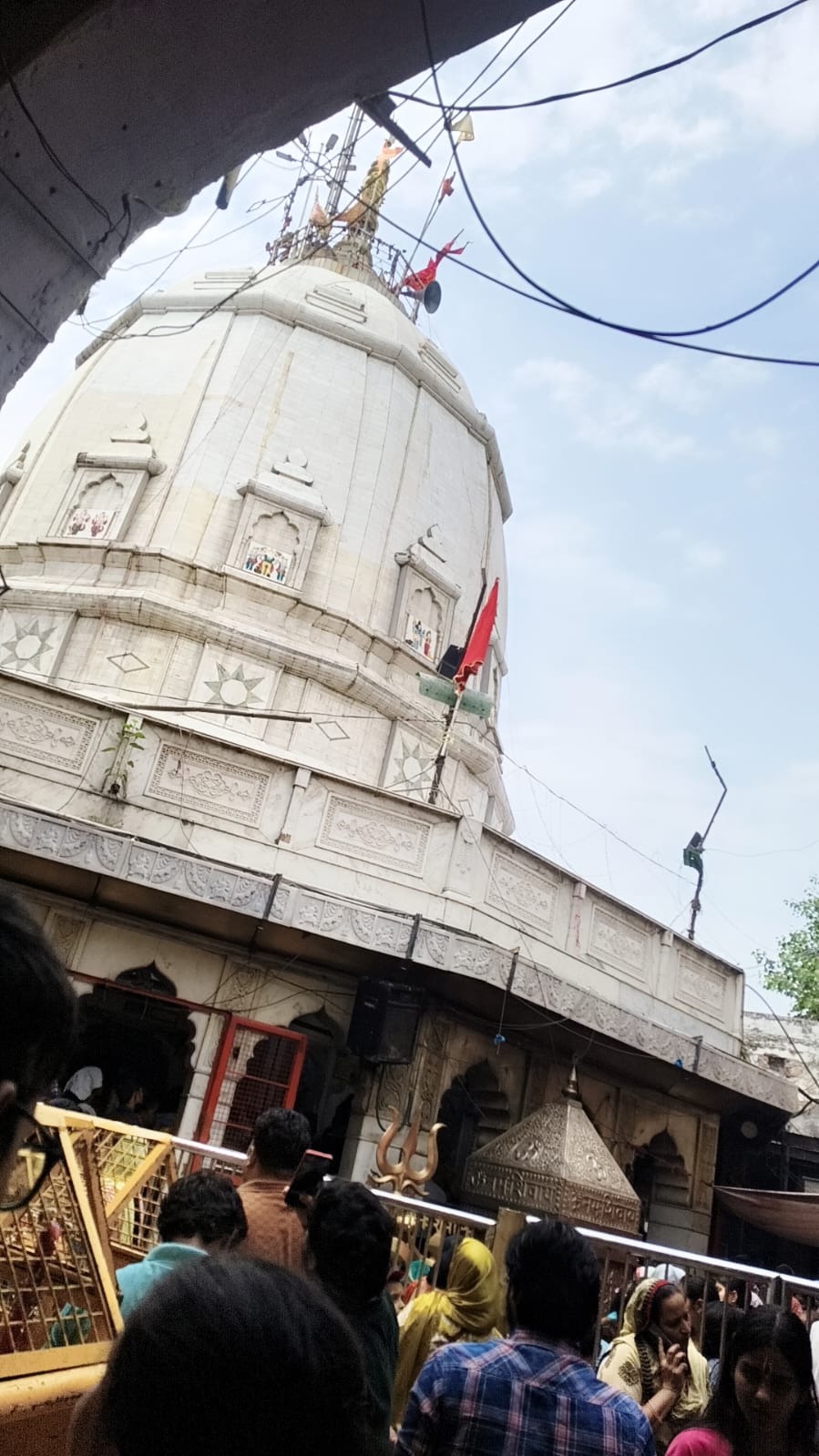
- 1816: the priests wanted a proper dome. They drew lots among wealthy Delhi patrons, and the choice fell on Raja Kedarnath, an official at the court of Mughal emperor Akbar II. He paid for twelve outer rooms, the tall pyramidal tower, two red sandstone tigers, a large bell and a trident.
- Later 1800s: local merchants and bankers added more rooms around the complex.
In recent years the Delhi High Court has supervised a redevelopment of the temple precinct, with an approved layout plan aimed at better access and facilities for devotees. Expect some construction or changed entry routes while this work continues.
What you will see inside
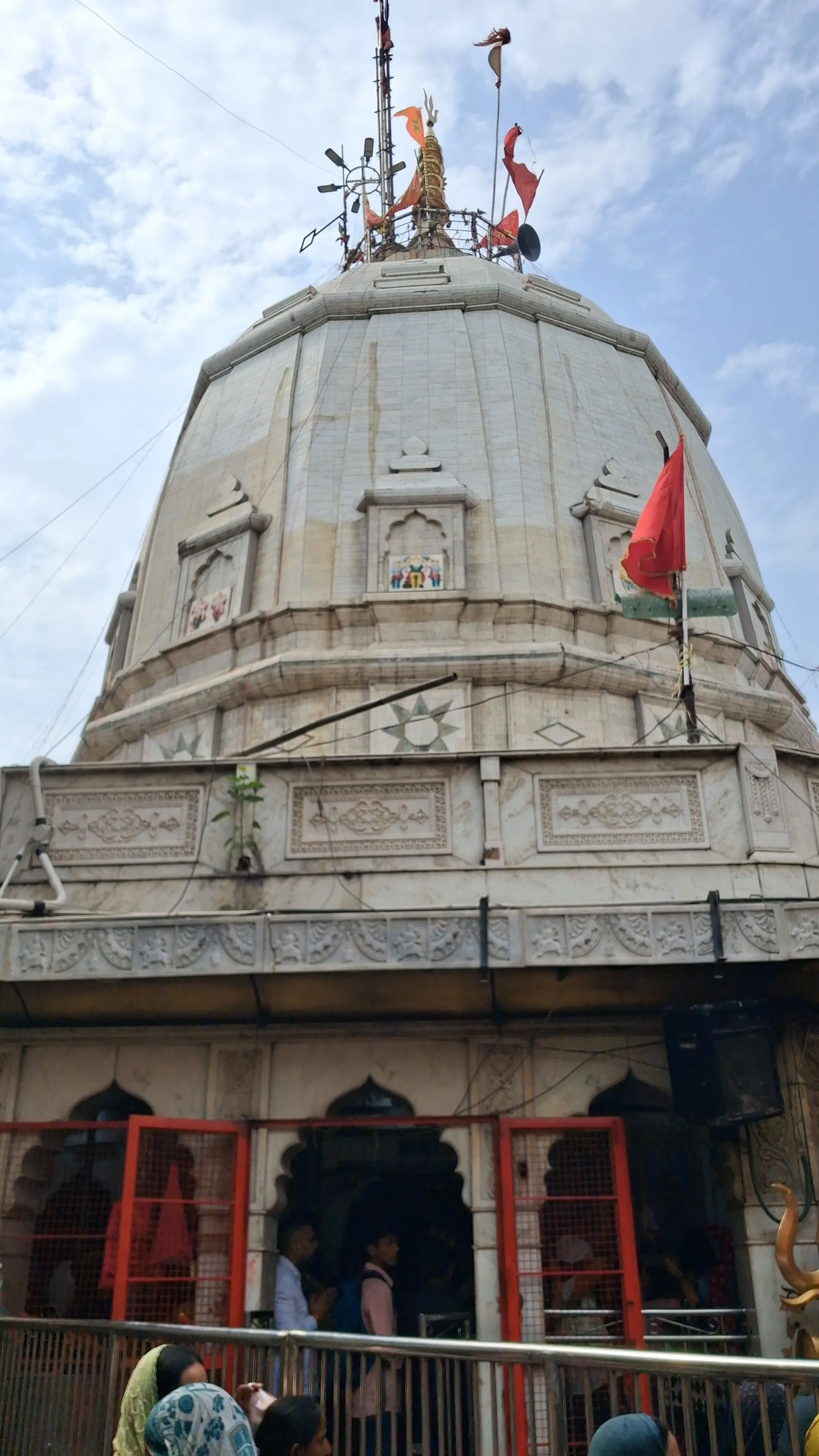
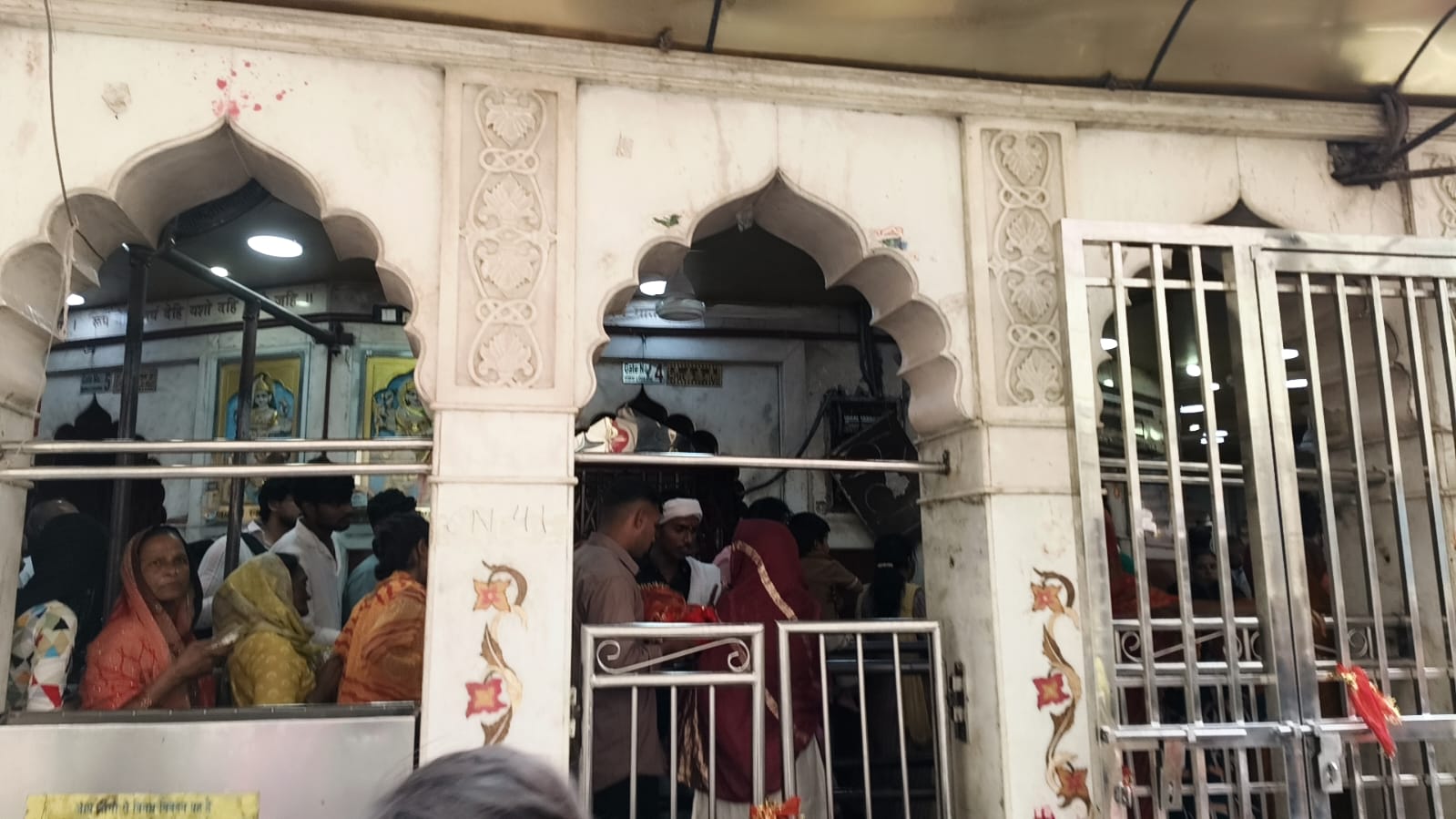
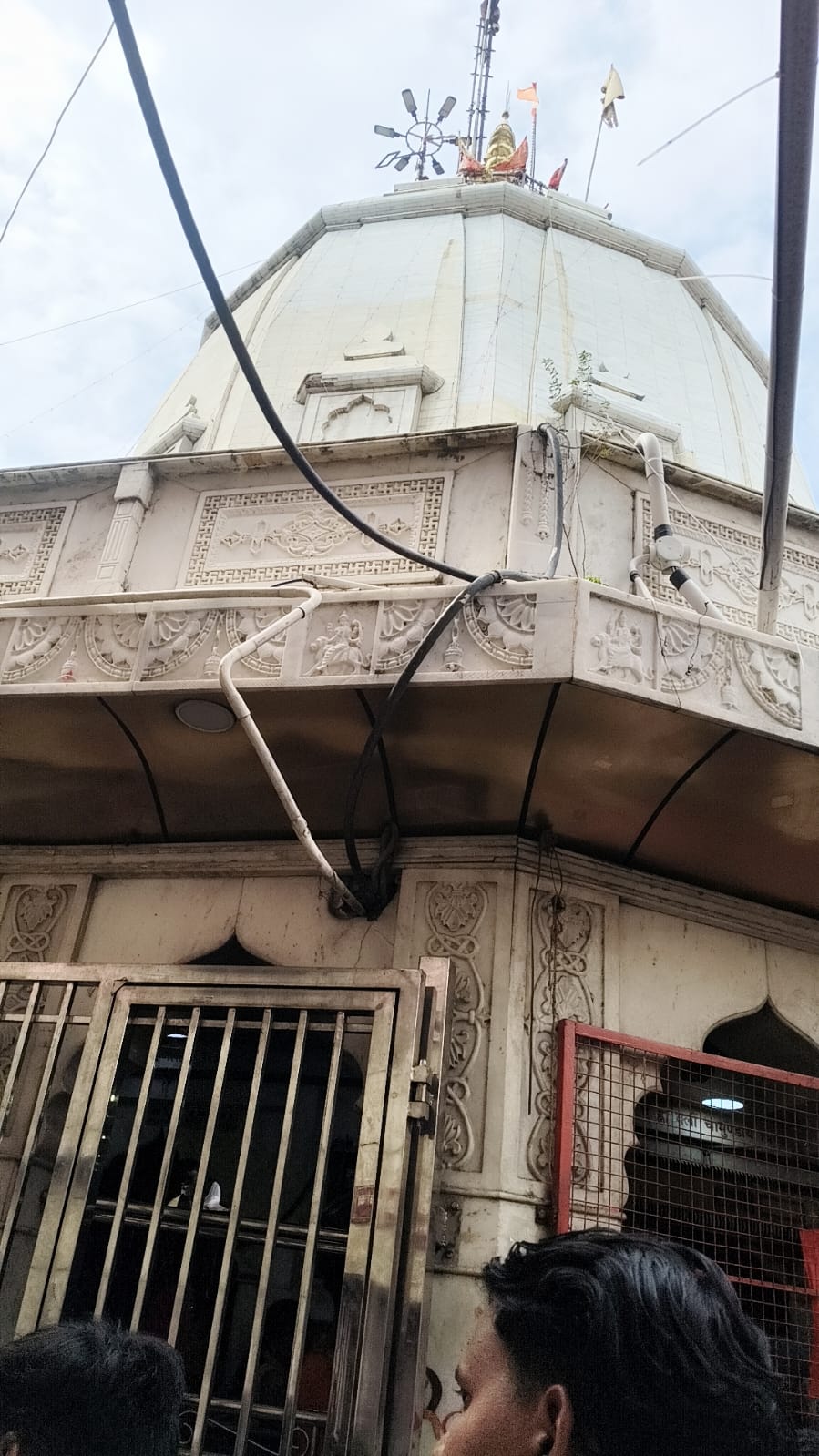
The main shrine is a 12-sided chamber about 24 feet across, with marble floors and a doorway on each side. A verandah with 36 scalloped arches runs around it, and above it rises the pyramid-shaped tower that you can see from the metro.
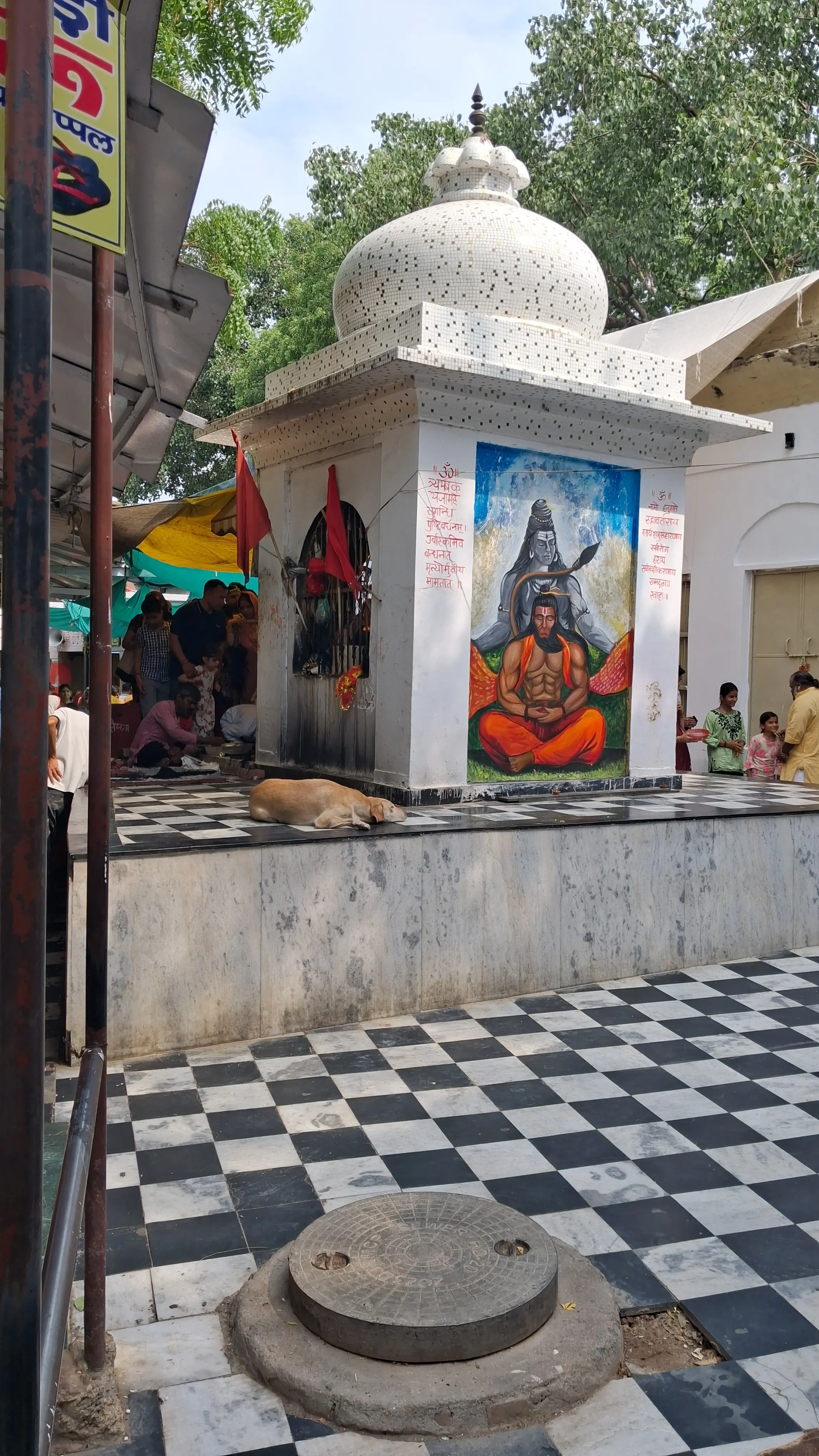
The goddess is worshipped as a stone image on a red sandstone pedestal, holding a trishul, which devotees believe is self-manifested. At the east entrance stand two red sandstone tigers on marble pedestals, with old Urdu inscriptions. Inside the courtyard you will also find a havan shala, a sacred neem tree and tulsi plant, and smaller shrines to Shiva, Hanuman, Ganesha, Lakshmi Narayan, Bhairon and Sita Ram. The temple also has a facility for mundan (first haircut) ceremonies, which many families from across Delhi come here for.
The deity is bathed in milk twice a day, followed by aarti. If you want to see the goddess in full shringar, come just after the morning or evening shringar session ends.
How to offer prayers at Kalkaji Mandir
You do not need a priest or any special preparation for darshan. A simple, respectful sequence works well:
- Wash your hands and feet, and leave your footwear at the shoe stand before entering.
- Carry a small offering: red chunri, red flowers (hibiscus is traditional for Kali), coconut, sweets or a diya. Prasad stalls outside sell ready offering baskets.
- While waiting in the queue, chant a short Kali mantra quietly.
- At the sanctum, offer your items, fold your hands and make your prayer briefly. The queue keeps moving, especially on crowded days.
- After darshan, sit for a few minutes in the courtyard and visit the smaller shrines.
Mantra to chant
Kali mantra
ॐ क्रीं कालिकायै नमः
Om Kreem Kalikayai Namah
Krim (क्रीं) is the bija mantra of Kali. This short mantra can be chanted 11, 21 or 108 times. On Tuesdays, Saturdays and during Navratri, many devotees also recite the Durga Chalisa or the Devi Kavach before darshan.
From our practice: Narendra Kumar Chaubey
When clients ask me which Devi temple to visit in Delhi, I usually suggest Kalkaji first, especially for anyone going through a period of fear, obstacles or delay. Maa Kalka is the form of the goddess who removes what blocks you, so go with one clear prayer rather than a long list. Tuesday or Saturday mornings are best; offer a red chunri and red flowers, and chant “Om Kreem Kalikayai Namah” 11 times while you wait in the queue.
Navratri at Kalkaji Mandir
Navratri, in both Chaitra (March to April) and Sharad (September to October), is the biggest time of year at Kalkaji. A large mela fills the roads around the temple, the queues can stretch for hours, and police and temple volunteers manage barricaded lines. The seventh day, when Maa Kalaratri is worshipped, draws especially large crowds because Kalaratri is closely associated with Kali.
If you plan to visit during Navratri, go very early in the morning on a weekday, carry as little as possible, keep valuables secure and use the metro. Watch the temple’s official announcements for any pass system or route changes for that year.
Other festivals celebrated at the temple include Maha Shivaratri, Janmashtami, Hanuman Jayanti and Vasant Panchami.
How to reach Kalkaji Mandir
By metro (easiest)
Kalkaji Mandir metro station is an interchange on the Violet Line and the Magenta Line, and the temple is a 1 to 2 minute walk from the station. Nehru Place station on the Violet Line is another close option.
By road
The temple is near the Outer Ring Road and the Lotus Temple Road, opposite Nehru Place. Parking near the temple is limited and fills up quickly on Tuesdays, weekends and festivals, so the metro or an auto-rickshaw is usually faster.
From the railway station or airport
From New Delhi railway station, take the Yellow Line to Central Secretariat and change to the Violet Line for Kalkaji Mandir. From Indira Gandhi International Airport (Terminal 1), the Magenta Line runs directly to Kalkaji Mandir station.
Location map
Get directions to Kalkaji Mandir on Google Maps
Tips for visiting
- Best time: early morning on a weekday, between opening and about 8:00 AM, is the calmest.
- Dress: wear modest, comfortable clothes and shoes you can slip off easily. You may stand in a queue for a while.
- Phones and photos: photography is not allowed inside the sanctum. Keep your phone away near the deity.
- Belongings: keep your phone and wallet in a front pocket or closed bag. Pickpocketing is a risk in the crowds, especially during Navratri and in the evenings.
- Water: carry a water bottle if you expect a long queue. Visitors report there are no vendor shops inside the temple.
- Cash: carry small change for offerings, prasad and the shoe stand.
- Elderly visitors: the temple sits on a slight rise and there are steps. Weekday mornings are easier for anyone who cannot stand in long queues.
Places to visit nearby
- Lotus Temple (Bahá’í House of Worship): next door, within walking distance.
- ISKCON Temple, East of Kailash: about 3 km away.
- Nehru Place: across the road, for food and shopping.
What visitors say
Here is what devotees have shared about their visits to Kalkaji Mandir in Google reviews (short excerpts).
“You might have to wait in long queue so would recommend to bring your water bottle as there’s no vendor shop inside the temple. Jai maa Kalka”
Shubham Thakur, Google review
“The temple has a divine atmosphere with constant chants and aartis that make you feel calm and connected. It can get crowded, especially during Navratri…”
Sanskar Kumar, Google review
“I was able to enter without any wait, which was a pleasant surprise. The peace I felt there was incredible.”
Ravindra Kumar, Google review
“Every time we visit India, we feel truly blessed here… The temple is always bustling with bhakts, which adds to its vibrant and spiritual atmosphere.”
Harsh Siwas, Google review
“The darshan was well managed despite the crowd. The temple is clean, the priests are respectful… Visiting during the morning or evening aarti makes the experience even more special.”
Sumit, Google review
Read more Kalkaji Mandir reviews on Google
Frequently asked questions
What are the Kalkaji Mandir timings?
The temple is open from about 4:00 AM to 11:30 PM every day, with short closures in the early morning and evening for shringar and in the afternoon for bhog. Timings change during Navratri.
Is there any entry fee or VIP darshan at Kalkaji Mandir?
Entry and regular darshan are free. Be careful of websites selling “VIP passes”; check the temple’s official announcements before paying anyone.
Which is the nearest metro station to Kalkaji Mandir?
Kalkaji Mandir station, on the Violet and Magenta lines. The temple is a 1 to 2 minute walk from the station.
What is the best day to visit Kalkaji Mandir?
Tuesdays, Saturdays and the Navratri days are considered especially auspicious for Devi worship, but they are also the most crowded. For a peaceful darshan, a weekday morning is best.
Does Kalkaji Mandir close during an eclipse?
No. Unlike most temples, Kalkaji Mandir stays open during solar and lunar eclipses.
Can I take photos inside Kalkaji Mandir?
Photography is not allowed inside the sanctum. You can usually take photos in the outer areas, but follow the instructions of the temple staff.
Why is Kalkaji Mandir called Jayanti Peeth?
Jayanti Peeth and Manokamna Siddha Peeth are traditional names for the temple. Devotees believe Maa Kalka grants the wishes of anyone who prays here with a sincere heart.
How old is Kalkaji Mandir?
Devotees believe the shrine is ancient, linked to the Satya Yuga and the time of the Pandavas. The oldest parts of the current building date to the mid-18th century, with major additions in 1816. A fair at the shrine is recorded as early as 1738.
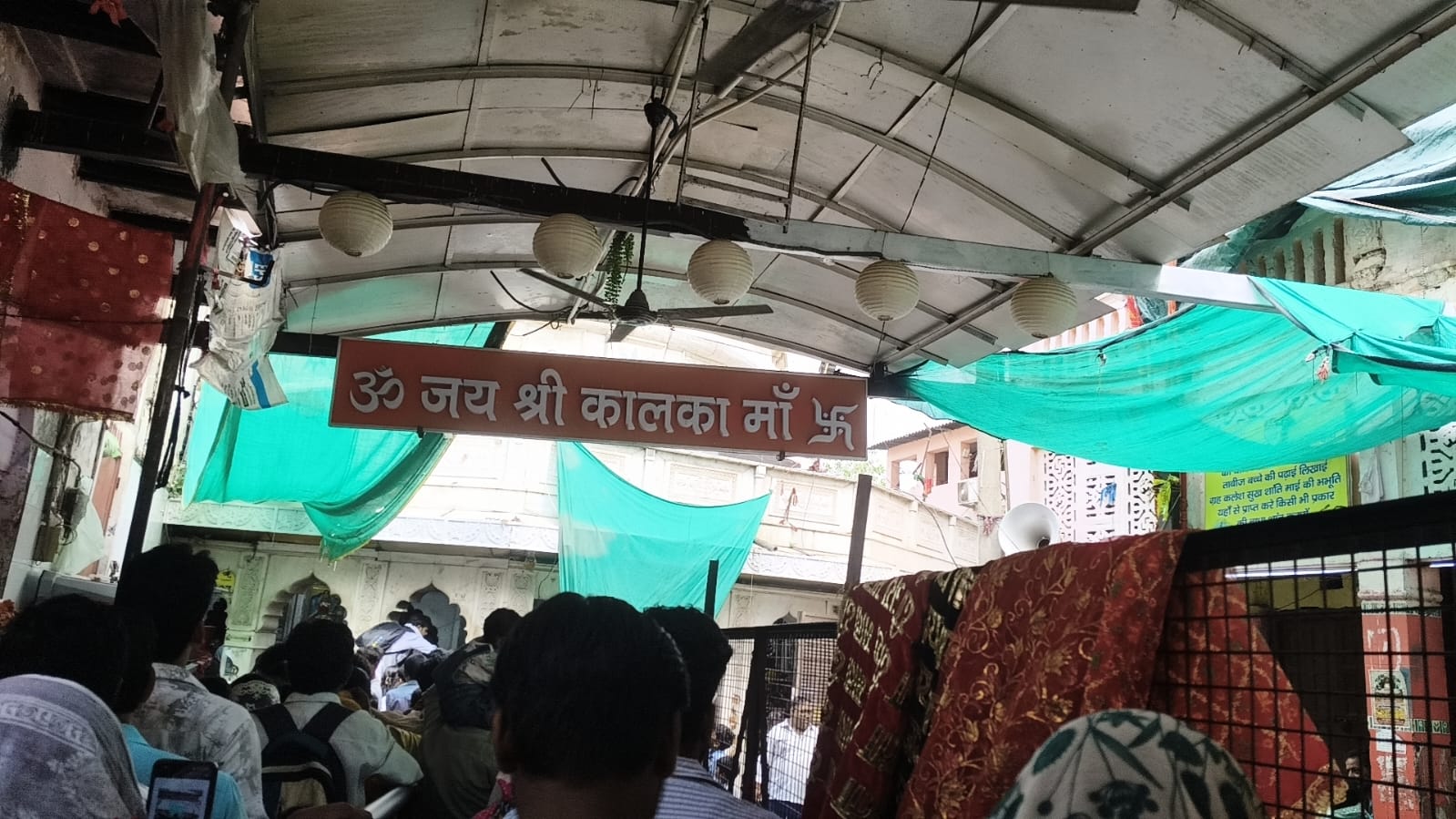
Kalkaji Mandir photo gallery
Sources
- Kalkaji Mandir, Wikipedia (history, architecture, legend)
- कालकाजी मंदिर, दिल्ली, Hindi Wikipedia (Jayanti Peeth, Suryakuta Parvat, 1738 fair)
- Shri Kalkaji Mandir, Bhakti Bharat (timings, festivals, eclipse tradition)
- Delhi High Court approves Kalkaji redevelopment plan, India Legal (December 2023)
- Devi Mahatmya (Markandeya Purana), chapters 7 and 8: the Raktabija episode
Also read on ABMantra:
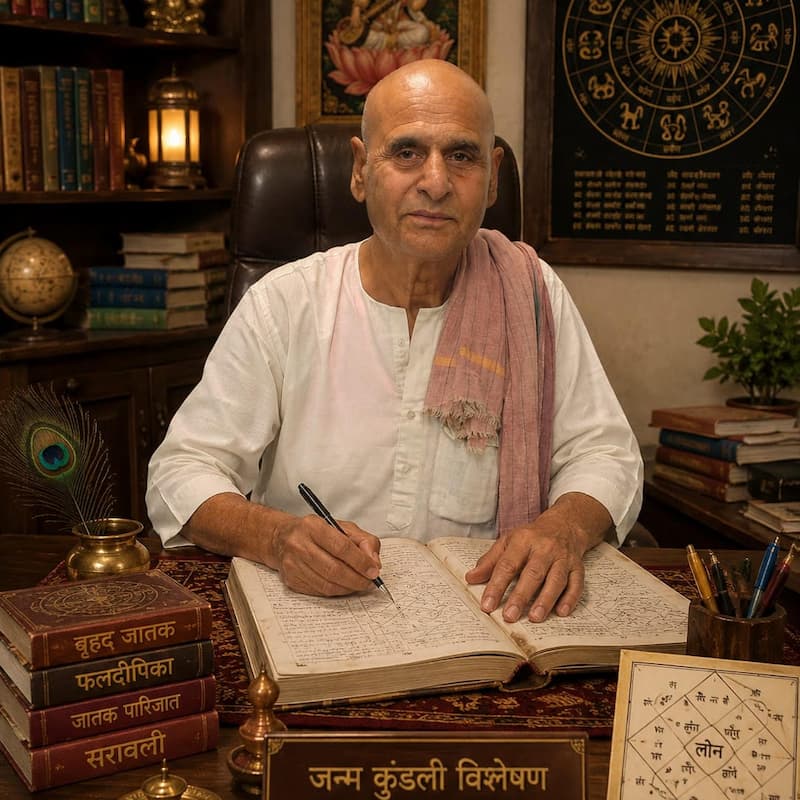
Narendra Kumar Chaubey is a Jyotisha Acharya with over 30 years of experience, based in Bihar and serving clients across India in Vedic astrology, mantra shastra, Vastu and ritual practice.
He completed his formal training at Kameshwar Singh Darbhanga Sanskrit University (KSDSU), one of India’s oldest and most respected institutions for Vedic and Sanskrit scholarship, where he studied Jyotisha shastra, mantra vidya and related classical sciences. KSDSU’s tradition of rigorous Sanskrit education tracing directly to the Mithila region’s centuries-old pandit lineage forms the foundation of his practice.
Over three decades, Narendra Kumar Chaubey has worked with thousands of individuals and families across Bihar and across India, offering guidance in:
- Kundli (birth chart) analysis: Identifying karmic patterns, planetary periods and life path guidance through classical Jyotisha
- Palmistry (Hasta Samudrika): Reading the hand according to the classical Samudrika Shastra tradition
- Vastu Shastra: Assessment and correction of living and working spaces according to directional and elemental principles
- Mantra and Pooja vidhi: Performing and guiding all categories of puja, havan, and mantra sadhana for personal, family and business situations
- Predictive Jyotisha: Transit analysis, muhurta (auspicious timing) selection and remedial guidance
He works across four languages Sanskrit, Hindi, English and Bhojpuri making classical knowledge accessible to practitioners across educational backgrounds and regions.
His writing for ABMantra brings the precision of classical Vedic training to practical mantra guidance: not general advice but specific prescriptions grounded in shastra, lineage and 30 years of direct practice with real situations.
For more info follow on: