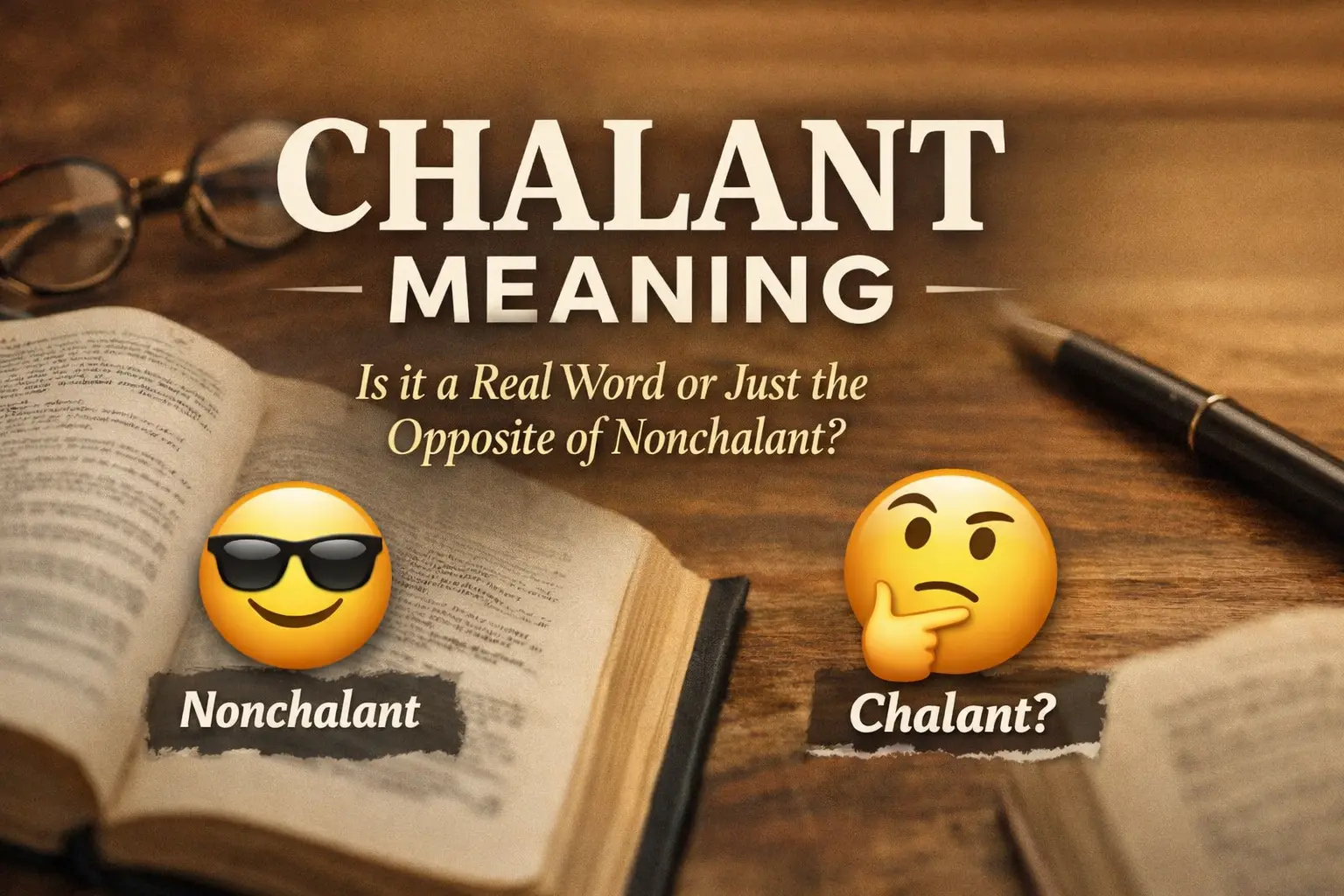

Chalant meaning has quietly become one of those internet-born language puzzles that makes people pause and smile. You might have seen it in a meme, a WhatsApp chat or an Instagram caption where someone writes, “I’m very chalant about this.” It feels logical, sounds real and yet it raises an honest question: Is “chalant” actually a real word or is it just people playing with English?
This article answers that question clearly and simply. It explains where the word comes from, how dictionaries treat it, how people use it today in chats and social media and whether you should use it yourself. No jargon. No fluff. Just clear meaning, real examples and everyday context.
What Does “Chalant” Mean?
In modern usage, chalant is usually used as the opposite of nonchalant, meaning attentive, concerned or showing interest. However, most language experts agree that it is not a standard, commonly accepted English word. It exists mainly as an informal or playful back-formation used in speech, writing and online conversations.
That short answer already tells you half the story. The full picture becomes more interesting once you see how the word entered English thinking in the first place.
Where “Nonchalant” Comes From and Why “Chalant” Feels Missing
To understand chalant meaning in English, you need to look at nonchalant first.
The word nonchalant comes from French. It traces back to the verb “chaloir”, which meant to care or to concern oneself. Over time, French speakers formed “nonchalant”, literally meaning not caring. English borrowed nonchalant fully formed, with its relaxed, cool tone intact.
Here’s the key detail:
English borrowed nonchalant, but never adopted “chalant” as a common standalone word.
So what happened?
English has many words like this. Linguists call them unpaired words. They sound like they should have an opposite, but they don’t. Think about how disheveled exists, but sheveled does not. Ruthless exists, but ruthful sounds strange to most people.
“Chalant” falls into this same category.
That said, language is shaped by people, not rulebooks alone. When speakers noticed that nonchalant looked like it was missing its other half, they filled the gap themselves. That’s how chalant was born into casual use.
Is “Chalant” in the Dictionary?
This is where things get nuanced.
Some online dictionaries and language resources list chalant as a nonce word, meaning a word created for playful or limited use. These entries usually describe it as not nonchalant or showing concern or interest.
Major traditional dictionaries, on the other hand, usually do not treat it as standard English. When they mention it at all, they label it as informal, humorous or rare.
So yes, chalant meaning is recorded, but mostly with warnings about its status.
This distinction matters if you care about tone. In formal writing, school assignments, job applications or professional emails, chalant still feels out of place. In relaxed settings, the word feels clever and expressive.
Chalant Meaning in Daily Life: How People Actually Use It
Language today spreads faster through phones than through books. That’s where chalant meaning in chat and Instagram truly comes alive.
On social platforms, people often use chalant with a wink. It feels ironic, light and self-aware. Here are examples you may recognize instantly:
“I’m being very chalant about this deadline.”
“Don’t worry, I’m extremely chalant today.”
“He pretends to be chill, but trust me, he’s very chalant.”
In these sentences, chalant signals care, attention or emotional involvement. The word adds humor because readers already know it isn’t fully official.
This style of usage works because modern audiences enjoy language play. It signals confidence and cultural awareness, especially among younger readers who live in fast, expressive digital spaces.
Chalant Meaning Example: Clear Context Matters
Let’s ground this further with a few clearer examples.
Imagine two people waiting for exam results.
If someone says, “I’m completely nonchalant,” you picture calm detachment.
If they say, “I’m very chalant,” you immediately picture nervous energy, checking the phone, pacing the room, biting nails.
That emotional contrast explains why the word stuck.
Chalant meaning example sentences often work best when emotion is involved. The word carries a sense of care, concern or alertness that contrasts with indifference.
Chalant vs Nonchalant: Understanding the Contrast
Many people look for chalant vs nonchalant comparisons and for good reason. The pair feels natural even if only one is officially established.
Nonchalant describes someone who appears calm, unconcerned and effortless. Picture someone sipping tea while chaos unfolds around them.
Chalant, in contrast, describes the opposite behavior. The person notices details, reacts emotionally and shows involvement.
The pair works well in speech because the contrast is immediate and intuitive. Even readers who have never seen chalant before usually understand it on the first read.
That instant clarity is one reason the word continues to spread despite its unofficial status.
Chalant Meaning in English: Is It Wrong to Use?
This is the question many readers care about most.
Using chalant is not wrong in casual language. It becomes questionable only when precision and formality matter.
If you are writing:
- academic essays
- news articles
- official reports
- professional emails
then safer words like attentive, concerned, engaged or alert work better.
If you are chatting with friends, writing captions, posting on social media or using playful personal writing, chalant fits right in.
Language rules are not just about correctness. They are also about expectations. Right now, chalant signals informality, creativity and cultural awareness.
Chalant Meaning in Instagram and Online Culture
Instagram captions thrive on short, sharp language that feels personal. That’s where chalant meaning in Instagram becomes especially useful.
Captions like “Trying to act chill but very chalant inside” work because they combine humor with emotion. The word mirrors how people actually feel in high-pressure moments, from job interviews to family weddings.
Online culture rewards relatability. Chalant sounds human because it admits feeling invested rather than pretending to be cool.
This emotional honesty explains why the word often appears in posts about relationships, exams, work stress and life changes.
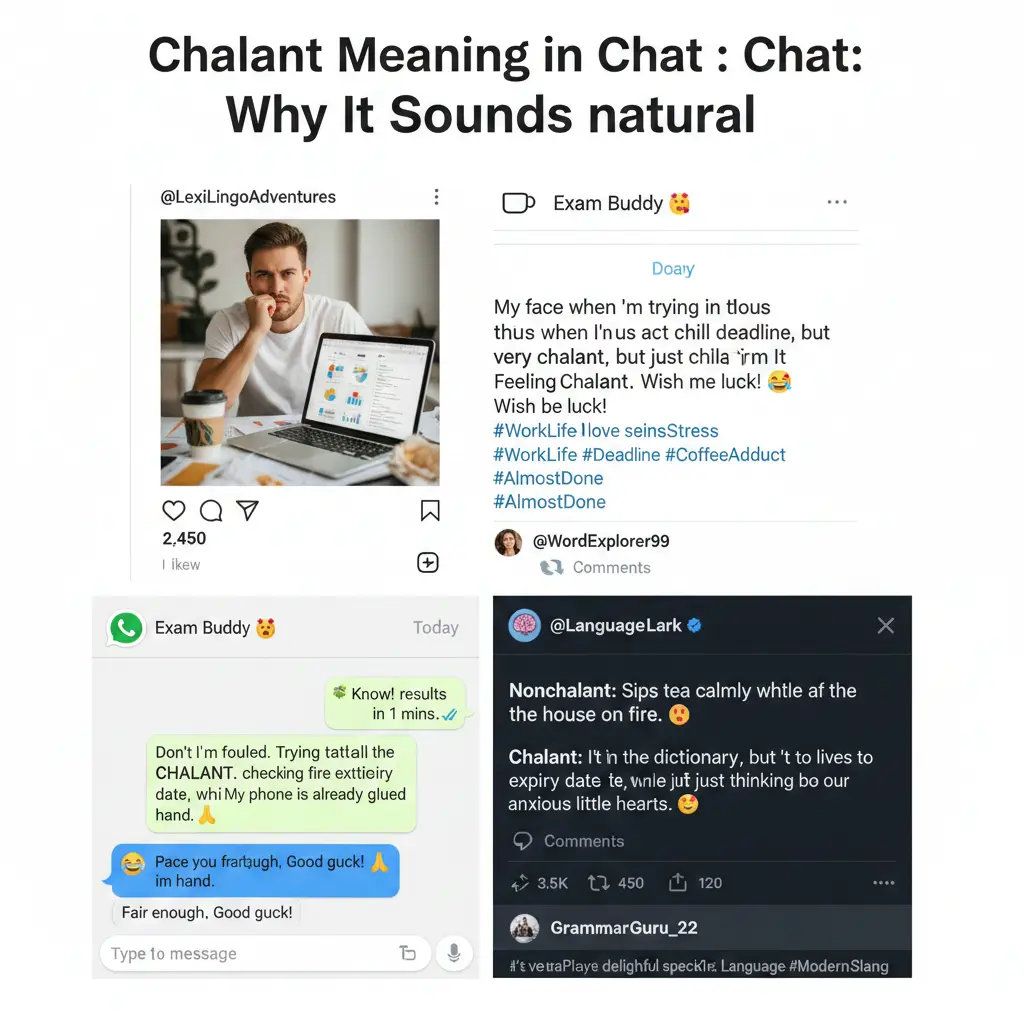
Chalant Meaning in Chat: Why It Sounds Natural
In chats, people value speed and clarity. Chalant works because it saves words.
Instead of typing “I’m feeling very emotionally involved and anxious about this,” someone writes “I’m chalant.” The message still lands.
This efficiency makes the word attractive in texting culture, especially among younger speakers who constantly compress language.
Chalant Meaning in French and Spanish: Common Confusion
Many readers search for chalant meaning French or chalant meaning Spanish expecting direct equivalents.
In French, the historical root exists, but chalant itself is not commonly used today the way English speakers use it online. Native French speakers rely on other words to express care or concern.
In Spanish, there is no commonly used equivalent word that mirrors chalant directly. Spanish expresses the idea using phrases rather than a single standalone term.
So when English speakers use chalant, they are not borrowing a living foreign word. They are reshaping English using familiar patterns.
Should You Use “Chalant” in Writing?
This comes down to audience awareness.
If your reader expects clarity, warmth and a conversational tone, chalant works. It adds texture and personality.
If your reader expects formality and standard grammar, choose safer alternatives. Words like attentive or concerned remove any doubt.
Pro-tip from experience:
When you use playful words like chalant, context matters more than correctness. One well-placed sentence makes you sound clever. Repeating it too often makes the writing feel forced.
Why “Chalant” Keeps Gaining Attention
Language grows where logic meets emotion.
People noticed a gap. They filled it. Others understood it instantly. That’s how new expressions survive.
Chalant feels satisfying because it follows a pattern English speakers already recognize. It also captures emotional states that modern life produces daily: stress, care, anticipation, attachment.
As long as people enjoy bending language with intention, chalant will remain part of casual English.
Quick Recap: Chalant Meaning in Simple Words
Chalant meaning refers to being attentive, concerned or emotionally involved, usually used as a playful opposite to nonchalant. It appears mostly in informal language, chats and social media. Dictionaries acknowledge it cautiously and its use depends on tone and context rather than strict grammar rules.
ALSO Read: What do you mean by AB?
FAQs:
Is chalant a real English word?
Chalant appears in some dictionaries as an informal or nonce word, but major dictionaries do not treat it as standard English. It is widely understood in casual speech and online use.
What does chalant mean in simple terms?
Chalant usually means caring, attentive or emotionally involved, often used as the opposite of nonchalant in informal contexts.
Can I use chalant on Instagram or in chats?
Yes, chalant fits naturally in captions, chats and casual writing where playful language feels appropriate and engaging.
What is the difference between chalant and nonchalant?
Nonchalant describes calm detachment, while chalant suggests active concern or interest in a situation.
Does chalant exist in French or Spanish?
The historical root exists in French, but chalant is not commonly used today and there is no direct modern equivalent in Spanish.
Should I avoid using chalant in formal writing?
Yes, in professional or academic writing, standard words like attentive or concerned are safer choices.

Pankaj Tripathi is a content marketer with over 6 years of experience. With experience in the industries of Education, Technology, B2B SAAS, e-commerce, and the hospitality sector, Pankaj brings a wealth of knowledge to his writing. In his initial role, he supported over 100 writers in creating content for diverse fields such as finance, medicine, insurance, and media and publications.