


Different kinds of clothes for different seasons shape how people in India live, work, travel and feel each day. The weather in India changes a lot. In Jaipur, it gets very hot in summer. Mumbai has humid monsoons. Delhi has foggy mornings in winter. What we wear impacts our energy, skin comfort, and confidence.
Seasonal dressing is not about fashion trends. It is about reading the weather and understanding fabrics. You need to choose clothes that support your body. This is important for long hours, crowded commutes, family gatherings, and changing routines. This guide explains what works, why it works and how to dress well across Indian seasons without effort.
Why season matters when choosing clothes
The human body constantly adapts to temperature and humidity. In summer, sweat cools the skin. In monsoon, moisture lingers in the air. In winter, heat escapes rapidly, especially from exposed areas.
Clothes act as a layer between the body and the environment. When fabrics fight the weather, the body feels tired faster. When fabrics cooperate, daily life feels easier. In India, where outdoor exposure is unavoidable, season-appropriate clothing supports comfort, health and mobility.
Summer season: light, breathable and sweat-friendly clothes
Indian summers feel unforgiving. Hot air, sharp sunlight and humidity drain energy if clothes trap heat. Summer outfits must feel light the moment they touch the skin.
Cotton remains the most reliable fabric for this season. It absorbs sweat and allows airflow, which keeps the body cool during long afternoons. Linen feels crisp and airy, especially in dry regions. Khadi, deeply rooted in Indian culture, balances breathability with durability and works well for daily wear and offices.
Loose silhouettes outperform tight fits. Flared kurtas, cotton shirts, palazzos, relaxed trousers and flowy dresses reduce friction and skin irritation. Light colours such as white, ivory, pastel blue and soft yellow reflect heat instead of absorbing it.
Footwear also affects comfort. Open sandals, kolhapuris and breathable slip-ons allow ventilation and prevent odor. Heavy synthetic fabrics often cause rashes and sweating, making natural fibers the safer choice.
Personal pro-tip from experience:
If a summer fabric feels uncomfortable within the first hour, it will feel unbearable by noon. Many clothes look airy on the hanger but turn sticky once sweat builds up. Wearing a new outfit for an hour at home quickly reveals if it can survive a real Indian summer day.
Monsoon season: quick-dry, flexible and easy-to-maintain clothes
Monsoon brings relief from heat but introduces dampness and unpredictability. Clothes take longer to dry, roads splash mud and humidity clings to the skin.
Lightweight cotton blends and quick-dry fabrics perform better because they release moisture quickly. Cropped pants, ankle-length trousers and shorter hemlines reduce soaking from puddles. Darker tones like navy, olive, maroon and charcoal hide rain marks and stains better.
Heavy embroidery and thick fabrics feel uncomfortable during rains. Simple kurtas, tunics and wrinkle-resistant shirts remain manageable for daily movement. Many people prefer fabrics that do not demand ironing in high humidity.
Footwear needs grip and flexibility. Waterproof sandals, rubber soles, or treated leather reduce slipping on wet roads. Shoes with airflow dry faster than heavy sneakers.
Monsoon clothes must dry fully before storage. Even slightly damp fabric invites odor and mold inside wardrobes.
Winter season: warm layers that trap heat
Winters vary across India. Northern cities face cold winds and fog, while southern regions experience mild chills. Winter dressing focuses on insulation rather than airflow.
Layering works best. A soft base layer sits close to the skin and traps warmth. Cotton thermals or light wool perform well. The mid-layer, such as a sweater or fleece, adds insulation. An outer layer blocks wind through jackets, coats, or shawls.
Wool remains the most dependable winter fabric. It traps warm air and regulates temperature even when slightly damp. Cashmere feels light and luxurious, while blended wool offers warmth at a practical cost. Office wear often pairs shirts with sweaters for balance.
Accessories matter in winter. Mufflers, gloves, wool socks and caps protect areas where body heat escapes quickly. Dark shades like grey, brown, navy and forest green suit winter dust and fog.
Personal pro-tip many people learn late:
Most focus on jackets and ignore the base layer. A poor inner layer makes even the best jacket feel ineffective. A soft cotton or light wool base keeps warmth close to the body and prevents sweat chills during early-morning commutes.
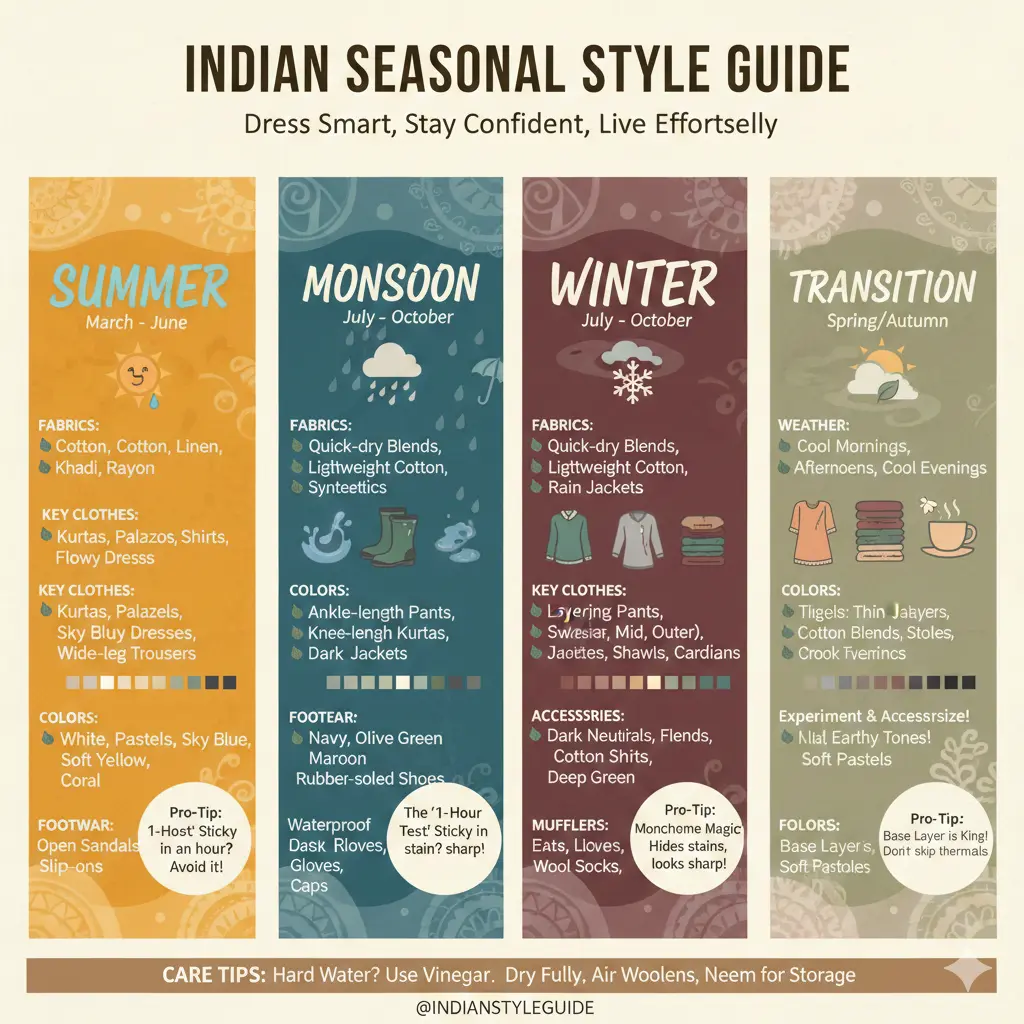
Spring and autumn: clothes for changing weather
Transition seasons bring unpredictability. Mornings feel cool, afternoons warm up and evenings cool down again.
Light layering works best. Cotton shirts with thin jackets, kurtas paired with stoles and breathable trousers allow easy adjustment. Medium-thickness fabrics help the body adapt without sudden discomfort.
These seasons invite experimentation. Floral prints, earthy tones and soft pastels reflect festive moods and social gatherings common during this time.
Fabrics explained: what works best in each season
Fabric choice affects comfort more than design. Cotton absorbs moisture and suits heat. Linen stays cool but wrinkles easily. Wool traps heat and regulates temperature. Silk feels smooth but suits dry weather. Synthetic blends dry fast and resist creases but can trap heat in summer.
Understanding fabric behavior helps smarter shopping, especially in India’s varied climate.
Different kinds of clothes for different seasons women rely on
Seasonal dressing for women in India balances comfort, movement and grace. Daily life often involves long travel, work tasks, family duties, and social events. This requires clothes that work well from morning to night.
During summer, breathable cotton kurtas, airy sarees, mulmul dupattas and relaxed palazzos keep the body cool. Loose sleeves and natural dyes reduce heat absorption, while lighter colours feel calming under direct sun. For office wear, cotton straight-fit kurtas with soft trousers maintain structure without stiffness.
In the monsoon season, practicality becomes essential. Knee-length kurtas, ankle-cropped pants and cotton-synthetic blends stay manageable in damp weather. Darker tones and subtle prints hide rain splashes, which reduces stress during daily commuting.
Winter dressing often depends on layering instead of bulk. Soft woollen shawls, knitted cardigans, full-sleeve kurtas and thermal leggings provide warmth without restricting movement. Fabrics that feel gentle on the skin matter because winter dryness can cause irritation.
Different kinds of clothes for different seasons women choose work best when fabric comfort leads and silhouettes allow ease. When clothes support everyday rhythm, confidence follows naturally.
Different kinds of clothes for different seasons men should know
Men often rely on a limited wardrobe, yet seasonal dressing can remain simple and effective.
In summer, cotton shirts, breathable t-shirts and light chinos allow airflow and reduce sweating. Monsoon dressing benefits from quick-dry shirts, wrinkle-resistant trousers and darker colours that survive rain splashes. A lightweight rain jacket adds function without heaviness.
Winter dressing focuses on layers. Shirts under sweaters or sweatshirts, paired with jackets, retain warmth while staying mobile. Denim or wool trousers with inner layers protect against cold winds. Scarves and socks quietly boost comfort.
Different kinds of clothes for different seasons men wear should place comfort before style. When fabric suits the weather, outfits feel effortless and sharp.
Looking stylish while staying practical through the seasons
Comfort does not cancel style. Small choices make seasonal outfits look intentional rather than purely functional.
Monochrome outfits work especially well during monsoon. A navy kurta with matching trousers or a charcoal shirt with dark chinos hides water stains while creating a clean, confident look. Simplicity feels sharper in gloomy weather.
Summer style improves through texture rather than layers. Cotton slub shirts, handloom kurtas and light weaves add visual interest without trapping heat. Clean fits and rolled sleeves enhance appearance without effort.
Winter outfits gain depth through contrast. Neutral inner layers paired with darker jackets or shawls create structure without bulk. When layers feel deliberate, even simple outfits look refined.
Practical style works best when clothes move naturally with the body and suit the season.
Shopping smart: building a seasonal wardrobe
Thoughtful wardrobes reduce clutter and save money. Instead of trend-driven pieces, season-friendly essentials offer long-term value.
Summer wardrobes rely on breathable basics. Monsoon wardrobes need quick-dry, low-maintenance clothes. Winter wardrobes benefit from quality layers rather than many heavy garments. Transition seasons work best with adaptable pieces.
Natural fabrics last longer and suit Indian conditions better. Local textiles such as khadi also support artisans while solving real weather challenges.
Care and storage tips across seasons
Seasonal care extends clothing life. Summer clothes need frequent washing with gentle drying. Monsoon clothes must dry completely before storage. Winter woolens benefit from airing instead of repeated washing. Transition-season clothes need rotation.
Proper hangers, breathable covers and occasional sunlight protect clothes effectively without effort.
Conclusion:
When fabrics, fits and seasons align, clothes stop fighting the weather and start supporting daily life. Comfort improves, confidence settles in and getting dressed becomes a quiet strength rather than a daily struggle.
FAQs About Different kinds of clothes for different seasons
What are the best clothes for Indian summer?
Cotton, linen, and khadi are the best choices. They absorb sweat, let air flow, and reduce skin irritation. This is important during hot and humid Indian summers.
Which clothes suit the monsoon season?
Quick-dry fabrics, light blends, darker colors, and shorter hemlines are great. They dry quickly and handle damp conditions well.
How should men dress in winter in India?
Men should wear layered clothing. This includes cotton thermals, wool sweaters, and jackets. These layers help keep them warm and adjust to temperature changes easily.
Why is fabric choice important for seasons?
Fabric controls airflow, moisture absorption and heat retention, which directly affects comfort, skin health and weather adaptation.
Can one outfit work across seasons?
Yes, versatile pieces like cotton shirts, neutral trousers and light jackets adapt across seasons with layering and fabric changes.
Which fabrics should be avoided in summer?
Heavy synthetic fabrics should be avoided because they trap heat and sweat, often causing rashes and discomfort.
How many seasonal clothes should a man own?
A balanced seasonal wardrobe includes around 8 to 12 essential pieces per season for rotation without overcrowding.
How should seasonal clothes be stored?
Clothes should be cleaned, fully dried and stored in breathable covers with sunlight exposure and natural repellents like neem.

Bhawna Anand is a talented content writer and editor with over 5 years of experience crafting engaging stories for Abmantra. She specializes in Fashion, Lifestyle, and Spiritual content, along with expert guides on Festivals, Gifting, and Ecommerce. Bhawna’s informative writing style has been instrumental in building Abmantra’s loyal readership and vibrant online community.
When not at work, Bhawna enjoys traveling the world, which often inspires her to write captivating travel pieces that transport readers to new destinations. She also loves to sing, cook, and read good novels.