
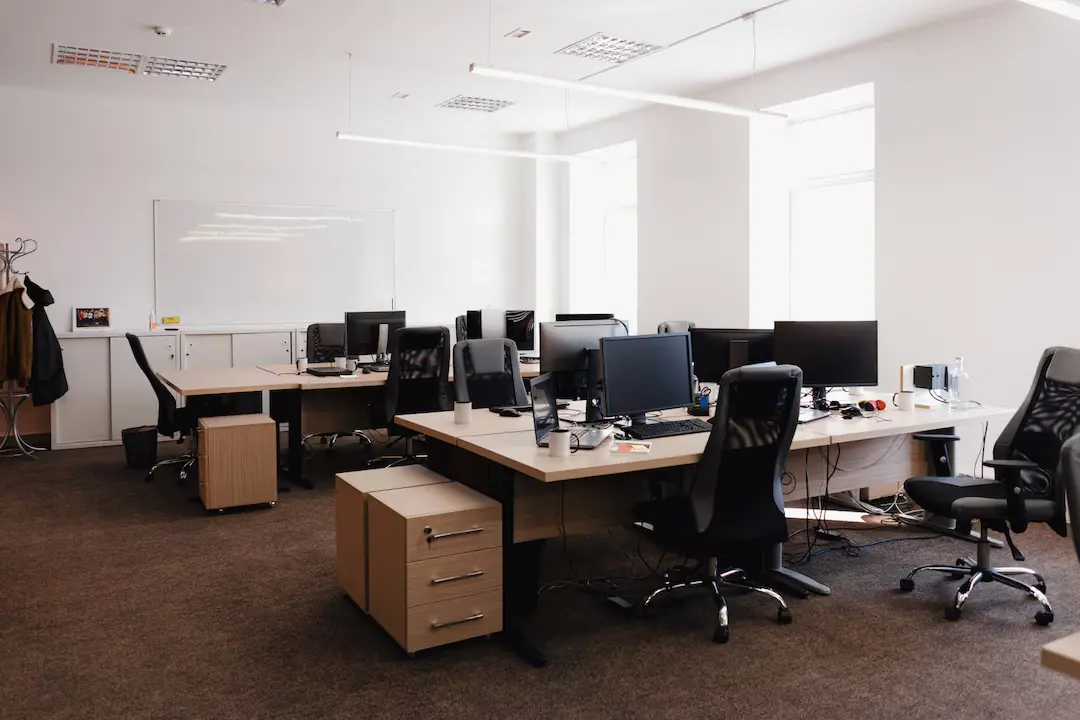

Most office decisions look efficient at the start. Rent is negotiated. Numbers are approved. The model seems clear. The shift usually happens after possession. Timelines stretch a bit. Vendors don’t align exactly as planned. Internal teams get pulled into discussions they were not supposed to be part of.
Costs don’t spike suddenly, but they start adding up in smaller layers. That’s where Renting Office Space in Hyderabad becomes less about rent and more about how much operational load the business is taking on.
What Renting Office Space Means in Modern Offices
At a basic level, the choice looks simple. Lease the space and build it out. Or move into a serviced setup and start working. In practice, the difference is not about space. It’s about responsibility. A leased office gives control, but also shifts execution to the company’s design, timelines, vendor coordination, and ongoing maintenance. Everything sits internally.
A serviced office removes most of that layer. The space is ready. Operations are already running. The company steps into an environment that works from day one. In many Grade A office spaces, both models exist side by side. The real question is not which is better. It’s how much complexity the business is willing to manage.
The Cost That Doesn’t Show Up in Initial Numbers
Leased offices almost always look more cost-efficient at first glance. The rent per square foot is lower. On paper, it feels like the better decision. But that number rarely stays isolated. In large-scale office operations, additional costs start appearing gradually, such as fit-outs, project delays, infrastructure upgrades, and vendor dependencies.
None of these is unexpected, but they tend to be underestimated. The challenge is not visibility. It’s an accumulation. Serviced offices compress most of this into one structure. The number may look higher upfront, but it removes variability. That difference only becomes clear after a few months of operations.
Where Time Quietly Becomes a Cost
Time rarely gets budgeted in office decisions. It should. In Office Space in Hitec City, it’s common to see a gap between lease signing and full operational readiness. Sometimes 60 days. Sometimes more, depending on scale. During this period, hiring often continues. Teams operate from temporary setups.
Productivity becomes inconsistent not because of people, but because the environment isn’t stable yet. Serviced setups change that equation. Teams move in and start working almost immediately. The advantage is not just speed, it’s continuity.
Managing an Office is a Function in Itself
Leased offices bring flexibility. They also bring coordination. Multiple vendors. Parallel timelines. Dependencies across design, IT, security, and facilities. Even with strong project management, things don’t always move in a straight line.
In Office Space in Gachibowli, where enterprises operate at scale, this often turns into an ongoing operational layer. Not temporary, continuous. Serviced offices absorb that layer. The complexity doesn’t disappear, but it shifts away from internal teams. That shift is where a lot of hidden costs sit.
Scalability Looks Different in Practice
Growth rarely follows projections exactly. Teams expand faster in some quarters, slower in others. Leased offices are structured around defined capacity. Once that threshold is reached, expansion requires fresh investment more space, more setup, more time.
In Office Space in Madhapur, companies in high-growth phases often run into this limitation earlier than expected. Serviced environments handle this differently. Expansion happens within the same ecosystem. Less disruption. Less rework. Fewer decisions under pressure.
Predictability vs Control
Leased offices offer control. Every element can be customised, negotiated, adjusted. But predictability becomes harder. Costs don’t always stay within initial assumptions, especially when operations evolve. Serviced offices trade some control for consistency.
Costs are more stable. Operations are standardised. In Office Space in Knowledge City, this difference becomes relevant for companies planning long-term presence but still dealing with evolving team structures.
The Cost of Leadership Attention
One part rarely discussed is how much leadership attention the office continues to demand. Leased setups don’t end at possession. Issues come up. Vendors need escalation. Decisions keep coming back. Individually small. Collectively time-consuming. Serviced offices reduce that loop. The office runs in the background. Leadership engagement stays focused on business, not infrastructure.
Where the Decision Actually Sits
The leased versus serviced debate often gets framed as cost versus convenience. That framing misses the point. The real decision is about the operating model. In many Grade A office spaces, companies are not choosing one over the other. They are aligning the model with business stage leased for stable, predictable operations, serviced for speed, flexibility, or new market entry.
Closing Perspective
Office costs are rarely wrong at the time of approval. They become misaligned over time. While evaluating Office Space in Hyderabad, the sharper question is not which option is cheaper today. It is which one will continue to make sense once teams grow, timelines tighten, and operations become less predictable. Because the visible cost is only one part. The rest shows up later in time, in attention, and in how smoothly the business runs after the decision is made.

This article has been written by the AB Mantra Team, a group of passionate writers and researchers covering topics across fashion, travel, finance, health, education, technology, lifestyle and business. Our goal is to share accurate, easy-to-understand, and helpful information that adds real value to readers. Each piece is carefully reviewed to maintain clarity, reliability and trust.