
A kashmiri shawl is not just winter clothing. It is warmth from the Himalayas, woven with centuries of craftsmanship, faith and family tradition. When you place a real kashmiri pashmina shawl on your shoulders, you feel something rare soft fibers that almost melt against the skin, light as mountain air yet deeply warm.
In Indian homes, shawls are gifted at weddings, draped over elders during ceremonies and treasured like heirlooms. From Srinagar’s bustling markets to bridal trousseaus in Delhi and Mumbai, the Kashmiri shawl carries culture, pride and timeless elegance.
This guide explains the history, types, materials, 2026 price reality and smart buying tips so you invest wisely.
What Is a Kashmiri Shawl?
A Kashmiri shawl is a handcrafted wrap made in the Kashmir Valley using fine wool or pashmina fiber. Artisans weave it on traditional wooden looms and often decorate it with detailed embroidery such as Sozni or weave complex Kani patterns directly into the fabric.
Unlike a standard winter shawl, a genuine Kashmiri shawl feels feather-light but provides exceptional warmth. Women wear it over sarees, lehengas, salwar suits and dresses. Men drape it during weddings and formal gatherings as a symbol of dignity.
The most premium category is the pure pashmina shawl, crafted from Changthangi goat wool sourced in Ladakh.
The Glorious History of Kashmiri Shawls
The story begins in the Mughal era. Emperor Akbar admired Pashmina deeply and promoted its weaving. Royal courts valued these shawls as symbols of refinement and authority.
Soon, European traders introduced Kashmiri shawls to France and England. Aristocratic women in Paris admired their delicate paisley patterns and whisper-soft texture. The design became globally iconic.
Even today, artisans in Srinagar, Budgam and Anantnag continue the same craft. Many families have woven shawls for generations. Some intricate pieces take months to complete by hand.
When you buy authentic work, you support this living heritage.
Types of Kashmiri Shawls
Each type differs in fiber, weave, artistry and price.
Kashmiri Pashmina Shawl
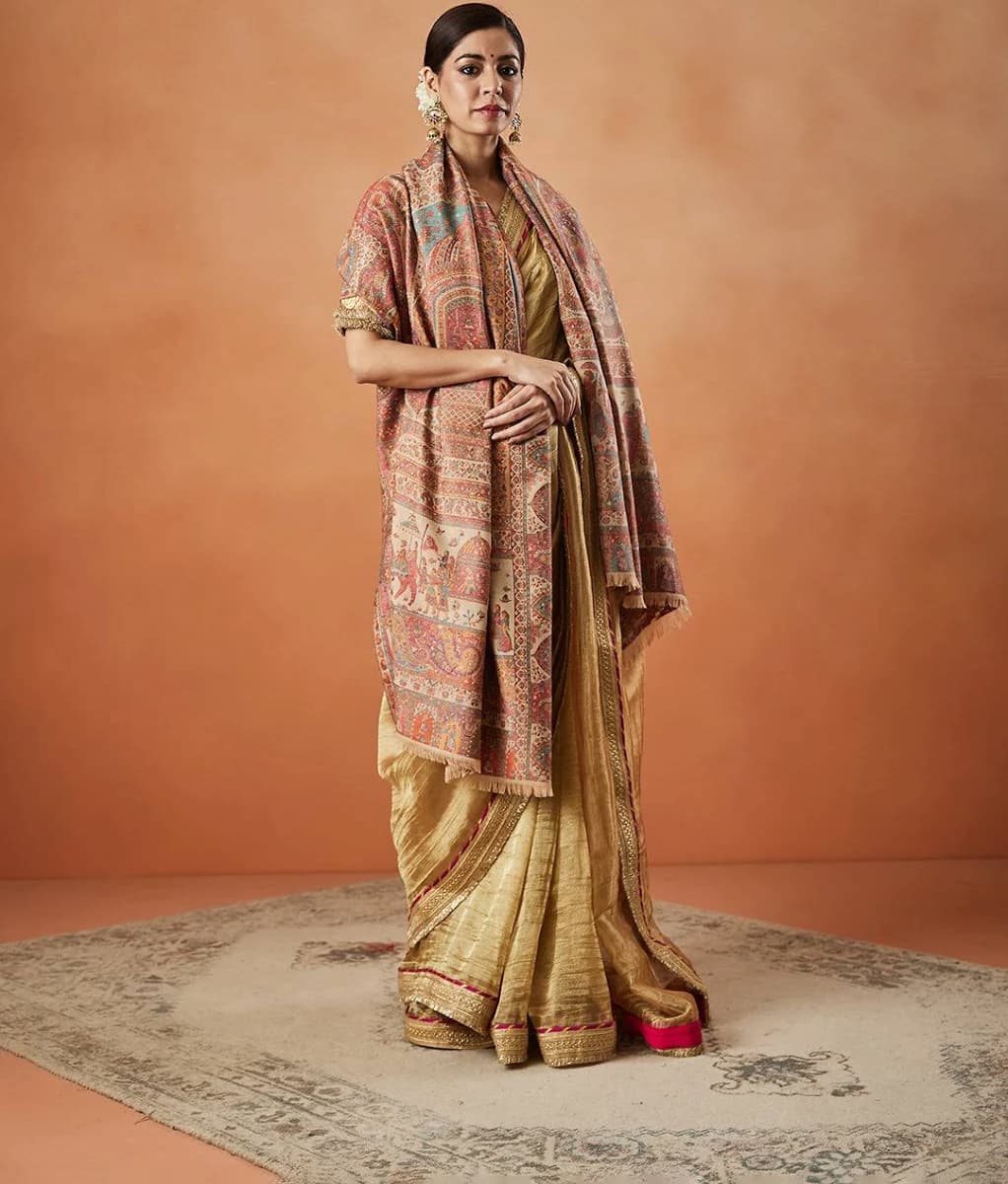
The kashmiri pashmina shawl uses fine undercoat fibers of the Changthangi goat. It feels luxuriously soft and breathable. Women often choose it for weddings or gifting.
Pure Pashmina Shawl
A pure pashmina shawl contains 100% hand-spun, hand-woven pashmina fiber. No silk blends. No synthetic mix. It offers heirloom quality.
Kani Shawl
Kani shawls use small wooden sticks called kanis to weave intricate floral patterns directly into the fabric. These fall under heritage designer shawl categories and appeal to collectors.
Sozni Embroidery Shawl
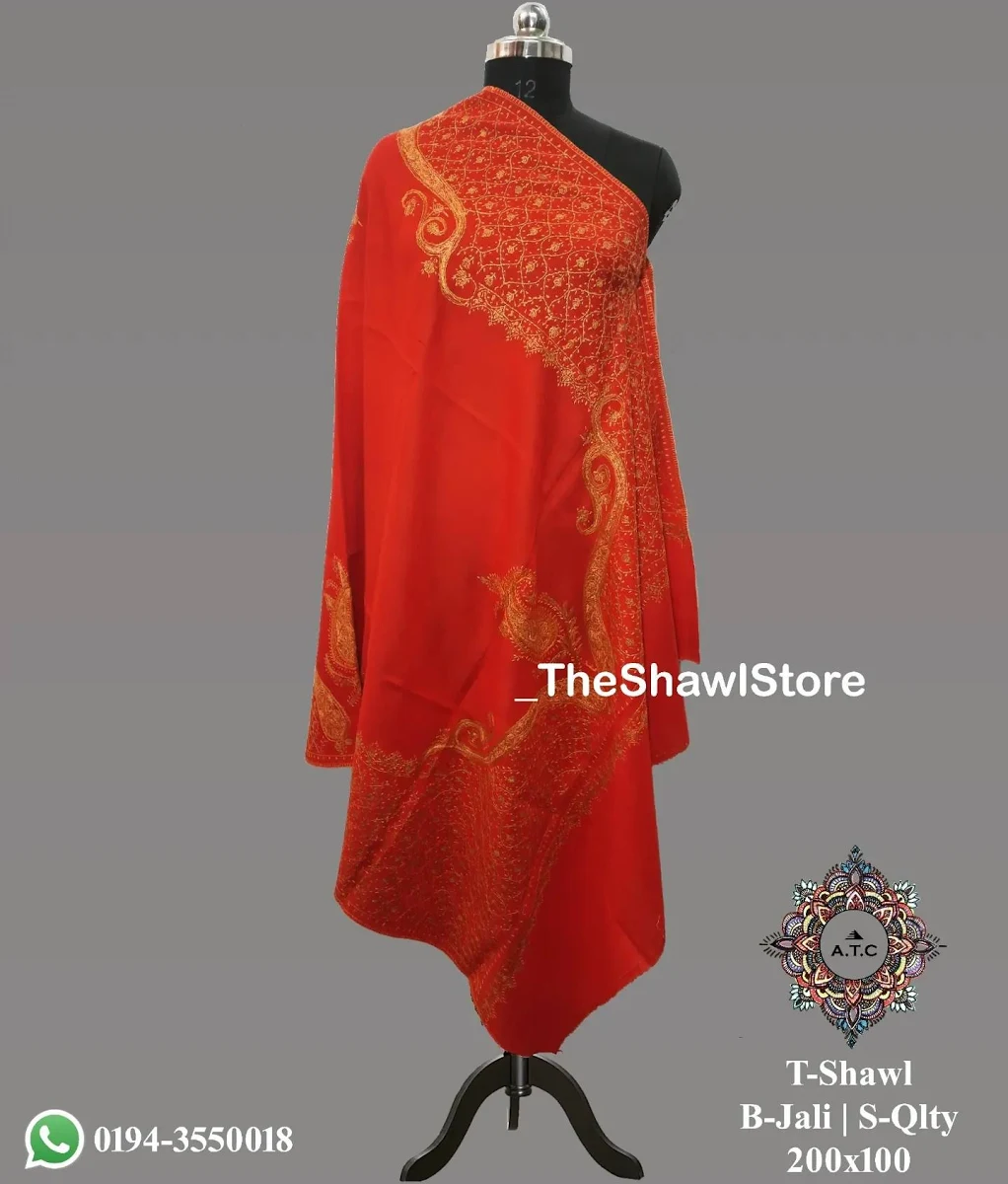
Sozni is fine needle embroidery stitched by hand. It transforms a simple wool base into a party wear shawl with royal detail.
Silk Shawl and Woolen Shawl
A silk shawl offers shine and elegance, ideal for festive occasions. A woolen shawl for winter feels thicker and works well in colder North Indian climates. Many women prefer a ladies woolen shawl for everyday warmth.
Materials & Craftsmanship
When you touch a genuine Kashmiri shawl, you notice three things instantly softness, warmth and lightness.
Artisans clean raw fibers manually, spin fine threads by hand and weave patiently on wooden looms. Some embroidery artists add patterns stitch by stitch using silk threads.
Blended versions mix pashmina silk or regular wool. These reduce cost but also change texture.
Pro-tip: Place the shawl gently on your neck. Real pashmina warms quickly without feeling heavy.
How Kashmiri Shawls Are Made
The process begins with combing Himalayan goats during spring. Artisans separate fine fibers, spin yarn delicately and weave threads slowly by hand.
Heavy embroidery may take weeks. Kani designs may take months.
This labor explains why authentic shawl price ranges remain higher than machine-made versions.
Kashmiri Shawl Price in India (2026 Market Reality)
In 2026, the market shows a sharp split between machine-made high-street versions and handwoven heritage pieces.
Here’s the accurate breakdown:
Machine-Woven “Pashmina” (Power Loom)
₹5,000 – ₹10,000
Often made with mill-spun yarn or blends. Beautiful, but not heirloom-grade.
GI-Certified Hand-Spun, Hand-Woven Pure Pashmina
Starts at ₹15,000 – ₹18,000
Premium embroidered pieces can go beyond ₹1,00,000.
If you see “pure pashmina shawl” priced below ₹10,000 in 2026, it is likely blended or machine-woven. That does not mean it lacks value but it is not traditional handwoven heritage.
Here is a quick reference:
| Type | Material | Best For | Price Range (Approx.) |
| Pure Pashmina | 100% Changthangi Wool | Heirloom, Weddings | ₹15,000 – ₹1,00,000+ |
| Kani Shawl | Wool/Pashmina | Art Collectors | ₹40,000 – ₹2,00,000+ |
| Sozni Shawl | Wool with Needlework | Party Wear | ₹8,000 – ₹50,000 |
| Semi-Pashmina | Pashmina-Silk Blend | Everyday Luxury | ₹4,000 – ₹9,000 |
| Woolen Shawl | Wool | Winter Wear | ₹1,500 – ₹5,000 |
Understanding this helps buyers compare pashmina shawl price honestly.
How to Identify an Original Kashmiri Shawl (2026 Truth)
Many people still believe in the “ring test.” The myth says real pashmina passes through a ring. Today, synthetic fibers can also pass through a ring.
Do not rely on that test alone.
Instead, check:
- GI (Geographical Indication) Certification
- Texture: soft yet matte, not overly shiny
- Warmth response
- Fiber burn smell (natural fibers smell like burnt hair, synthetic smells like plastic)
- Price realism
If someone offers you “pure pashmina” for the price of a fancy pizza (₹1,500), run don’t walk. You are not buying a Himalayan treasure. You are buying well-marketed polyester.
I once compared a ₹6,000 mall “pashmina” with a ₹18,000 GI-certified handwoven shawl. The difference was clear in seconds. The authentic piece felt breathable and alive in the palm. The machine-made one looked polished but lacked depth.
Best Kashmiri Shawls for Women & Girls
A kashmiri shawl for women pairs beautifully with sarees and suits. A womens white shawl gives daytime elegance. Younger buyers prefer light girls shawl designs in pastel colors.
A garam shawl works best in cold regions like Punjab, Himachal and Delhi winters. For office wear, many women choose neutral woolen shawls for women that match western outfits.
How to Style Your Shawl
Drape a designer shawl over one shoulder with a silk saree for weddings. Wrap a winter shawl loosely over jeans and boots for a modern look. Pin your ladies shawl for winter in a triangle fold for traditional elegance.
The beauty of a Kashmiri shawl lies in its versatility.
Care Guide: Protecting Your Shawl
Dry clean pure pashmina. If washing at home, use cold water and mild detergent.
Dry flat in shade. Store in cotton bags with neem leaves. Avoid plastic wrapping. Proper care lets your shawl last decades.
Why Kashmiri Shawls Remain Timeless
In India, shawls symbolize respect. Leaders honor guests with shawls. Families gift them during weddings. They connect faith, family and fashion.
A Kashmiri shawl is not fast fashion. It carries mountain air, artisan skill and cultural pride.
FAQs
Is Kashmiri shawl the same as Pashmina?
No. Pashmina refers to fine goat wool, while Kashmiri shawl includes wool, silk, blended and embroidered varieties made in Kashmir.
How much does a genuine Kashmiri shawl cost in 2026?
Machine-made versions start near ₹5,000, while GI-certified handwoven pure pashmina begins around ₹15,000 and can exceed ₹1,00,000.
How can I check if my shawl is pure pashmina?
Check for GI certification, realistic pricing, natural warmth and fiber texture rather than relying only on the ring test.
Which shawl is best for harsh winter?
A pure pashmina shawl or thick woolen shawl for winter offers strong insulation while remaining breathable.
Can men wear Kashmiri shawls?
Yes. Men wear them during weddings, religious gatherings and formal events for a refined traditional look.
Final Thoughts
When winter winds blow and evening air turns crisp, wrapping yourself in a Kashmiri shawl feels timeless. Choose authenticity over impulse. Respect craftsmanship over trends. And remember true heritage rarely comes at bargain prices.
A real shawl carries warmth. But it also carries a story.
Bhawna Anand is a talented content writer and editor with over 5 years of experience crafting engaging stories for Abmantra. She specializes in Fashion, Lifestyle, and Spiritual content, along with expert guides on Festivals, Gifting, and Ecommerce. Bhawna’s informative writing style has been instrumental in building Abmantra’s loyal readership and vibrant online community.
When not at work, Bhawna enjoys traveling the world, which often inspires her to write captivating travel pieces that transport readers to new destinations. She also loves to sing, cook, and read good novels.