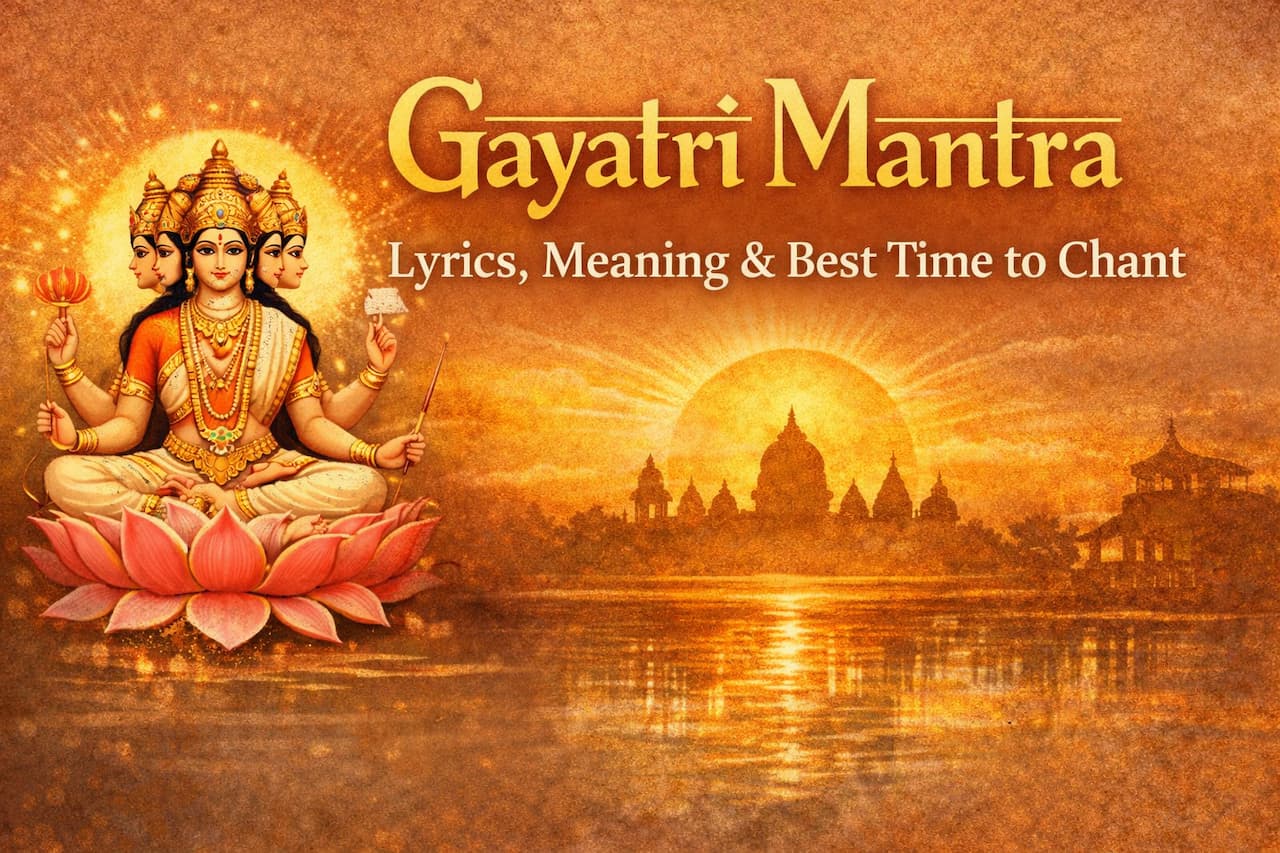

Gayatri Mantra is one of the most sacred Vedic chants in Sanatan Dharma. Many Indians grow up hearing it in temples at sunrise, during Sandhya Vandana or from grandparents softly reciting it at dawn. The sound feels pure, steady and bright like the first rays of the rising Surya touching the forehead.
This guide shares the authentic Gayatri Mantra lyrics, the Gayatri Mantra meaning in English, its spiritual and mental benefits and the best time to chant for daily practice. The content follows Vedic references and modern understanding, written in simple language for easy reading and deeper clarity.
Gayatri Mantra Lyrics (Sanskrit) and Gayatri Mantra Lyrics in English
Below are the traditional Gayatri Mantra lyrics in Sanskrit:
ॐ भूर्भुवः स्वः
तत्सवितुर्वरेण्यं
भर्गो देवस्य धीमहि
धियो यो नः प्रचोदयात्॥
Here is the Gayatri Mantra lyrics in English (transliteration):
Om Bhur Bhuvah Swaha
Tat Savitur Varenyam
Bhargo Devasya Dheemahi
Dhiyo Yo Nah Prachodayat
When spoken slowly, the chant carries a rhythmic vibration. The word “Om” feels deep and resonant in the chest. The phrase “Bhur Bhuvah Swaha” rolls gently on the tongue. Pronouncing each syllable clearly builds focus and calm.
Pro tip: Speak each line with steady breath. Pause slightly after every line. This method improves pronunciation and keeps the mind centered.
Gayatri Mantra Meaning in English (Line by Line Explanation)
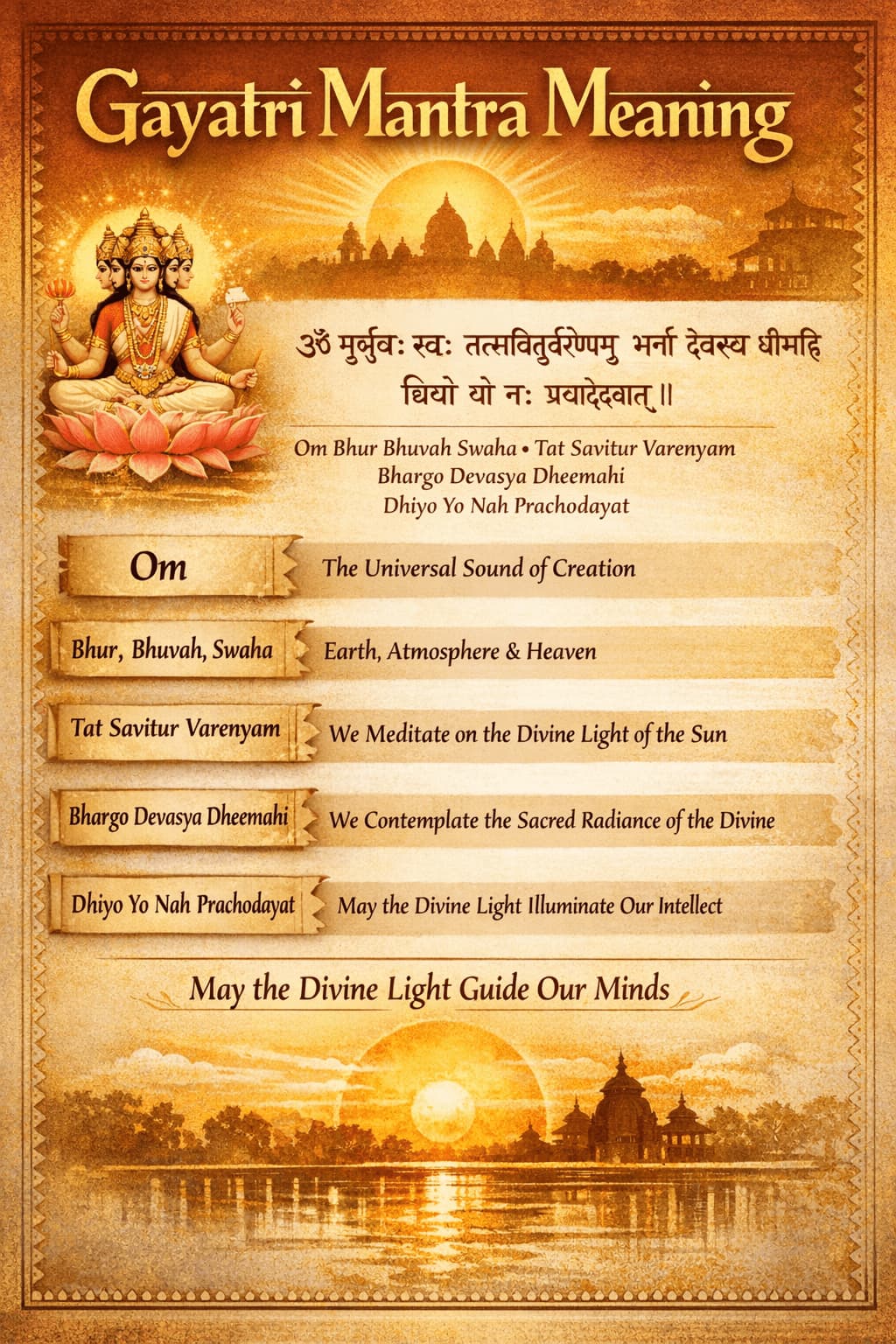
Understanding the Gayatri Mantra meaning in English helps you connect deeply with its intention.
- Om – The primordial cosmic sound. It represents the divine source of all creation.
- Bhur – The physical world, the Earth.
- Bhuvah – The mental world, the atmosphere.
- Swaha (Swah) – The spiritual world, the heavens.
- Tat Savitur Varenyam – We meditate upon the adorable glory of Savitur, the divine Sun.
- Bhargo Devasya Dheemahi – We contemplate the sacred radiance of the divine light.
- Dhiyo Yo Nah Prachodayat – May that divine light illuminate and inspire our intellect.
In simple words, the Gayatri Mantra is a prayer to the divine light to remove ignorance and guide our minds toward wisdom.
The mantra contains 24 syllables. Each syllable holds symbolic meaning in Vedic philosophy. The Rishis believed these sounds purify thought patterns and sharpen awareness.
When you chant and reflect on the meaning, the prayer feels alive not just words, but an inner conversation with the divine.
ALSO Read: Mantra: Meaning, Types, Benefits & How to Chant Correctly
The Vedic Origin of Gayatri Mantra
The Gayatri Mantra originates from the Rigveda, one of the oldest sacred texts in the world. It appears in Mandala 3, Hymn 62, Verse 10. Rishi Vishwamitra composed this verse in praise of Savitr, the Sun deity.
Savitr is not just the physical Sun shining in the sky. In Vedic thought, Savitr represents divine illumination. Just as the Surya removes darkness from the Earth, divine wisdom removes ignorance from the mind.
In many Hindu homes, the mantra is part of daily Sandhya Vandana rituals. Young boys traditionally learn it during Upanayana (sacred thread ceremony). Today, men and women both chant it with devotion.
The early morning air feels cool. The sky glows saffron and gold. During that peaceful time, chanting the Gayatri Mantra feels natural and grounding.
Gayatri Mantra Benefits for Mind, Body and Spirit
Many people ask about Gayatri Mantra benefits. The benefits work on spiritual, emotional and mental levels.
Spiritually, the mantra strengthens connection with higher consciousness. It creates inner stillness. Devotees often say they feel lighter and clearer after regular chanting.
Mentally, rhythmic chanting improves concentration. The steady sound pattern acts like a meditation anchor. When thoughts wander, the mantra brings them back gently.
Some early meditation studies suggest that mantra chanting lowers stress and stabilizes breathing patterns. Slow, deep chanting calms the nervous system and reduces anxiety levels.
Emotionally, regular practice encourages patience and compassion. Many practitioners report improved clarity in decision-making.
Personal observation: When chanted daily for 10–15 minutes, the mantra gradually reduces mental clutter. Over time, the mind feels organized and less reactive.
The benefits appear gradually. Chanting once may feel peaceful, but chanting daily builds deeper results.
Best Time to Chant Gayatri Mantra
The best time to chant Gayatri Mantra is during Brahma Muhurta, about 1.5 hours before sunrise. This period feels quiet and spiritually charged. The air is cool and fresh. The mind feels clear after sleep.
Sunrise is another powerful time. Facing east while chanting aligns you with the rising Surya.
Traditionally, devotees chant three times daily morning, noon and evening during sunset.
If mornings are difficult, chant whenever you find calm silence. Early morning remains ideal, but sincere devotion matters more than strict timing.
For beginners, start with 11 repetitions daily. Gradually move to 108 chants using a mala if comfortable.
How to Chant Gayatri Mantra Correctly
Chanting does not require complex rituals, but attention and respect improve results.
Sit comfortably on the floor with a straight spine. You may sit on a yoga mat or cotton cloth. Keep your eyes gently closed.
Take a slow breath in. Chant each word clearly. Feel the vibration around your throat and chest.
Avoid rushing. The mantra should flow naturally, not hurriedly.
Some practitioners chant aloud. Others chant softly or mentally. Beginners may prefer chanting audibly to maintain focus.
Keep distractions away. Silence your phone. Create a calm atmosphere. Even lighting a diya can enhance devotion.
Pro tip: Focus on the meaning of “Dhiyo Yo Nah Prachodayat.” Visualize divine light filling your mind. This mental image deepens concentration.
Consistency matters more than length. Five focused minutes daily help more than long irregular sessions.
Gayatri Mantra and Modern Life
In today’s fast-paced digital life, stress often clouds thinking. The Gayatri Mantra acts like mental sunlight. It clears confusion and restores clarity.
Students often chant before exams to improve concentration. Working professionals chant before important meetings to steady their thoughts.
The mantra does not belong only to temples. It belongs to daily life during morning tea, before yoga or in silent evening reflection.
When chanted regularly, it develops mindfulness. You become aware of your thoughts and actions.
This ancient Vedic wisdom still fits modern routines beautifully.
Variations of Gayatri Mantra
The original Gayatri Mantra from the Rigveda remains the most widely chanted version. There are also deity-specific Gayatri mantras like Surya Gayatri or Shiva Gayatri.
These versions follow a similar structure but focus on particular deities. The core intention remains the same seeking divine guidance and enlightenment.
If you are new, begin with the traditional Gayatri Mantra. Once comfortable, you may explore variations.
Common Mistakes While Chanting
Many beginners rush through the words. Speed reduces clarity and effect. Pronunciation also matters. Mispronouncing “Savitur” or “Prachodayat” may change rhythm.
Avoid chanting mechanically without understanding meaning. Awareness adds depth to the practice.
Another mistake is inconsistency. Chanting daily at a fixed time builds discipline and stronger mental association.
Gayatri Mantra FAQs (People Also Ask)
What is the Gayatri Mantra?
The Gayatri Mantra is a sacred Vedic hymn from the Rigveda that seeks divine light to guide and illuminate the intellect. It is one of the most powerful and widely chanted mantras in Hindu tradition.
What are the Gayatri Mantra lyrics?
The Gayatri Mantra lyrics begin with “Om Bhur Bhuvah Swaha Tat Savitur Varenyam.” The full verse appears in the Rigveda and contains 24 syllables dedicated to Savitr, the divine Sun.
What is the Gayatri Mantra meaning in English?
The Gayatri Mantra meaning in English is a prayer. It asks divine light to inspire, guide, and enlighten our minds. This helps us walk the path of truth and wisdom.
What are the Gayatri Mantra benefits?
Gayatri Mantra benefits include better mental clarity, emotional calm, stronger focus, spiritual growth and less stress. These benefits may improve when you chant regularly with attention and devotion.
What is the best time to chant Gayatri Mantra?
The best time to chant Gayatri Mantra is during Brahma Muhurta before sunrise. Many people also chant during sunrise, noon or sunset for spiritual alignment and calmness.
How many times should I chant it daily?
Traditionally, devotees chant it 108 times using a mala. Beginners can start with 11 repetitions and increase gradually as comfort and consistency improve.
Can women chant the Gayatri Mantra?
Yes, women can chant the Gayatri Mantra. In modern practice, it is open to everyone who chants with respect, understanding and pure intention.
Can I chant Gayatri Mantra at night?
Morning is ideal, but you can chant at night if you feel peaceful and focused. Devotion and sincerity matter more than the exact time.
Making Gayatri Mantra a Daily Habit
Start small. Choose a fixed time each day. Sit quietly, close your eyes and chant with meaning.
The Gayatri Mantra is not just a prayer. It is a daily reminder to seek clarity, truth and inner light.
As the golden rays of the rising Sun spread across the sky, let the mantra rise within you. Let it guide your thoughts, strengthen your intellect and bring calm strength to your day.
With steady practice, the sound becomes part of your breath. The prayer becomes part of your life.
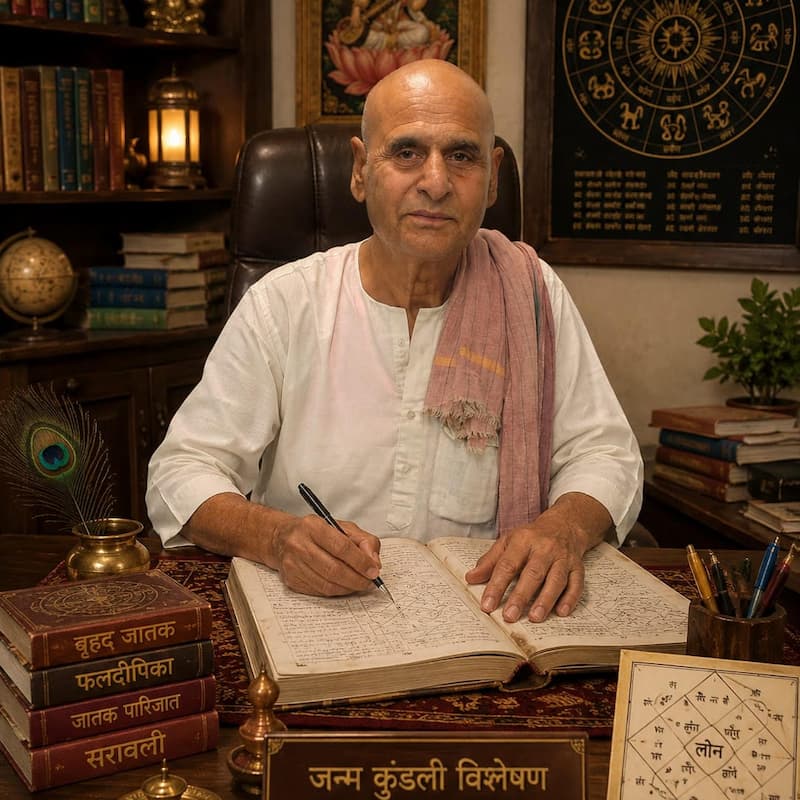
Narendra Kumar Chaubey is a Jyotisha Acharya with over 30 years of experience, based in Bihar and serving clients across India in Vedic astrology, mantra shastra, Vastu and ritual practice.
He completed his formal training at Kameshwar Singh Darbhanga Sanskrit University (KSDSU), one of India’s oldest and most respected institutions for Vedic and Sanskrit scholarship, where he studied Jyotisha shastra, mantra vidya and related classical sciences. KSDSU’s tradition of rigorous Sanskrit education tracing directly to the Mithila region’s centuries-old pandit lineage forms the foundation of his practice.
Over three decades, Narendra Kumar Chaubey has worked with thousands of individuals and families across Bihar and across India, offering guidance in:
- Kundli (birth chart) analysis: Identifying karmic patterns, planetary periods and life path guidance through classical Jyotisha
- Palmistry (Hasta Samudrika): Reading the hand according to the classical Samudrika Shastra tradition
- Vastu Shastra: Assessment and correction of living and working spaces according to directional and elemental principles
- Mantra and Pooja vidhi: Performing and guiding all categories of puja, havan, and mantra sadhana for personal, family and business situations
- Predictive Jyotisha: Transit analysis, muhurta (auspicious timing) selection and remedial guidance
He works across four languages Sanskrit, Hindi, English and Bhojpuri making classical knowledge accessible to practitioners across educational backgrounds and regions.
His writing for ABMantra brings the precision of classical Vedic training to practical mantra guidance: not general advice but specific prescriptions grounded in shastra, lineage and 30 years of direct practice with real situations.
For more info follow on: