
Mahamrityunjay Mantra is one of the most powerful and sacred chants in Sanatan Dharma. Devotees across India chant it in temples during Mahashivratri. They chant it in quiet home mandirs. They even chant it in hospital rooms where families pray for healing. The sound of “Om Tryambakam Yajamahe…” carries faith, hope and strength.
People chant this Vedic mantra for protection, inner peace, courage and relief from fear. Many also believe it supports physical and emotional healing when repeated with devotion. In this guide, you will learn the true meaning, the Mahamrityunjay Mantra benefits, the correct pronunciation and how to chant it properly using a 108-bead rudraksha mala.
What Is the Mahamrityunjay Mantra?
The Mahamrityunjay Mantra is an ancient Vedic mantra dedicated to Lord Shiva, also known as Mahadeva or Tryambaka (the three-eyed one). It appears in the Rigveda and Yajurveda and holds deep spiritual meaning.
The word “Maha” means great, “Mrityu” means death and “Jaya” means victory. So the name literally means “the great victory over death.” Devotees do not see this only as freedom from physical death. They also interpret it as victory over fear, negativity, illness and spiritual ignorance.
In Hindu tradition, sages recited this mantra during yajnas (fire rituals) to seek divine protection. Families still recite the Mahamrityunjay mantra during times of illness, surgery or crisis. The sound feels steady and grounding, like a calm bell ringing inside the heart.
Maha Mrityunjaya Mantra Lyrics in English & Sanskrit
Below are the authentic Maha Mrityunjaya Mantra Lyrics as found in the Vedas:
Sanskrit:
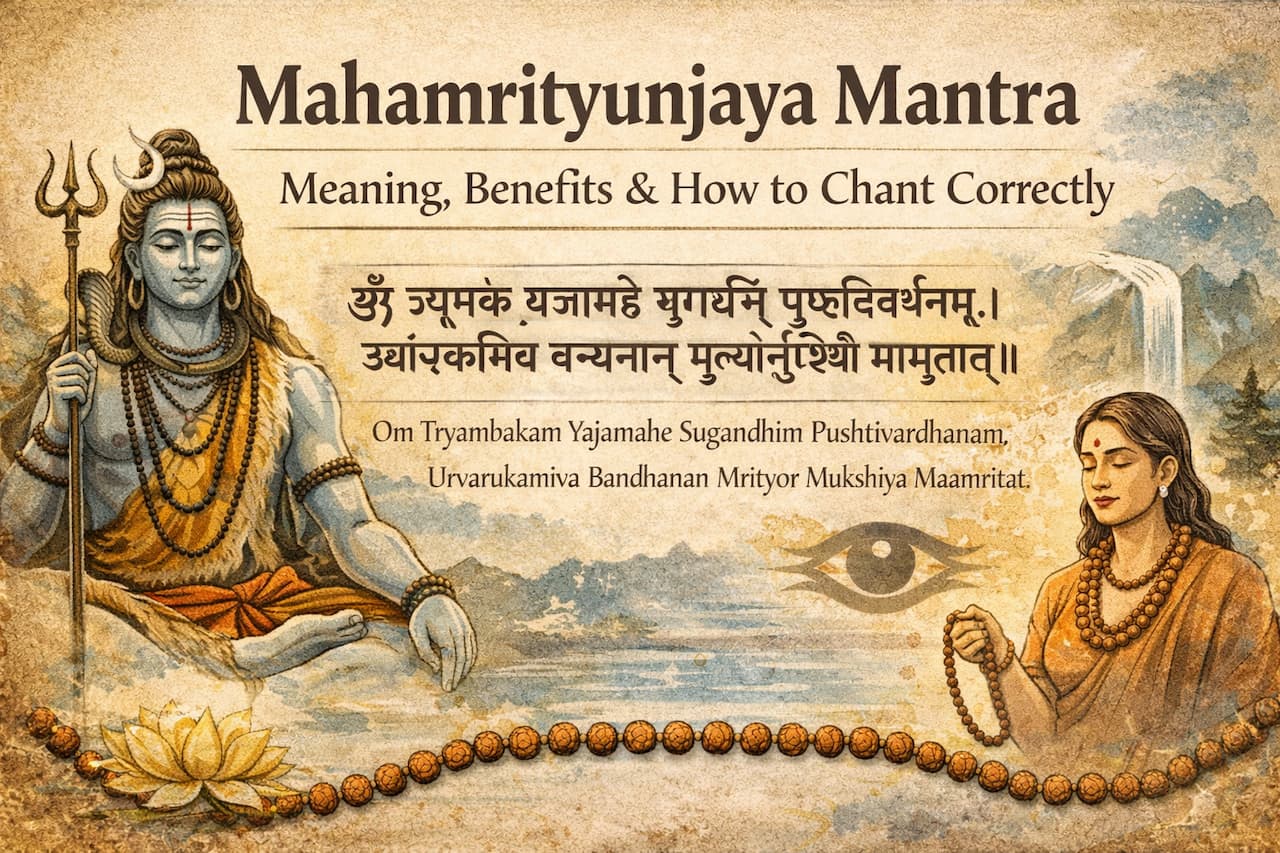
ॐ त्र्यम्बकं यजामहे सुगन्धिं पुष्टिवर्धनम्।
उर्वारुकमिव बन्धनान्मृत्योर्मुक्षीय मामृतात्॥
Transliteration:
Om Tryambakam Yajamahe
Sugandhim Pushtivardhanam
Urvarukamiva Bandhanan
Mrityor Mukshiya Maamritat
Maha Mrityunjaya Mantra Lyrics in English (Meaning)
“We worship the three-eyed Lord Shiva who nourishes and sustains all beings. May He free us from the bondage of death, like a cucumber separates from the vine and bless us with immortality.”
The cucumber example may sound simple, yet it carries a strong visual meaning. Just as a ripe fruit gently detaches from the creeper without pain, devotees pray for a peaceful release from suffering and fear.
When you chant these sacred syllables slowly, you feel the vibration around your chest and throat. The rhythm flows like the Ganga in Rishikesh steady, pure and cleansing.
Meaning of the Mahamrityunjay Mantra
- “Om” represents the universal sound of creation. It connects the mind to a deeper state of awareness.
- “Tryambakam” refers to Lord Shiva, the three-eyed deity. His third eye symbolizes higher wisdom and inner vision.
- “Yajamahe” means “we worship” or “we honor.” It shows humility and devotion.
- “Sugandhim” means fragrant. Here, fragrance represents positive energy spreading in all directions, like agarbatti filling a temple hall.
- “Pushtivardhanam” means the one who nourishes and strengthens life.
- “Urvarukamiva Bandhanan” compares freedom from death to a cucumber separating from its vine. It paints a gentle, natural image.
- “Mrityor Mukshiya Maamritat” is a prayer for liberation from mortality and suffering.
When you read the full meaning slowly, the mantra feels less mysterious and more personal. It becomes a heartfelt prayer rather than just Sanskrit words.
Mahamrityunjaya Mantra Benefits: Traditional and Modern View
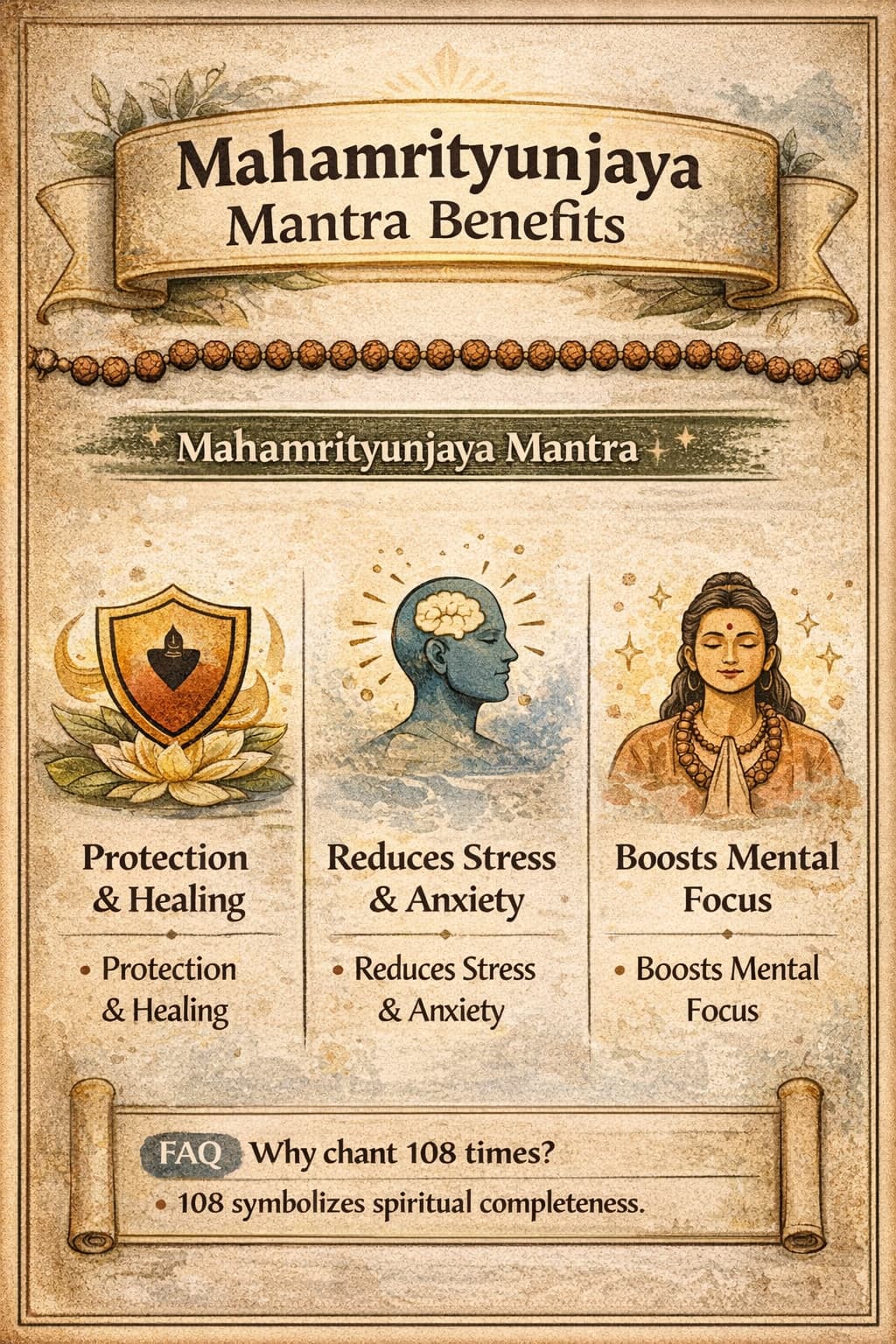
Many people ask about Mahamrityunjaya Mantra benefits. Scriptures describe it as a powerful healing mantra. Devotees chant it for:
- Protection from negative energy
- Relief during illness
- Mental strength during hardship
- Peaceful sleep and reduced anxiety
- Spiritual growth
In temples across Varanasi and Ujjain, priests perform Maha Mrityunjaya Jaap for families who want health and protection. During these rituals, the sacred fire crackles, ghee melts and the rhythmic chanting fills the air.
From a modern view, repetitive chanting works like meditation. When you repeat a sacred sound 108 times, your breathing slows naturally. A calm breath reduces stress hormones. Regular chanting can create emotional stability and reduce anxious thoughts.
It is important to understand that chanting does not replace medical treatment. It supports inner peace and faith. Many families combine prayer with proper healthcare.
Is There Scientific Evidence?
Scientific research on Vedic mantras specifically is limited. Still, studies on meditation and rhythmic chanting show positive effects on heart rate, brain waves and stress levels. The calm focus during mantra repetition can improve concentration and emotional balance.
The key benefit often comes from consistency. Daily chanting trains the mind to stay steady even during difficult times.
How to Chant the Mahamrityunjaya Mantra Correctly
Many readers search for how to chant the Mahamrityunjaya Mantra correctly. The process is simple, yet intention matters.
First, choose a clean and quiet place. Many people sit facing east during Brahma Muhurta, just before sunrise. The cool air at dawn feels fresh and peaceful.
Sit comfortably with your spine straight. You can sit cross-legged on a mat or even on a chair if needed.
Hold a 108-bead rudraksha mala in your right hand. Use your thumb to gently roll each bead while chanting one full mantra per bead. Avoid crossing the large guru bead; instead, reverse direction when you reach it.
Pronounce each word clearly. Speak softly but steadily. Let the sound vibrate in your chest.
You may chant aloud, whisper softly or repeat it mentally. Beginners often prefer audible chanting because it improves pronunciation.
If you ask, “What is the benefit of chanting Maha Mrityunjaya mantra 108 times?” the number 108 holds sacred value in Hindu tradition. It represents spiritual completeness. Chanting 108 times helps maintain rhythm, builds discipline and deepens concentration.
Common Mistakes to Avoid
People often chant too quickly. Speed weakens pronunciation and reduces focus. Slow repetition carries more impact.
Some chant without understanding the meaning. When you know the prayer’s essence, devotion feels stronger.
Another common mistake is irregular practice. Try to chant daily, even if you recite it only 11 times.
Pro Tip: In the beginning, listen to a trusted audio recording and chant along. This builds confidence and correct pronunciation.
When Should You Chant the Mahamrityunjaya Mantra?
Devotees chant this Shiva mantra at different times depending on need.
Early morning remains ideal because the mind stays calm and distraction-free. The silence before sunrise feels sacred.
People also chant during Mahashivratri, Shravan month or Monday fasts dedicated to Lord Shiva.
During illness, families sometimes organize group chanting sessions. The collective sound of 11 or 21 people chanting together feels powerful and comforting.
You can also chant before sleep if anxiety disturbs you. The slow vibration can help the mind settle down.
Practical 7-Day Beginner Plan to Start Chanting
Starting a spiritual habit often feels challenging. A simple plan makes it easier.
On Day 1 and 2, chant the Mahamrityunjaya Mantra 11 times in the morning. Focus on correct pronunciation.
On Day 3 and 4, increase to 21 repetitions. Notice your breathing and keep it steady.
By Day 5 and 6, chant 54 times. Use a mala to maintain rhythm.
On Day 7, complete one full round of 108 chants. Sit calmly for two minutes afterward. Observe the silence.
This gradual method builds confidence. You will feel more connected to the mantra each day.
Emotional and Spiritual Impact of Regular Chanting
Many devotees describe a warm, grounded feeling after chanting. Some say their mind feels lighter, as if heavy thoughts slowly dissolve.
During personal difficulty, repeating “Om Tryambakam…” creates a sense of safety. It reminds the devotee that Shiva protects and guides.
Regular practice can strengthen faith and reduce constant worry. The steady rhythm works like a gentle heartbeat inside the mind.
From my observation, consistency matters more than intensity. Someone who chants quietly every day often experiences deeper calm than someone who chants loudly once a month.
Maha Mrityunjaya Jaap and Temple Rituals
In many parts of India, families arrange Maha Mrityunjaya Jaap in temples. Priests chant the mantra thousands of times while performing havan (fire ritual). Devotees sit around the sacred fire while the scent of sambrani and ghee fills the air.
These rituals often take place in cities like Varanasi, Haridwar and Nashik. Families believe collective prayer increases positive energy.
While elaborate rituals hold importance, personal chanting at home also carries value. Sincere devotion matters most.
The Power of Sound and Vibration
Every mantra carries vibration. Sanskrit sounds create subtle resonance in the body. When you chant “Tryambakam,” the vibration touches the throat area. The sound “Om” vibrates in the head.
Chanting with awareness connects breath, sound and intention. This unity can feel calming and strong at the same time.
Unlike casual conversation, mantra repetition creates rhythmic stability. Over time, it influences thought patterns.
FAQs About Mahamrityunjaya Mantra
What is the Mahamrityunjaya Mantra?
The Mahamrityunjaya Mantra is an ancient Vedic prayer dedicated to Lord Shiva, chanted for protection, healing and spiritual strength. It appears in the Rigveda and is known as the great victory over death mantra.
What are the Mahamrityunjaya Mantra benefits?
Traditional beliefs say it protects from negative energies and illness, while modern practice shows it helps reduce stress and improve mental focus when chanted regularly with devotion.
What is the benefit of chanting Maha Mrityunjaya mantra 108 times?
Chanting 108 times builds concentration and discipline. The sacred number symbolizes spiritual completeness and helps deepen meditation and inner peace.
Can I chant the Mahamrityunjaya Mantra during illness?
Yes. Many families chant it during illness for emotional strength and positivity, but it should support not replace proper medical treatment.
What is the correct pronunciation of Maha Mrityunjaya Mantra Lyrics in English?
Pronounce each Sanskrit word clearly and slowly using transliteration as guidance. Listening to a trusted audio source helps beginners avoid mistakes.
When is the best time to chant this mantra?
Early morning before sunrise is ideal because the mind stays calm and focused, but you can chant at any peaceful time of day.
What is the full Mahamrityunjay mantra?
The full Mahamrityunjaya Mantra is:
Om Tryambakam Yajamahe Sugandhim Pushtivardhanam,
Urvarukamiva Bandhanan Mrityor Mukshiya Maamritat.
It is a Vedic mantra dedicated to Lord Shiva, praying for freedom from fear, suffering, and spiritual bondage.
Can we chant Maha Mrityunjaya mantra 11 times?
Yes, you can chant the Maha Mrityunjaya mantra 11 times daily. Beginners often start with 11 repetitions to build consistency, focus, and correct pronunciation before gradually increasing to 21, 54, or 108 chants.
Can I listen to Maha Mrityunjaya mantra?
Yes, listening to the Mahamrityunjaya Mantra can create calmness and positive vibrations. Chanting actively brings deeper focus, but listening mindfully—especially during stress or illness—can still promote emotional peace and spiritual connection.
What are the rules for Mahamrityunjaya Mantra?
Basic rules include sitting in a clean space, maintaining a calm mind, pronouncing the mantra correctly, and chanting with devotion. Many prefer early morning and a 108-bead mala, but sincerity and consistency matter more than strict ritual complexity.
Can we chant Mahamrityunjaya Mantra without taking bath?
Yes, you can chant the Mahamrityunjaya Mantra without bathing, especially in emergencies or during illness. Physical cleanliness is ideal in Hindu tradition, but purity of mind and sincere intention hold greater spiritual importance.
Final Thoughts on the Mahamrityunjaya Mantra
The Mahamrityunjaya Mantra carries centuries of faith, devotion and spiritual power. Its words may seem simple, yet its sound feels steady and reassuring.
When you sit quietly and chant with sincerity, you may notice your breath slowing, your thoughts softening and your heart feeling lighter.
Whether you chant 11 times or 108 times, do it with awareness and faith. Over time, the mantra becomes more than a prayer. It becomes a companion through life’s challenges and victories.
Next Read:
Narendra Kumar Chaubey is a Jyotisha Acharya with over 30 years of experience, based in Bihar and serving clients across India in Vedic astrology, mantra shastra, Vastu and ritual practice.
He completed his formal training at Kameshwar Singh Darbhanga Sanskrit University (KSDSU), one of India’s oldest and most respected institutions for Vedic and Sanskrit scholarship, where he studied Jyotisha shastra, mantra vidya and related classical sciences. KSDSU’s tradition of rigorous Sanskrit education tracing directly to the Mithila region’s centuries-old pandit lineage forms the foundation of his practice.
Over three decades, Narendra Kumar Chaubey has worked with thousands of individuals and families across Bihar and across India, offering guidance in:
- Kundli (birth chart) analysis: Identifying karmic patterns, planetary periods and life path guidance through classical Jyotisha
- Palmistry (Hasta Samudrika): Reading the hand according to the classical Samudrika Shastra tradition
- Vastu Shastra: Assessment and correction of living and working spaces according to directional and elemental principles
- Mantra and Pooja vidhi: Performing and guiding all categories of puja, havan, and mantra sadhana for personal, family and business situations
- Predictive Jyotisha: Transit analysis, muhurta (auspicious timing) selection and remedial guidance
He works across four languages Sanskrit, Hindi, English and Bhojpuri making classical knowledge accessible to practitioners across educational backgrounds and regions.
His writing for ABMantra brings the precision of classical Vedic training to practical mantra guidance: not general advice but specific prescriptions grounded in shastra, lineage and 30 years of direct practice with real situations.
For more info follow on: