
Quick Answer
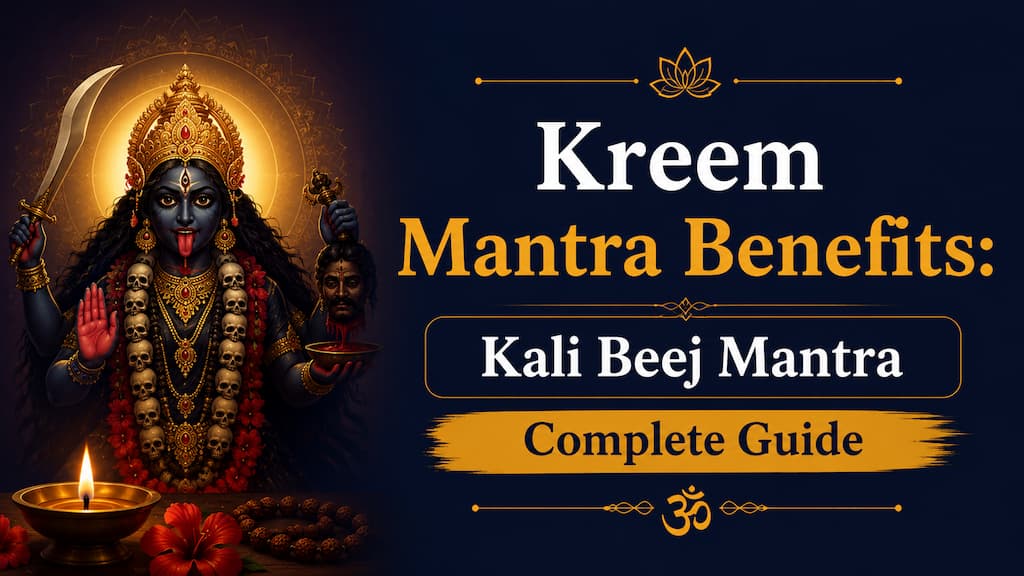
Kreem (ॐ क्रीं) is the primary beej (seed syllable) of Goddess Kali in the Shakta Tantric tradition. It is also used in mantras for Goddess Bhuvaneshwari and as a component of the Kali Mula Mantra.
Primary Kreem mantra: Om Kreem Kalikayai Namah (ॐ क्रीं कालिकायै नमः) : 108 times daily
Kali Mula Mantra: Om Kreem Kreem Kreem Hum Hum Hreem Hreem Dakshine Kalike Kreem Kreem Kreem Hum Hum Hreem Hreem Swaha : the complete invocation for serious Kali sadhana
Core benefit of Kreem: Transformation : specifically the dissolution of what is no longer needed in the practitioner’s life and consciousness. Kreem does not attract or protect in the way Shreem or Hreem do. It destroys the unnecessary. What remains after Kreem’s action is the genuine, the essential, the real.
Who This Article Is For
This article is for you if you want to understand what Kreem specifically does and why it is Kali’s beej rather than belonging to a gentler deity | you want to know the difference between Kreem, Aim, Hreem and Shreem so you can choose the right beej for your situation | you want to begin a Kreem mantra practice safely and correctly.
Also see: What is Beej Mantra: the complete guide to seed syllables
Of the four primary Shakta beej syllables, Kreem is the most transformative and the least understood. Aim, Hreem and Shreem are relatively accessible in their function: Aim governs intelligence and learning, Hreem governs creative power and manifestation, Shreem governs abundance and prosperity. Kreem is different. It governs transformation through destruction: the deliberate dissolution of the ego’s constructions, the removal of what is false, the stripping away of what obscures the genuine self underneath.
Here is what most Kreem mantra articles miss: they describe Kreem’s benefits in comfortable terms : protection, power, confidence. These are not wrong, but they are incomplete. Kreem is Kali’s beej. Kali is the deity who destroys illusion, who cuts through the ego’s self-deceptions with absolute precision. The practitioner who chants Kreem consistently and sincerely is not asking for comfort. They are asking for the specific divine power that removes what is false from their life. That process is transformative and sometimes uncomfortable. The tradition is honest about this: Kali does not give what you want. She gives what you need.
Kreem vs the Other Primary Beej Syllables
| Beej | Deity | Primary function | Use when |
|---|---|---|---|
| Aim (ऐं) | Saraswati | Intelligence, learning, speech, creativity | Seeking knowledge, academic success, creative expression |
| Hreem (ह्रीं) | Bhuvaneshwari / Mahalakshmi | Creative power, manifestation, divine energy | Manifesting goals, developing power and presence |
| Shreem (श्रीं) | Lakshmi | Abundance, prosperity, attracting good fortune | Wealth, career growth, material wellbeing |
| Kreem (क्रीं) | Kali | Transformation through dissolution, removal of falseness, liberation | Breaking persistent negative patterns, removing deep-rooted obstacles, spiritual liberation |
| Kleem (क्लीं) | Kamadeva / Krishna | Attraction, love, drawing what is desired | Relationships, bhakti, drawing the divine toward you |
The Specific Benefits of Kreem Mantra Practice
1. Dissolution of Deep-Rooted Negative Patterns
Kreem operates at the root level of the unconscious. Where most mantras address the surface dimensions of life (wealth, health, relationships), Kreem addresses the karmic and psychological root structures that generate repeating negative patterns. If you find yourself in the same type of difficulty repeatedly despite genuine effort to change : the same type of relationship ending the same way, the same career obstacle appearing in different forms, the same fear preventing different opportunities : this is the territory Kreem addresses.
2. Liberation from Fear
Kali is the deity specifically associated with the annihilation of fear. Her iconography : the terrifying face, the severed head, the cremation ground setting : is not cruelty but the tradition’s visual representation of the only genuine liberation from fear: looking directly at what is feared without flinching. The Kreem mantra practice, maintained consistently, produces a progressive reduction in the power of fear in the practitioner’s experience. Not the suppression of fear but its dissolution through the same direct-seeing that Kali represents.
3. Acceleration of Spiritual Development
For practitioners who want rapid spiritual development and are willing to accept the acceleration that comes with it, Kreem is specifically prescribed in the Tantric tradition. The Shakta texts are clear: Kali’s grace does not come slowly. Where other deities’ blessings accumulate gradually, Kali’s transformative power operates intensely. Practitioners who chant Kreem consistently report the quality of their inner life changing significantly within a shorter time period than other mantras produce. The trade is that the change is less predictable in its form and sometimes uncomfortable in its process.
4. Removal of Black Magic and Negative Influences
Kali as the destroyer of illusion specifically governs the removal of negative external influences, black magic (Abhichara), and psychic attacks in the Tantric tradition. The Kreem mantra creates a field of Kali’s energy around the practitioner that specifically counteracts Tamas (darkness) in all its forms.
The Kreem Mantra Practice
Complete Kreem Mantra Practice
Primary mantra: Om Kreem Kalikayai Namah : 108 times daily
Time: Midnight or after sunset on Tuesdays and Saturdays. Kali’s energy is most potent in the night hours and at amavasya (new moon).
Direction: South (Kali’s direction)
Mala: Black tourmaline, rudraksha or red coral mala
Offering: Red hibiscus flowers. Ghee lamp or mustard oil lamp.
Important: Begin the practice with Om Namah Shivaya 3 times : Shiva is Kali’s consort and his invocation balances the intense Shakti energy of the Kreem practice.
Who Should Approach Kreem Mantra Carefully
Kreem is a powerful transformative energy that produces rapid change. The tradition prescribes it particularly for:
- Practitioners who have an established daily mantra practice (minimum 6 months of another mantra before adding Kreem)
- Those who are genuinely ready for transformation rather than seeking comfort
- Those experiencing deep-rooted obstacles that gentler practices have not resolved
For beginners seeking wealth, learning or relationship improvement, Aim, Shreem or Kleem are more appropriate starting points. Kreem is not the first mantra : it is the mantra you arrive at when gentler approaches have not produced the depth of change needed.
From Our Practice
From Our Practice
In my Jyotisha practice, I prescribe the Kreem mantra specifically in two situations. The first is when the chart shows a strong Kali yoga : a combination of planets that indicates the native is under Kali’s specific influence in this lifetime and has a karmic connection to her energy. For these practitioners, Kreem is the natural primary mantra regardless of the specific problem they come with.
The second is when a client comes with a pattern that has not changed despite years of effort: the same relationship dynamic repeated across different partners, the same career failure in different industries, the same financial pattern restored after every recovery. This is karmic root-level obstruction. Shreem and Kleem address the surface. Kreem goes to the root.
I tell all clients starting the Kreem practice the same thing: do not assess the mantra by whether things immediately improve. Assess it by whether things that were not working become undeniably clear in their impossibility. Kali’s first gift is clarity about what was never going to work. The second gift, which follows from the first, is the energy to move into what will.
Frequently Asked Questions
❓ Is Kreem mantra dangerous?
Not harmful, but intense. Kreem is Kali’s energy : she dissolves illusion and removes falseness. For a practitioner who is deeply attached to a situation, relationship or self-image that is not genuinely serving them, the Kreem practice will accelerate the dissolution of that attachment. This can feel disruptive if the practitioner mistakes discomfort for danger. The tradition is clear: Kali does not harm the sincere devotee. She transforms them. The preparation is inner readiness for transformation, not ritual complexity.
❓ Can I combine Kreem with Shreem or Aim?
Yes : in fact, the classical Kali mantras often combine multiple beej syllables. Om Aim Hreem Kreem Chamundayai Vicche is one of the most important Kali mantras, combining Aim (Saraswati), Hreem (Bhuvaneshwari) and Kreem (Kali) in a single invocation that addresses all three dimensions simultaneously. As a standalone daily practice, Om Kreem Kalikayai Namah is sufficient. The combinations are for formal Tantric sadhana.
❓ How many times should I chant Kreem mantra?
108 times daily is the standard prescription. For a specific Kali sadhana at amavasya or during Navratri, 1,008 times in one sitting is the traditional intensive practice. The complete Purashcharan for Kali (the formal count for mantra mastery) is 100,000 repetitions. At 108 per day this takes approximately 926 days. For most practitioners, 108 daily plus the intensive amavasya practice is the complete accessible sadhana.
❓ Can women chant the Kreem mantra?
Yes, absolutely. Kali is a Goddess. Women chanting her beej mantra are invoking their own divine feminine energy in its most powerful form. The Shakta tradition has always recognised women as the primary carriers of Shakti energy : the tradition of women as Kali’s natural devotees is as old as the Shakta texts themselves. There are no restrictions for women chanting the Kreem mantra at any time.
❓ What is the difference between Kreem and Hum?
Both are associated with Kali and with protective-destructive energy, but they operate differently. Kreem is the beej of Kali’s transformative aspect: dissolution of the unnecessary from the inside out, working on the practitioner’s consciousness. Hum is the beej of protective fire: the cutting, burning energy that specifically destroys external negative forces and creates a protective field. In the Kali Mula Mantra, both appear: Kreem for inner transformation, Hum for outer protection. In simple daily practice, Om Kreem Kalikayai Namah covers both dimensions.
❓ I want wealth and success. Should I chant Kreem or Shreem?
For wealth and material success specifically: Shreem. Om Hreem Shreem Lakshmi Bhyo Namah on Fridays. Kreem is not the prosperity mantra. If your material success is blocked by a deep-rooted pattern (a self-limiting belief, a recurring behavioural tendency, an ancestral karma) that Shreem alone is not resolving, then adding Kreem to address the root pattern alongside Shreem for the manifestation dimension is the complete approach.
Begin With One Syllable
Tomorrow morning, chant Om Kreem Kalikayai Namah 21 times before breakfast. Just 21. Pay attention to how the Kreem syllable lands in your awareness. Notice if anything in you responds to it or resists it. That response or resistance is already information about your relationship to this energy.
If the response is one of recognition : a quality of aliveness or attention : continue to 108 daily. If the response is fear or strong resistance, that is also meaningful: it suggests the mantra is touching something real. Both responses are invitations to continue, not signals to stop.
Sources
- Wikipedia : Kali: Kali’s iconography, scriptural sources, beej mantra tradition and Shakta devotional practice
- Wikipedia : Bija Mantra: classification of beej syllables, their deities and functions in Tantric tradition
- Mahanirvana Tantra : classical source for Kali’s beej mantra Kreem and its significance in Shakta sadhana
- Tantrasara by Krishnananda Agamavagisha : classical Tantric text on Kreem as Kali’s primary seed syllable
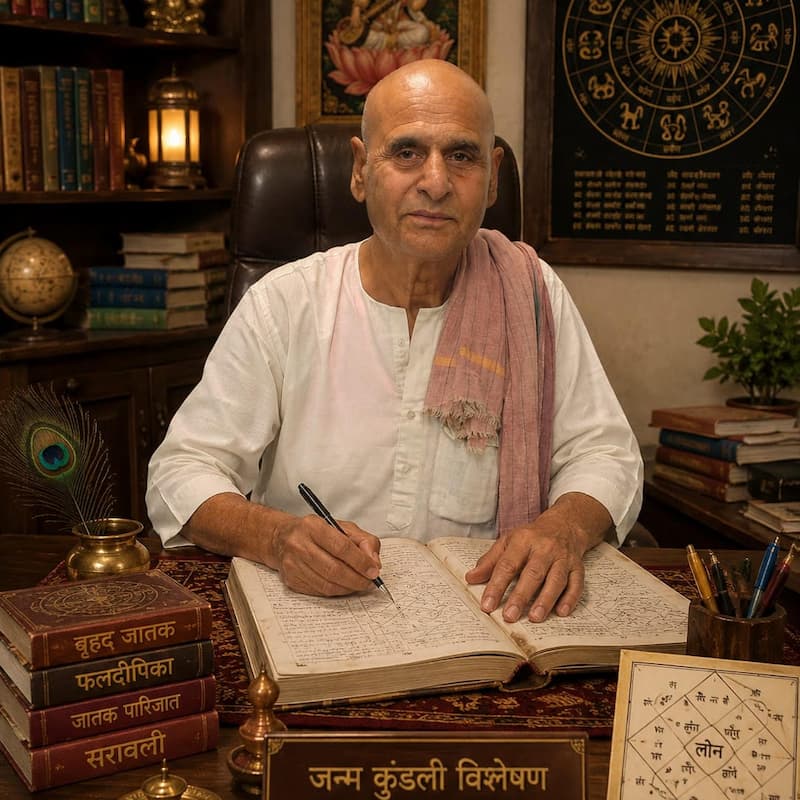
Narendra Kumar Chaubey is a Jyotisha Acharya with over 30 years of experience, based in Bihar and serving clients across India in Vedic astrology, mantra shastra, Vastu and ritual practice.
He completed his formal training at Kameshwar Singh Darbhanga Sanskrit University (KSDSU), one of India’s oldest and most respected institutions for Vedic and Sanskrit scholarship, where he studied Jyotisha shastra, mantra vidya and related classical sciences. KSDSU’s tradition of rigorous Sanskrit education tracing directly to the Mithila region’s centuries-old pandit lineage forms the foundation of his practice.
Over three decades, Narendra Kumar Chaubey has worked with thousands of individuals and families across Bihar and across India, offering guidance in:
- Kundli (birth chart) analysis: Identifying karmic patterns, planetary periods and life path guidance through classical Jyotisha
- Palmistry (Hasta Samudrika): Reading the hand according to the classical Samudrika Shastra tradition
- Vastu Shastra: Assessment and correction of living and working spaces according to directional and elemental principles
- Mantra and Pooja vidhi: Performing and guiding all categories of puja, havan, and mantra sadhana for personal, family and business situations
- Predictive Jyotisha: Transit analysis, muhurta (auspicious timing) selection and remedial guidance
He works across four languages Sanskrit, Hindi, English and Bhojpuri making classical knowledge accessible to practitioners across educational backgrounds and regions.
His writing for ABMantra brings the precision of classical Vedic training to practical mantra guidance: not general advice but specific prescriptions grounded in shastra, lineage and 30 years of direct practice with real situations.
For more info follow on: