
Quick Answer
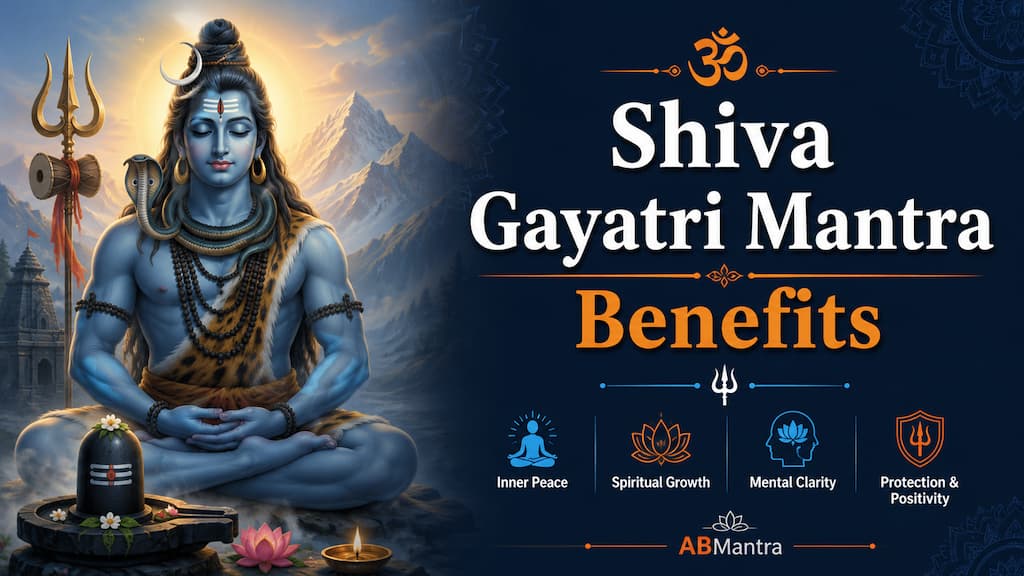
The Shiva Gayatri Mantra (most widely chanted form):
ॐ तत्पुरुषाय विद्महे महादेवाय धीमहि।
तन्नो रुद्रः प्रचोदयात्॥
Om Tatpurusaya Vidmahe Mahadevaya Dhimahi
Tanno Rudra Prachodayat
Meaning: We know (Vidmahe) the Supreme Being (Tatpurusha). We meditate (Dhimahi) on the great Lord (Mahadeva). May that Rudra illuminate and guide (Prachodayat) our intellect (Tanno).
Benefits of Shiva Gayatri Mantra: Illuminates the intellect, removes mental confusion, accelerates spiritual growth, purifies the energy field, develops the capacity for genuine meditation, and specifically invokes Shiva’s grace for removal of ignorance : the root of all suffering in Vedantic understanding.
Best time: Brahma Muhurta (before sunrise) or Pradosha (1.5 hours before and after sunset, especially on Trayodashi / 13th lunar day). 108 repetitions daily.
Who This Article Is For
This complete guide is for Shiva devotees who want to understand what the Shiva Gayatri Mantra actually does : not just a benefit list but the mechanism behind each benefit | beginners who want to know which Shiva mantra to start with | experienced practitioners who want to understand the difference between the two classical forms of the Shiva Gayatri.
Also see: Om Namah Shivaya: complete word-by-word meaning and Maha Mrityunjaya Mantra: meaning, benefits and guide
The Shiva Gayatri Mantra is not a prayer for specific outcomes. It is a prayer for the capacity to understand and pursue what is genuinely good. Om Namah Shivaya asks Shiva to receive your devotion. The Maha Mrityunjaya asks Shiva to liberate you from death and fear. The Shiva Gayatri asks Shiva to illuminate your intellect : to sharpen and purify your understanding so that you can discern what is real from what is illusion, what is worth pursuing from what merely appears valuable. This makes the Shiva Gayatri the most profoundly transformative of all Shiva mantras, because it addresses the root of every difficulty rather than individual symptoms.
Here is what most Shiva Gayatri articles miss: they present the benefits as a generic list without explaining the mechanism behind them. The Shiva Gayatri Mantra’s specific structure : the three-line Gayatri meter with its Vidmahe-Dhimahi-Prachodayat movement : is not arbitrary. Each of the three lines performs a distinct function in the practitioner’s consciousness. Understanding this transforms the practice from recitation to genuine meditation.
The Two Classical Forms of the Shiva Gayatri Mantra
There are two primary classical forms of the Shiva Gayatri Mantra. Both are authentic. Both appear in classical sources. Understanding which form you are chanting : and what distinguishes them : is important.
| Form | Sanskrit text | Source | Key difference |
|---|---|---|---|
| Form 1 (most widely chanted) |
ॐ तत्पुरुषाय विद्महे महादेवाय धीमहि तन्नो रुद्रः प्रचोदयात् Om Tatpurusaya Vidmahe |
Mahanarayana Upanishad (part of Krishnayajurveda), Taittiriya Aranyaka | Addresses Shiva as Tatpurusha (the Supreme Being) and Mahadeva (Great Lord). Asks Rudra to illuminate the intellect. |
| Form 2 (also classical) |
ॐ महादेवाय विद्महे रुद्रमूर्तये धीमहि तन्नः शिवः प्रचोदयात् Om Mahadevaya Vidmahe |
Appears in several Tantric and Puranic sources; used widely in South Indian Shaiva traditions | Addresses Shiva as Mahadeva directly. Meditates on Rudra’s form specifically. Asks Shiva to illuminate the intellect. |
Which form should you use? Either is complete and valid. Form 1 is more widely used in North Indian and pan-Indian tradition. Form 2 is more common in South Indian Shaiva practice. If you have received a specific form from a teacher or family tradition, follow that. If you are beginning without guidance, Form 1 is the more universally accessible starting point.
Complete Word-by-Word Meaning
Om Tatpurusaya Vidmahe Mahadevaya Dhimahi Tanno Rudra Prachodayat: Every Word
Om (ॐ): The primordial sound. The vibration from which all of creation emerges. All Gayatri mantras begin with Om to establish the cosmic ground before the deity’s specific qualities are invoked.
Tatpurusaya (तत्पुरुषाय): To that Supreme Being. Tat = that (beyond all names and forms). Purusha = the cosmic conscious being, the witness consciousness that pervades all. Tatpurusha is one of Shiva’s five cosmic faces in the Panchamukha tradition. The dative case (-aya) means “to” or “for.” We are addressing the aspect of Shiva that represents the transcendent Supreme Reality.
Vidmahe (विद्महे): We know, we come to know, we seek to know. From the root Vid (to know, from which also comes Veda : knowledge). The first line of the Gayatri is always the knowing line: we are establishing a relationship of recognition with the divine. Not merely praying to someone distant, but acknowledging that we are attempting to know the reality of this presence.
Mahadevaya (महादेवाय): To Mahadeva : the Great God (Maha = great, Deva = divine being/god). This is Shiva in his fully manifest, actively blessing, cosmically governing form. While Tatpurusha is the transcendent aspect, Mahadeva is the immanent aspect : the great Lord who is actively present in the world of form and devotion.
Dhimahi (धीमहि): We meditate, we contemplate, we hold in our awareness. From the root Dhi (intelligence, the higher discriminating mind, the Buddhi). This is the active meditation line : we are not just asking, we are actually meditating on Mahadeva’s qualities. Dhimahi means the meditation is happening now, in this moment of chanting.
Tanno (तन्नः): May that (Tan) for us / to us (Nah). Tan refers back to the divine being just named. Nah is the first-person plural dative : “for us.” The request line: may that very divinity we have acknowledged and meditated upon, act upon us.
Rudra (रुद्रः): Rudra : the fierce, roaring, storm-deity aspect of Shiva who specifically governs the transformation of consciousness. Rudra is the one who “roars” (from the root Rud, to roar/cry). He represents Shiva’s transformative energy : the quality that dissolves ignorance, burns away what is false, and clears the way for genuine understanding. Asking Rudra (not just Shiva generically) to illuminate the intellect specifically invokes this transformative clearing quality.
Prachodayat (प्रचोदयात्): May (he) illuminate, inspire, impel, set in motion, enlighten. From the root Pra (forward) + Chud (to impel, to set in motion). This is the optative mood in Sanskrit : expressing a wish or aspiration. May Rudra set our intellect in motion toward truth. May he inspire it forward. The word Prachodayat appears in every Gayatri mantra : it is the Gayatri meter’s characteristic conclusion, always asking the deity to illuminate and inspire the higher intelligence (Dhi) of the practitioner.
The Three-Line Gayatri Structure: What Each Line Does
Every Gayatri mantra : the Savitr (original) Gayatri, the Shiva Gayatri, the Ganesha Gayatri, all 36 deity Gayatris : follows the same three-line structure. The structure itself is a complete meditation practice. Understanding what each line is doing makes the chanting significantly more powerful.
| Line | Sanskrit pattern | Function | What happens in consciousness |
|---|---|---|---|
| Line 1 8 syllables |
Om Tatpurusaya Vidmahe | Recognition : establishing the knowing relationship with the divine | The mind turns toward Shiva. The ego acknowledges something greater than itself. The orientation of consciousness shifts from self to divine. |
| Line 2 8 syllables |
Mahadevaya Dhimahi | Meditation : actively holding the divine quality in awareness | The mind holds Mahadeva’s presence consciously. This is the actual meditation moment within each repetition : a brief but genuine act of contemplation. |
| Line 3 8 syllables |
Tanno Rudra Prachodayat | Aspiration : the sincere request that the divine act upon the practitioner’s intellect | The higher intelligence (Buddhi/Dhi) is offered to Rudra for transformation. The practitioner surrenders the quality of their own understanding to Shiva’s illuminating influence. |
Each complete repetition of the Shiva Gayatri Mantra moves through recognition, meditation and aspiration : making it a complete miniature meditation cycle. 108 repetitions means 108 complete cycles of turning toward Shiva, holding his presence consciously, and asking him to illuminate your intellect. This is why the Gayatri is considered the most complete of all mantric forms.
Shiva Gayatri Mantra Benefits: The Mechanism Behind Each
Most articles give you a bullet list of benefits without explaining why the Shiva Gayatri specifically produces them. Here is the mechanism behind each primary benefit.
1. Illumination of the Intellect
This is the primary, stated benefit : the one the mantra explicitly asks for. Prachodayat specifically means “may he illuminate/impel the Dhi (higher intellect).” The Dhi in Vedantic understanding is not ordinary thinking but the discriminating intelligence that distinguishes the real from the unreal, the permanent from the temporary, what is worth pursuing from what merely appears valuable.
When this intelligence is illuminated, you do not become smarter in the ordinary sense. You become clearer about what actually matters. Decisions that felt difficult become obvious. The habitual mental fog that makes choices hard begins to lift. This is Rudra’s specific gift through the Gayatri : not information but the clarity to use it correctly.
2. Removal of Ignorance
Shiva is specifically described in the tradition as Ajnanasya Nasa : the destroyer of ignorance (Ajna = ignorance, Nash = destroyer). In Vedantic understanding, ignorance (Avidya) is not simply lack of information : it is the fundamental misperception that the ego-self is separate from the divine ground of reality. The Shiva Gayatri, by invoking Rudra’s illuminating power directly on the practitioner’s intellect, specifically addresses this root ignorance. Daily practice creates a cumulative shift in the quality of the practitioner’s self-understanding.
3. Spiritual Growth and Deepening of Meditation
The Gayatri meter itself trains the mind in a specific three-phase movement (recognition, meditation, aspiration) that mirrors the structure of genuine meditation. Practitioners who maintain the Shiva Gayatri consistently over 40 to 108 days report that their seated meditation practice deepens alongside the mantra practice : specifically the quality of concentration and the ability to hold a single object of awareness without wandering. This is because the mantra is training the same mental faculty (Dhi) that meditation requires.
4. Purification of the Energy Field
Sound vibration creates physical resonance in the body and in the space around the practitioner. The specific syllable pattern of the Gayatri meter : three lines of eight syllables each, creating a 24-syllable complete invocation : has been observed across traditions to create a particularly harmonious resonant field. The Om at the beginning specifically entrained the nervous system to a more coherent state before the deity invocation begins. This is why many practitioners experience a quality of mental calm and spaciousness during and immediately after Shiva Gayatri practice that is distinct from other forms of chanting.
5. Removal of Fear and Ego-Driven Anxiety
Rudra : the fierce aspect of Shiva invoked in the closing line : specifically governs the dissolution of what is false in the practitioner’s self-understanding. Fear, in the Vedantic tradition, arises from the false sense of separation: the ego believes it is alone, unsupported, facing the world without the divine. Rudra’s specific transformative quality dissolves this sense of isolation. Consistent Shiva Gayatri practice produces a gradual, deepening sense of being held within something larger : which is the direct experiential antidote to fear.
6. Protection and Auspiciousness in Daily Life
Mahadeva : invoked in the second line : specifically governs auspiciousness (Shiva means literally “the auspicious one”). His active blessing on the daily life of the devotee manifests as a quality of things falling into place, of protection from unnecessary difficulties, and of the sense that life is fundamentally supportive rather than hostile. This is a genuine experiential shift that consistent practitioners report : not wishful thinking but the natural result of a consciousness that is increasingly aligned with the divine through daily practice.
Additional Forms of the Shiva Gayatri Mantra
The tradition also prescribes specific Gayatri forms for different aspects or names of Shiva:
Samba Shiva Gayatri (Shiva as the one accompanied by Amba/Parvati)
Devanagari:
ॐ सदाशिवाय विद्महे सहस्राक्षाय धीमहि
तन्नः साम्भः प्रचोदयात्॥
Transliteration:
Om Sadashivaya Vidmahe Sahasraksaya Dhimahi
Tanno Sambhah Prachodayat
Meaning: We know the Eternal Shiva (Sadashiva). We meditate on the thousand-eyed one (Sahasraksha : Shiva who sees through all). May Sambhu (the benevolent one, Shiva with Amba/Parvati) illuminate our intellect.
When to use: Particularly powerful for married couples. The Samba aspect (Shiva with Parvati) specifically invokes the blessing of the divine union : Shiva’s grace as the partner who holds and supports. Chant on Mondays for marital harmony.
Panchanana Shiva Gayatri (Shiva in his Five-Faced form)
Devanagari:
ॐ पञ्चाननाय विद्महे तन्महेशाय धीमहि
तन्नः शिवः प्रचोदयात्॥
Transliteration:
Om Panchananya Vidmahe Tanmaheshaya Dhimahi
Tanno Shivah Prachodayat
Meaning: We know Panchanana (the five-faced Shiva, whose five faces govern the five directions). We meditate on Maheshwara (the supreme lord). May Shiva illuminate our intellect.
When to use: For comprehensive spiritual protection. Shiva’s five faces (Sadyojata, Vamadeva, Aghora, Tatpurusha, Ishana) govern all five directions and all five elements. This form is prescribed for complete protection of the practitioner’s life in all dimensions.
When to Chant: The Significance of Pradosha
Most articles say Pradosha time is best for Shiva mantras without explaining why. Understanding the significance makes the timing feel meaningful rather than arbitrary.
Pradosha is the 1.5-hour window before and after sunset on every Trayodashi (13th lunar day). The tradition holds that on Trayodashi evening, Shiva and Parvati are in a particularly joyful, playful state : they dance together on Kailash. All the devas gather to witness this dance. Shiva is at his most accessible, most benevolent, most ready to grant blessings during this window. The fierce Rudra quality is softened by the joy of the Pradosha moment.
The transitional moment between day and night (Sandhya) is considered the most potent time for mantra practice across all traditions : because the mind is naturally transitioning between activity and rest, making it more receptive to the shift in consciousness that mantra practice produces.
| Time | Why it works | Best for |
|---|---|---|
| Brahma Muhurta (~4:00 to 6:00 AM) |
Before sunrise, the mind has not yet been filled with the day’s content. The quality of Sattva (clarity, purity) in nature is at its peak. Mantra practice in this window reaches the deepest layers of consciousness before the day’s noise covers them. | Daily sustained practice, Japa sadhana |
| Sunrise Sandhya (around sunrise) |
The transitional Sandhya moment. Sun’s energy activates : good for mantras that combine solar consciousness (Gayatri mantras are solar in origin, from Savitri / the Sun) | Gayatri mantras specifically, morning puja |
| Pradosha (1.5 hr before-after sunset, especially on Trayodashi) |
Shiva is at his most accessible. The sunset Sandhya is Shiva’s time. The Pradosha window on Trayodashi amplifies this further. | All Shiva mantras, especially for devotional and protective purposes |
| Monday evenings | Monday (Soma-vara) is the Moon’s day. Shiva wears the moon (Soma) on his head. Monday evening combines the Moon’s energy with the sunset Sandhya : particularly potent for Shiva practice. | Regular Monday Shiva practice |
Shiva Gayatri vs Om Namah Shivaya vs Maha Mrityunjaya: When to Use Which
| Mantra | Core quality | Best for | When NOT the primary choice |
|---|---|---|---|
| Om Namah Shivaya (Panchakshara) |
Devotional surrender. The five syllables (Na Ma Shi Va Ya) address the five elements. Simple, accessible, universal. | Daily devotional practice, informal continuous chanting, building a relationship with Shiva, beginners | When you specifically need mental clarity rather than devotional connection |
| Maha Mrityunjaya Mantra | Liberation from death, fear and serious illness. Shiva as the healer and liberator. The most powerful protective Shiva mantra. | Serious health situations, fear, crisis, when someone’s life is at risk, for ancestors | Not the best choice for daily meditation or spiritual growth : it is a specific-purpose mantra for intense situations |
| Shiva Gayatri Mantra | Illumination of the intellect. Shiva as the destroyer of ignorance. Spiritual growth and clarity. | Daily spiritual practice, deepening meditation, seeking wisdom and clarity, long-term transformation | When immediate crisis protection is needed (use Maha Mrityunjaya) or when simple devotion is the need (use Om Namah Shivaya) |
Complete Daily Practice Guide
Shiva Gayatri Mantra Daily Practice: Complete Method
Japa count:
Regular daily practice: 108 times (1 mala round)
Monday or Pradosha intensive: 27 times (optional addition to the daily 108)
Complete Purashcharan (for Mantra Siddhi / mastery): 4 lakh (400,000) repetitions
At 108 per day: approximately 3,700 days (just over 10 years). At 1,000 per day: approximately 400 days.
Mala to use: Rudraksha mala is most appropriate for all Shiva mantras. Sphatik (crystal quartz) mala is also excellent for the Gayatri specifically : it is associated with the Savitr / solar energy from which the Gayatri meter originates.
Posture: Sit in a comfortable cross-legged position or on a chair with spine erect. Face east (sunrise direction) in the morning or north in the evening.
Step 1 : Opening:
Om Namah Shivaya : 3 times. This opening in the Panchakshara establishes the devotional relationship before the Gayatri meditation begins.
Step 2 : Sankalpa (intention setting):
Hold the mala in both hands at your heart. State silently what you are asking for: “May Rudra illuminate my intellect. May this practice remove the ignorance that is causing difficulty in my life and spiritual path.”
Step 3 : Main Japa:
Om Tatpurusaya Vidmahe Mahadevaya Dhimahi Tanno Rudra Prachodayat : 108 times.
Move one bead per complete mantra. Do not cross the Meru bead : reverse direction when you reach it.
Chant at a consistent, unhurried pace. Not too fast (which reduces contemplative quality) and not so slow that the syllables lose their natural flow.
Step 4 : Closing:
Sit in silence for 3 to 5 minutes after completing the count. This silence is not wasted time : it is when the mantra’s energy settles most deeply into the consciousness. Speak Om Namah Shivaya once at the close.
Pradosha special practice (monthly on Trayodashi evenings):
In addition to the daily 108, chant 108 more during the Pradosha window. Offer a ghee lamp and bilva (Bel) leaves to a Shiva image or Shivalinga before beginning. The cumulative power of monthly Pradosha practice alongside daily Japa accelerates the mantra’s transformative effect significantly.
From Our Practice
From Our Practice
In my practice as a Jyotisha, the Shiva Gayatri Mantra is the mantra I prescribe most often for clients who come with the specific complaint of mental confusion : people who are intelligent, well-meaning, and working genuinely hard but who consistently make decisions that lead them away from what they actually want and need. This is the classical symptom of Avidya (ignorance) in its practical form: not stupidity but a mismatch between the mind’s habitual patterns and the genuine intelligence that the person actually possesses.
The Shiva Gayatri addresses this specifically because it invokes Rudra’s illuminating function on the Dhi : the higher discriminating mind. Within six to twelve weeks of consistent daily practice, most practitioners begin to report a quality of “seeing more clearly” : not dramatic visions but a gradual increase in the confidence of their own judgement, a reduction in the circular thinking that prevents good decisions, and a quality of knowing what to do next that was previously obscured.
What I emphasise to every person I give this mantra to is the same thing: the Shiva Gayatri is not a mantra that produces effects outside you. It works by changing the quality of your own consciousness from within. Do not measure its effectiveness by whether your external circumstances have changed in the first three weeks. Measure it by the quality of your own inner state : specifically whether you are experiencing more clarity, more certainty, more confidence in your own understanding. Those internal shifts precede the external changes and are themselves the evidence that the mantra is working.
Frequently Asked Questions
❓ What is the difference between the Shiva Gayatri Mantra and the original Gayatri Mantra?
The original Gayatri Mantra (Om Bhur Bhuva Swah, Tat Savitur Varenyam…) is addressed to Savitr : the Sun as the source of divine light and intelligence. The Shiva Gayatri Mantra uses the same 24-syllable Gayatri meter but addresses Shiva (as Tatpurusha, Mahadeva and Rudra) instead of Savitr. Both mantras ask for the same gift : illumination of the intellect (Prachodayat / Dhiyo Yo Nah Prachodayat). The difference is the deity being invoked and the specific quality of illumination requested: Savitr brings solar wisdom and clarity; Rudra brings the transformative clearing of ignorance that Shiva specifically governs.
❓ Can beginners chant the Shiva Gayatri Mantra or does it require initiation?
Beginners can chant the Shiva Gayatri Mantra without initiation. The tradition holds that Gayatri mantras are among the most accessible of all Vedic mantras : they do not require formal diksha for home daily practice. For the complete formal Purashcharan (the 4 lakh repetition count for Mantra Siddhi), guidance from a qualified teacher is recommended. But for daily devotional practice of 108 repetitions, the mantra is open to all sincere practitioners regardless of initiation status.
❓ Why does the Shiva Gayatri say Rudra Prachodayat instead of Shiva Prachodayat?
This is one of the most interesting aspects of the mantra. Rudra and Shiva are the same deity but different aspects. Shiva (the auspicious one) is Shiva’s gentle, gracious, blessing-bestowing aspect. Rudra (the roaring, fierce one) is Shiva’s transformative, dissolving, reality-revealing aspect. The Gayatri asks Rudra : not Shiva : to illuminate the intellect because illumination of the intellect specifically requires Rudra’s quality: the burning away of false understanding, the roaring dissolution of comfortable illusions, the fierce clarity that replaces comfortable fog with uncomfortable truth. Rudra’s illumination is more intense and more transformative than Shiva’s gentler grace. The mantra is specifically asking for this fiercer, more thorough illumination.
❓ How long before I experience the benefits of chanting the Shiva Gayatri Mantra?
Internal shifts : a quality of greater clarity, confidence in decision-making, reduction in circular thinking : typically begin to appear between day 21 and day 40 of consistent daily practice. The first sign is usually not a dramatic experience but a quiet sense of knowing more clearly what you think and what you need to do. External results follow internal shifts. Do not assess the practice after only one or two weeks. The Shiva Gayatri works cumulatively and gradually, as all Gayatri practices do. Pradosha practice in addition to daily Japa accelerates the timeline noticeably for most practitioners.
❓ Can women chant the Shiva Gayatri Mantra?
Yes. The Shiva Gayatri Mantra has no gender restriction for devotional home practice. Women chant this mantra, offer bilva leaves, perform Monday Shiva puja and observe Pradosha vrat without restriction across all major Shaiva traditions in India. Some traditionally-minded communities restrict Vedic mantra recitation for women in formal ritual contexts (Vedic yajna and puja ceremonies) : but for personal daily japa and devotional practice, the mantra is open to all. Maha Shivaratri, Mondays and Pradosha are particularly auspicious for women’s Shiva Gayatri practice.
❓ Which form of Shiva Gayatri is more powerful : Om Tatpurusaya or Om Mahadevaya?
Both forms are equally valid and have different classical sources. Tatpurusaya Vidmahe (Form 1) emphasises Shiva as the transcendent Supreme Being : the formless, absolute aspect. Mahadevaya Vidmahe (Form 2) emphasises Shiva as the great, actively present lord : the immanent, form-possessing aspect. If your practice leans toward the philosophical-meditative (Shiva as the absolute, formless consciousness), Form 1 resonates more naturally. If your practice leans toward the devotional (Shiva as the great Lord who actively loves and protects), Form 2 resonates more. Pick one form and maintain it consistently. Switching between forms is less effective than consistent practice of either.
Begin Tomorrow Morning
Tomorrow at Brahma Muhurta : or at sunrise if the pre-dawn timing is not yet accessible : take your rudraksha mala, sit with your spine erect, and chant Om Tatpurusaya Vidmahe Mahadevaya Dhimahi Tanno Rudra Prachodayat : 108 times.
Do not chant it as background noise while doing something else. Give it the 10 to 12 minutes it takes. During those minutes, you are not asking Shiva for things. You are asking Rudra to illuminate your intellect. You are asking for the capacity to understand more clearly : to see your life, your choices and your inner landscape with greater honesty and precision.
That request, made consistently and sincerely over 40 days, produces a shift in the quality of understanding that is genuinely transformative. Not because of anything miraculous but because the specific quality Rudra governs : the dissolution of what is false, the fierce clarity of what is real : is exactly what a mind confused by ignorance and ego most needs.
Shiva is the destroyer of ignorance. The Gayatri asks him to bring that destruction to the ignorance within your own consciousness. Every morning. 108 times. Begin tomorrow.
Sources
- Mahanarayana Upanishad : primary classical source for Form 1 of the Shiva Gayatri Mantra (Om Tatpurusaya Vidmahe), part of the Taittiriya Aranyaka of the Krishnayajurveda
- Wikipedia : Rudra: Rudra’s relationship to Shiva, the fierce-and-auspicious duality, scriptural sources in the Rigveda and Yajurveda
- Wikipedia : Gayatri Mantra: the Gayatri meter (24 syllables, three lines of eight), Vidmahe-Dhimahi-Prachodayat structure and the tradition of 36 deity-specific Gayatri mantras
- Wikipedia : Pradosham: the Trayodashi evening Pradosha vrat, significance for Shiva worship and the tradition of Pradosha Puja timing
Also Read on ABMantra
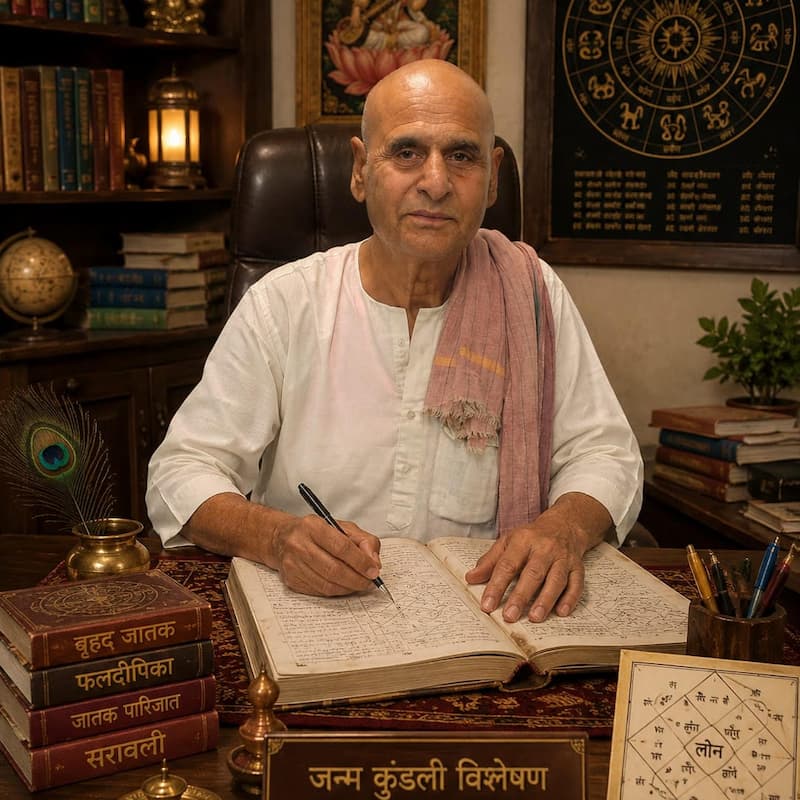
Narendra Kumar Chaubey is a Jyotisha Acharya with over 30 years of experience, based in Bihar and serving clients across India in Vedic astrology, mantra shastra, Vastu and ritual practice.
He completed his formal training at Kameshwar Singh Darbhanga Sanskrit University (KSDSU), one of India’s oldest and most respected institutions for Vedic and Sanskrit scholarship, where he studied Jyotisha shastra, mantra vidya and related classical sciences. KSDSU’s tradition of rigorous Sanskrit education tracing directly to the Mithila region’s centuries-old pandit lineage forms the foundation of his practice.
Over three decades, Narendra Kumar Chaubey has worked with thousands of individuals and families across Bihar and across India, offering guidance in:
- Kundli (birth chart) analysis: Identifying karmic patterns, planetary periods and life path guidance through classical Jyotisha
- Palmistry (Hasta Samudrika): Reading the hand according to the classical Samudrika Shastra tradition
- Vastu Shastra: Assessment and correction of living and working spaces according to directional and elemental principles
- Mantra and Pooja vidhi: Performing and guiding all categories of puja, havan, and mantra sadhana for personal, family and business situations
- Predictive Jyotisha: Transit analysis, muhurta (auspicious timing) selection and remedial guidance
He works across four languages Sanskrit, Hindi, English and Bhojpuri making classical knowledge accessible to practitioners across educational backgrounds and regions.
His writing for ABMantra brings the precision of classical Vedic training to practical mantra guidance: not general advice but specific prescriptions grounded in shastra, lineage and 30 years of direct practice with real situations.
For more info follow on: