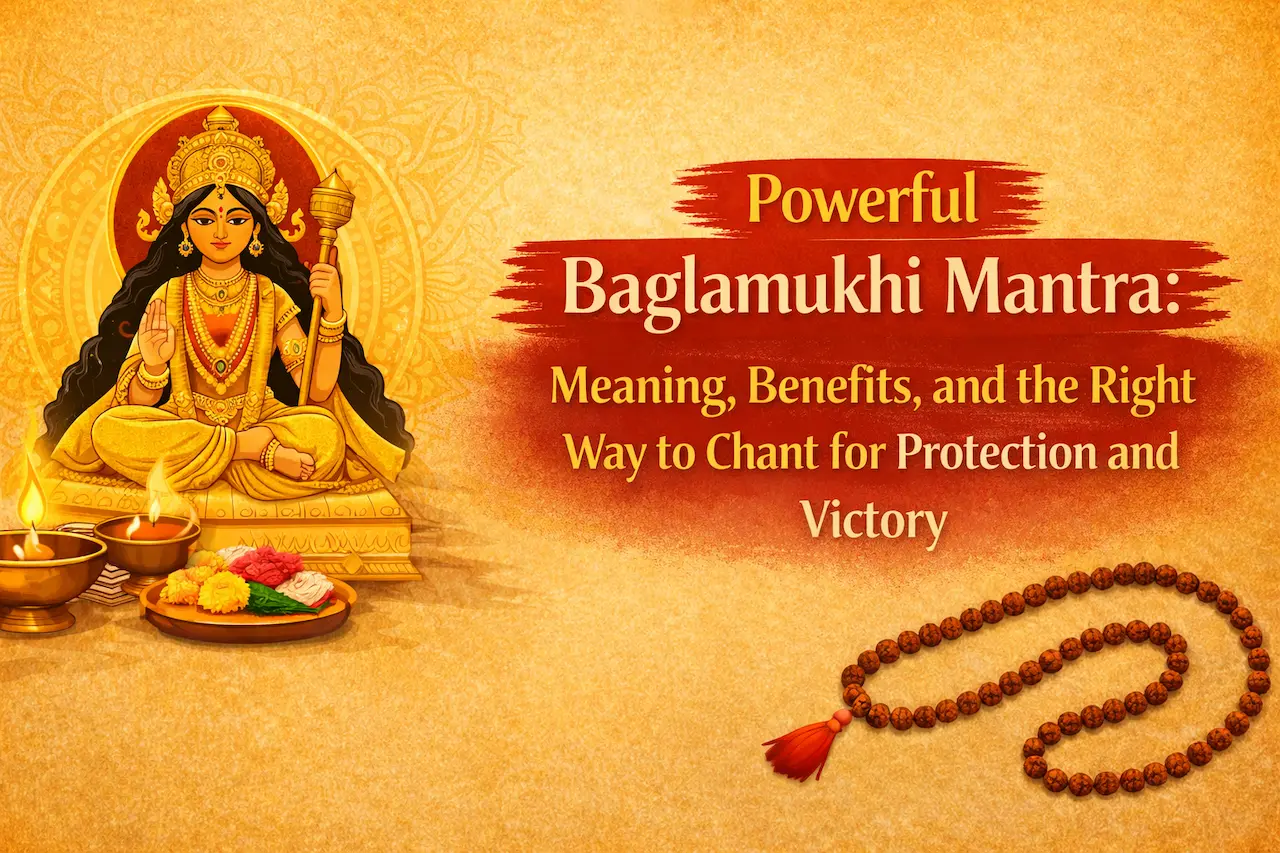

The Baglamukhi Mantra holds a special place in Hindu spiritual practice. Many devotees across India chant it when they seek protection, courage and victory over obstacles. Early morning at temples like the Baglamukhi Temple in Datia, Madhya Pradesh, you can hear this mantra. Its rhythmic chanting echoes through the air. The sound feels calm yet powerful, like a steady drumbeat guiding the mind toward focus.
In Hindu tradition, Maa Baglamukhi is one of the Ten Mahavidyas. These are fierce and wise forms of the Divine Mother. They are described in ancient tantric texts. Devotees believe her mantra has the power to stop negativity, silence harmful speech and bring success in difficult situations.
This guide explains the meaning of the Baglamukhi Mantra, its benefits and the correct way to chant it. The goal is to help readers understand the spiritual purpose of the mantra. It also helps them approach it with respect.It helps them approach it with clarity.
Who Is Goddess Maa Baglamukhi?
Maa Baglamukhi is a powerful form of the Divine Mother in Shaktism. Shaktism is a Hindu tradition that worships the goddess as the supreme energy of the universe. Scriptures linked with the Devi Mahatmya and tantric traditions describe her as the force that can stop chaos and restore balance.
Her name comes from two Sanskrit roots:
- Bagla refers to controlling or restraining.
- Mukhi means face or speech.
Together, the name symbolizes the ability to stop harmful words, negative intentions and destructive actions.
Images of Maa Baglamukhi often show her dressed in yellow clothes, holding the tongue of a demon while raising a weapon. The symbolism feels dramatic but meaningful. It represents the power to silence lies, gossip and injustice.
Many devotees wear yellow during her worship. If you visit the Baglamukhi Temple in Kangra, Himachal Pradesh, the courtyard often glows with yellow flowers. It also has turmeric offerings and saffron cloth.
The Original Baglamukhi Mantra in Sanskrit and English
The most widely known Baglamukhi mantra appears in tantric texts and devotional practices.
Mantra in Sanskrit
ॐ ह्लीं बगलामुखी सर्वदुष्टानां वाचं मुखं पदं स्तम्भय
जिह्वां कीलय बुद्धिं विनाशय ह्लीं ॐ स्वाहा॥
Mantra in English
Om Hleem Baglamukhi Sarva Dushtanam
Vacham Mukham Padam Stambhaya
Jihvam Keelay Buddheem Vinashaya
Hleem Om Swaha
Many devotees chant this mantra slowly while counting beads on a Rudraksha or turmeric mala.
The sound vibration of the word “Hleem” sits at the heart of the mantra. In tantric practice, this syllable acts like a seed of spiritual energy.
Baglamukhi Beej Mantra
The Baglamukhi Beej Mantra is a shorter form used during meditation and mantra repetition.
Beej Mantra
Om Hleem Baglamukhi Namah
This simple chant focuses on the sacred seed sound Hleem. Practitioners believe this vibration strengthens concentration and builds inner discipline.
Many spiritual teachers recommend beginning with the maa baglamukhi beej mantra before moving to the longer mantra.
Meaning of the Baglamukhi Mantra
The baglamukhi mantra carries symbolic meaning rather than literal instruction. The words express a prayer for protection from harmful influences.
The first line calls upon Maa Baglamukhi, asking her to control negative forces. The next lines request that harmful speech and actions stop before causing damage.
The mantra also asks the goddess to remove destructive thoughts and confusion from the mind.
In simple terms, the mantra seeks three things:
- Protection from negative people or situations.
- Strength to remain calm in conflict.
- Clarity of thought and speech.
When chanted with focus, the mantra becomes like a steady anchor in the mind. It brings attention back whenever emotions feel scattered.
Powerful Benefits of Chanting the Baglamukhi Mantra
Devotees across India chant the maa baglamukhi mantra for different reasons. Some approach it for spiritual growth, while others seek protection during challenging times.
Protection from Negative Energy
Many believers say the baglamukhi mantra benefits include protection from jealousy, harmful speech and conflict. The mantra acts like a shield that keeps the mind steady when outside pressure builds.
In spiritual terms, the mantra stops negativity from gaining power over thoughts.
Success in Legal Matters and Competition
The baglamukhi mantra for success is often associated with victory in disputes. Students preparing for competitive exams, business owners facing tough negotiations and people involved in legal matters sometimes chant it for confidence.
I once visited the Datia Baglamukhi Temple during a Navratri festival. A local priest shared that many devotees come before court hearings or exams. They sit quietly with turmeric malas and chant the mantra 108 times.
Mental Strength and Confidence
The rhythm of mantra chanting calms the nervous system. Repeating the mantra slowly creates a steady breathing pattern.
Over time, this practice helps reduce anxiety and builds mental discipline.
Spiritual Growth and Focus
The baglamukhi beej mantra works like a meditation tool. The seed sound “Hleem” draws attention inward.
People who practice daily chanting often report deeper concentration during meditation or prayer.
The Right Way to Chant the Baglamukhi Mantra
Chanting the baglamukhi mata mantra requires patience and respect. Spiritual teachers often say that intention matters more than speed.
Best Time to Chant
Many devotees chant the mantra during Brahma Muhurta, the quiet period before sunrise. The mind feels calm during this time and distractions remain minimal.
Tuesdays and Thursdays are also considered favorable for Maa Baglamukhi worship.
Preparing for the Chant
A clean and peaceful environment helps maintain focus.
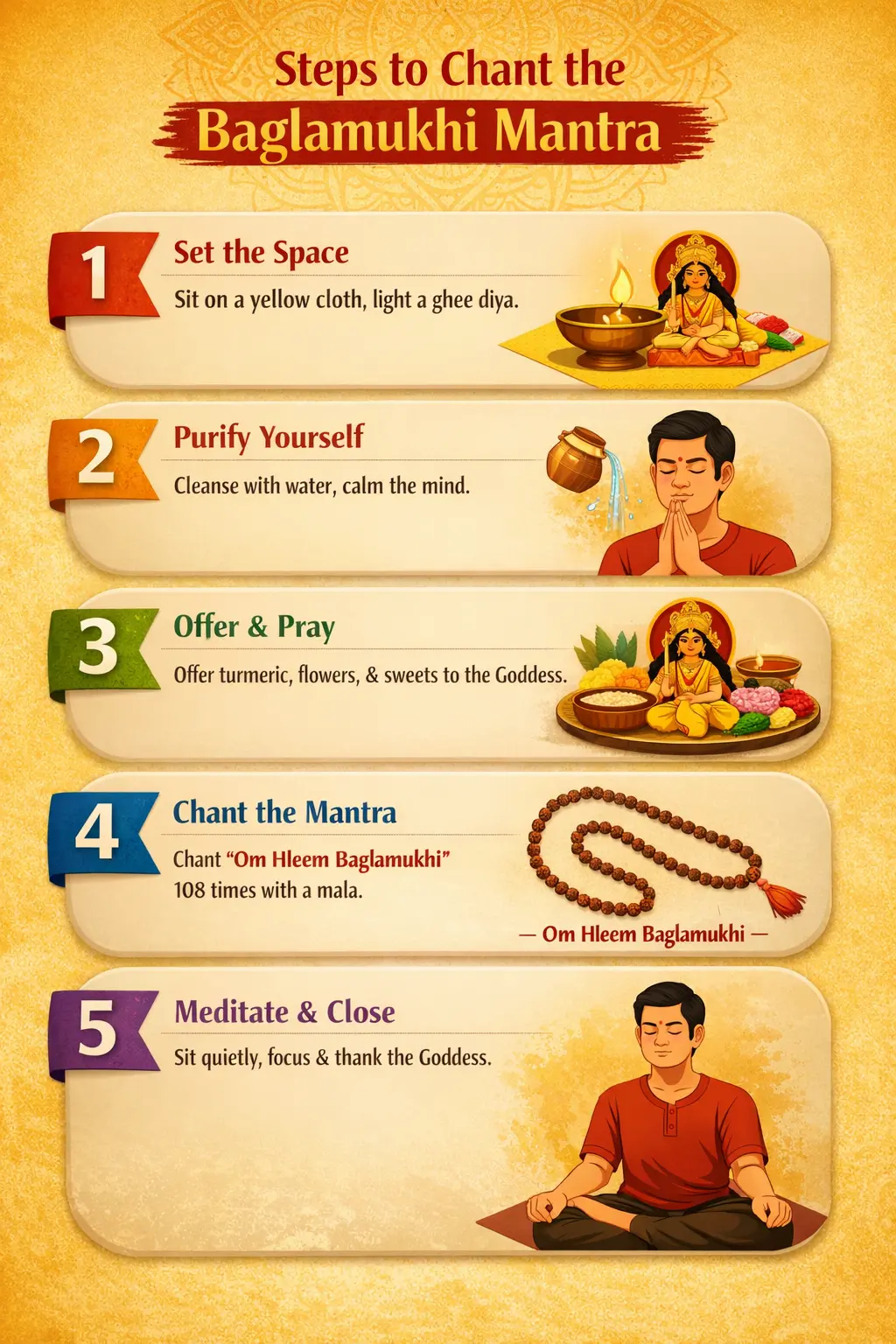
Devotees usually sit on a yellow cloth and light a small ghee diya or incense stick. Some people place a picture or idol of Maa Baglamukhi nearby.
Turmeric flowers, yellow sweets or sandalwood paste often appear in the offering plate.
How Many Times Should You Chant?
Traditional practice suggests chanting the baglamukhi mantra 108 times using a mala.
Beginners can start with 21 repetitions and gradually increase the count. Consistency matters more than the number.
Baglamukhi Mantra Sadhana
A deeper spiritual practice called Baglamukhi Mantra Sadhana involves chanting the mantra for several days with strong discipline.
Some devotees follow a 11-day or 41-day sadhana cycle. During this period, they chant the mantra daily, maintain a simple diet and avoid distractions.
In temples such as the Baglamukhi Temple in Nalkheda, Madhya Pradesh, priests perform extended mantra rituals during Navratri. The temple courtyard fills with the scent of incense and turmeric, while priests chant the mantra continuously.
The experience feels intense yet peaceful, like sitting inside a river of sound.
Common Mistakes While Chanting Baglamukhi Mantra
Many beginners approach the baglamukhi mantra with curiosity but little guidance. A few common mistakes can reduce the focus of the practice.
One mistake involves rushing through the mantra without understanding the pronunciation. Sanskrit sounds carry subtle vibrations, so slow chanting helps maintain clarity.
Another issue appears when people chant the mantra with anger or revenge in mind. Traditional teachings suggest focusing on protection and balance rather than harm.
A calm mindset keeps the practice spiritually healthy.
Who Should Chant the Baglamukhi Mantra?
The maa baglamukhi mantra can be practiced by anyone seeking inner strength and protection.
Students preparing for competitive exams such as UPSC or banking tests sometimes use mantra chanting as a way to build focus. Business owners facing intense negotiations also turn to spiritual practices for mental balance.
Still, spiritual teachers from institutions like the Ramakrishna Mission often remind practitioners that mantras should support positive thinking rather than control others.
The mantra works best when used for self-discipline and clarity.
Baglamukhi Mantra for Success and Protection
The idea of baglamukhi mantra for success appears often in devotional circles. Success here does not only mean winning disputes.
Many devotees describe success as the ability to remain calm in stressful moments.
During one temple visit in Himachal Pradesh, I noticed something interesting. A young man preparing for the SSC exam sat quietly in a corner of the temple courtyard. He held a turmeric mala and whispered the mantra slowly.
After finishing, he smiled and said, “The chanting helps me focus. My mind stops running everywhere.”
That moment showed how the mantra works like a mental anchor.
Just as a lighthouse guides ships through fog, mantra repetition guides the mind through confusion.
Final Thoughts on the Power of Baglamukhi Mantra
The Baglamukhi Mantra carries centuries of spiritual tradition from temples, scriptures and personal devotion. Its sound vibration reminds practitioners to control speech, steady the mind and face challenges with courage.
When practiced with patience, the mantra becomes more than words. It turns into a quiet rhythm that keeps the mind balanced even when life feels uncertain.
Perhaps the deeper question is not only what the mantra can change outside, but also how it might reshape the calm strength inside us.
Next Read:
- Om Krishnaya Vasudevaya Haraye Paramatmane Mantra: Meaning, Benefits
- Om Kleem Krishnaya Namaha Mantra Benefits in English & Hindi
- Gayatri Mantra: Lyrics, Meaning, and Best Time to Chant
- Mahamrityunjay Mantra: Meaning, Benefits and How to Chant Correctly
- What Is the Most Powerful Mantra? Meaning, Science, and Benefits
FAQs About Baglamukhi Mantra
What is the most powerful Baglamukhi mantra?
The most widely practiced mantra is “Om Hleem Baglamukhi Sarva Dushtanam…”, a Sanskrit prayer asking the goddess to stop negative speech and harmful actions. Devotees chant it for protection, clarity and victory in difficult situations.
What are the benefits of chanting Maa Baglamukhi mantra daily?
Daily chanting of the maa baglamukhi mantra may strengthen focus, reduce anxiety and create a sense of spiritual protection. Devotees believe the practice helps control negative thoughts and encourages calm decision-making during stressful situations.
What is the Baglamukhi Beej Mantra?
The baglamukhi beej mantra is a short chant: “Om Hleem Baglamukhi Namah.” It focuses on the sacred seed sound “Hleem,” which tantric traditions associate with protection, concentration and spiritual energy.
How many times should Baglamukhi mantra be chanted?
Traditional practice suggests chanting the baglamukhi mantra 108 times using a mala. Beginners often start with 21 repetitions daily and increase gradually as their focus and comfort with the mantra improve.
Can beginners chant Baglamukhi mantra?
Yes, beginners can chant the baglamukhi mata mantra if they approach it respectfully. Starting with the shorter beej mantra helps develop pronunciation and concentration before moving to longer versions.
Which day is best for Baglamukhi mantra chanting?
Many devotees consider Tuesday and Thursday favorable for chanting the maa baglamukhi mantra, though the mantra can be recited on any day with sincere intention and focus.
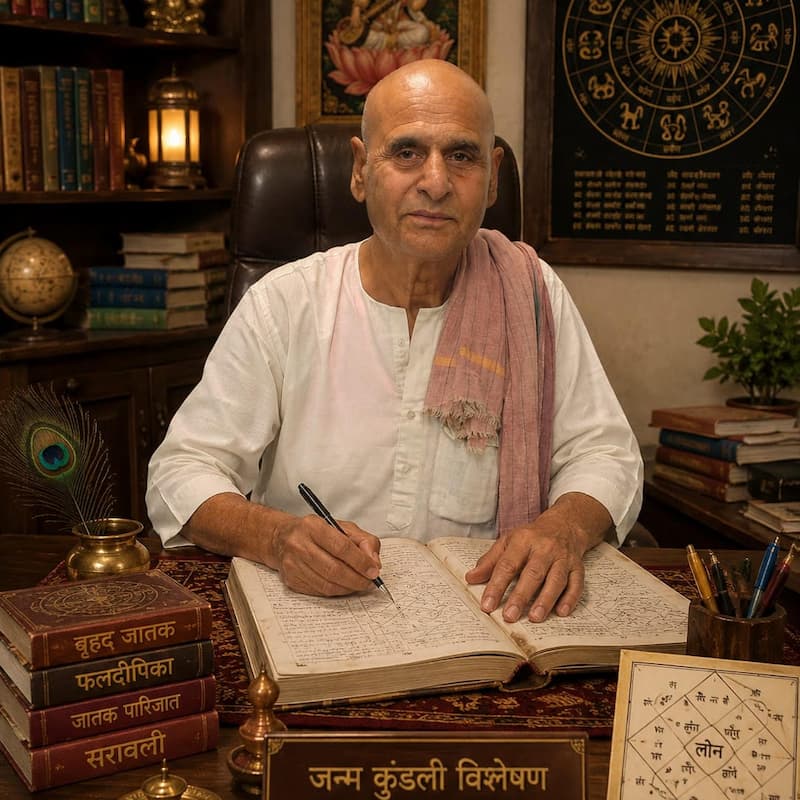
Narendra Kumar Chaubey is a Jyotisha Acharya with over 30 years of experience, based in Bihar and serving clients across India in Vedic astrology, mantra shastra, Vastu and ritual practice.
He completed his formal training at Kameshwar Singh Darbhanga Sanskrit University (KSDSU), one of India’s oldest and most respected institutions for Vedic and Sanskrit scholarship, where he studied Jyotisha shastra, mantra vidya and related classical sciences. KSDSU’s tradition of rigorous Sanskrit education tracing directly to the Mithila region’s centuries-old pandit lineage forms the foundation of his practice.
Over three decades, Narendra Kumar Chaubey has worked with thousands of individuals and families across Bihar and across India, offering guidance in:
- Kundli (birth chart) analysis: Identifying karmic patterns, planetary periods and life path guidance through classical Jyotisha
- Palmistry (Hasta Samudrika): Reading the hand according to the classical Samudrika Shastra tradition
- Vastu Shastra: Assessment and correction of living and working spaces according to directional and elemental principles
- Mantra and Pooja vidhi: Performing and guiding all categories of puja, havan, and mantra sadhana for personal, family and business situations
- Predictive Jyotisha: Transit analysis, muhurta (auspicious timing) selection and remedial guidance
He works across four languages Sanskrit, Hindi, English and Bhojpuri making classical knowledge accessible to practitioners across educational backgrounds and regions.
His writing for ABMantra brings the precision of classical Vedic training to practical mantra guidance: not general advice but specific prescriptions grounded in shastra, lineage and 30 years of direct practice with real situations.
For more info follow on: