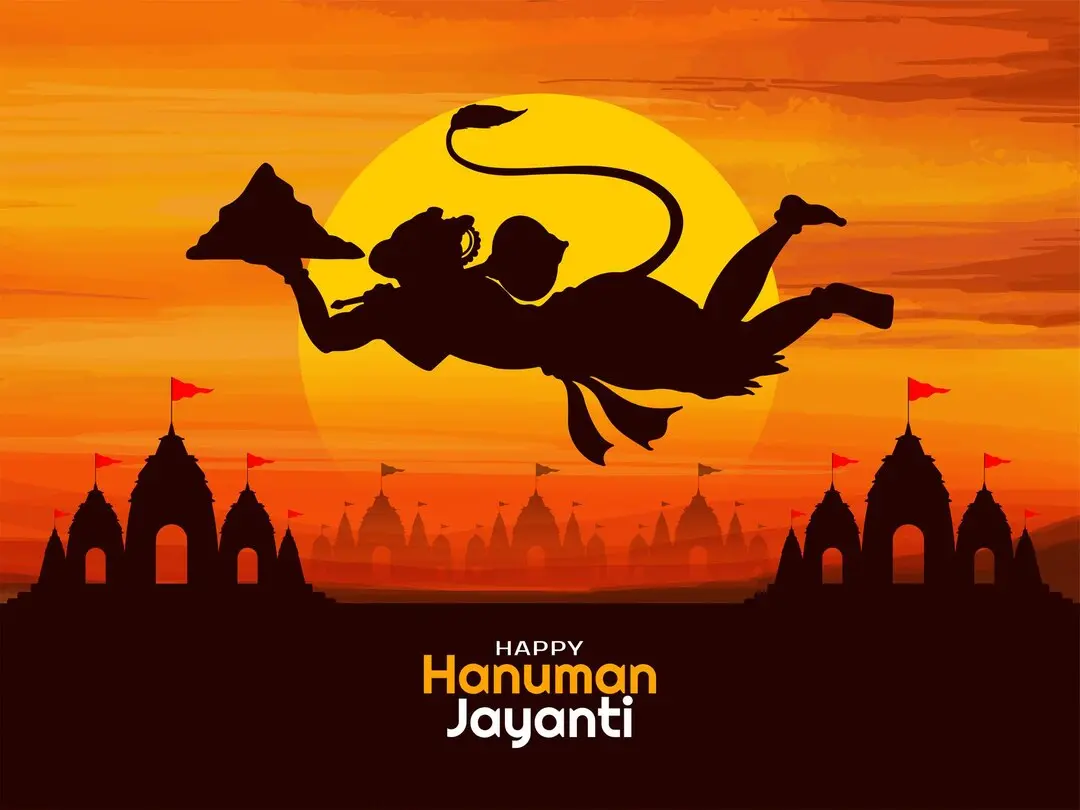

Every year on Chaitra Purnima, the full moon night of the Chaitra month, Hindus across the world celebrate the birth of Lord Hanuman. It is one of the most widely observed festivals in India, not because of elaborate ritual or expensive preparation, but because Hanuman himself is the most accessible of all deities. He asks for nothing but sincere devotion. His favourite offering is a laddoo and a pure heart.
In 2026, Hanuman Jayanti is observed on Thursday, April 2. Many people searching for Hanuman Jayanti kab hai 2026 or Hanuman Janmotsav 2026 will see two dates listed across different websites. The date has caused confusion because the Purnima Tithi starts on April 1, but the traditional Udaya Tithi rule (the tithi prevailing at sunrise determines the festival date) clearly places the correct observance on April 2. This guide explains the date clearly, gives you the confirmed timings, and walks you through everything from samagri to puja vidhi to mantras.
Thursday is Guruvar, the day of Jupiter. Hanuman Jayanti 2026 falling on a Thursday is considered doubly auspicious, as Jupiter amplifies the qualities of wisdom, grace and divine protection that Hanuman embodies. This guide covers the correct date, puja vidhi, mantras and everything else you need for a complete Hanuman Jayanti 2026 celebration.
For the complete guide to all Hanuman Mantras including the Hanuman Chalisa, Bajrang Baan and Beej Mantra, see our main article: Hanuman Mantra: Meaning, Types, Benefits and How to Chant.
Why April 2 Is the Correct Date for Hanuman Jayanti 2026
This is the most common question people ask about Hanuman Jayanti 2026, because some calendars show April 1 and others show April 2. Here is the clear explanation.
Hanuman Jayanti falls on Chaitra Purnima, the full moon day of Chaitra. The Purnima Tithi in 2026 begins at 7:06 AM on April 1 and ends at 7:41 AM on April 2. The key rule in Hindu calendar science is called Udaya Tithi: the tithi that is prevailing at sunrise on a given day is the tithi of that day.
On April 1, 2026, sunrise is at 6:12 AM. The Purnima Tithi begins at 7:06 AM, which is after sunrise. So Purnima is not prevailing at sunrise on April 1. That day does not qualify as Purnima by the Udaya Tithi rule.
On April 2, 2026, sunrise is at 6:11 AM. The Purnima Tithi is still active at that moment (it does not end until 7:41 AM). So Purnima is prevailing at sunrise on April 2. That is the correct Hanuman Jayanti day.
Source: Udaya Tithi rule as described in Dharmasindhu and Nirnayasindhu, the classical Hindu calendar science texts. Confirmed by Outlook India, DrikPanchang and multiple panchangs for 2026.
The practical implication: perform all your main puja rituals on the morning of April 2, ideally before 7:41 AM when the Purnima Tithi formally closes. Many devotees also begin an overnight Akhand Path from the evening of April 1, chanting continuously through to sunrise on April 2.
Hanuman Jayanti 2026: Complete Timings
The timings below are for North India (Delhi/IST). Adjust by 15 to 30 minutes for your location.
| Ritual / Event | Time | What to Do |
| Purnima Tithi Begins | 7:06 AM, Wednesday April 1, 2026 | Purnima starts on April 1 but does NOT prevail at sunrise that day (sunrise is at 6:12 AM). April 1 is NOT the correct day by the Udaya Tithi rule. |
| Purnima Tithi Ends | 7:41 AM, Thursday April 2, 2026 | Purnima IS prevailing at sunrise (6:11 AM) on April 2. This makes April 2 the correct Hanuman Jayanti date by Udaya Tithi principle. |
| Brahma Muhurta (Best start time) | 4:35 AM to 5:23 AM, April 2 | The most auspicious time to begin practice. Wake up, bathe and start chanting before sunrise. |
| Sunrise (Most auspicious puja) | 6:11 AM, April 2, 2026 | Lord Hanuman is believed to have been born at sunrise. The first minutes after sunrise on Hanuman Jayanti carry the highest devotional potency. |
| Morning Puja Window | 6:11 AM to 10:15 AM, April 2 | Complete sindoor offering, Hanuman Chalisa, Bajrang Baan and prasad distribution within this window. |
| Purnima Tithi Closes | 7:41 AM, April 2, 2026 | Finish the core rituals before 7:41 AM if possible. This is when the Purnima Tithi formally ends. |
| Evening Puja and Aarti | 6:30 PM to 8:00 PM, April 2 | The full moon rises in the evening. A beautiful time for Hanuman Aarti under the Purnima moonlight. Many families do a second puja at this time. |
| Overnight Akhand Path (optional) | Evening April 1 to sunrise April 2 | Many devotees and temples begin an Akhand Path (continuous reading) of Hanuman Chalisa or Sundarkand from the evening of April 1 through to sunrise on April 2. |
Why We Celebrate Hanuman Jayanti: The Story of His Birth
According to the Valmiki Ramayana and the Shiva Purana, Hanuman was born to Anjana, a celestial apsara who had taken birth as a female vanara (monkey) due to a curse, and her husband Kesari, a powerful vanara king. But his divine parentage goes further. Hanuman is also considered the son of Vayu, the wind god, which is why he is called Pavan Putra (son of the wind) and Vayu Putra (son of Vayu).
Lord Shiva himself is said to have played a role in Hanuman’s birth. Anjana had performed intense tapasya (spiritual austerities) for years to receive a divine son. Shiva, pleased with her devotion, transferred his own divine energy into the womb of Anjana through Vayu. This is why Hanuman is described in some texts as the 11th Rudra, an avatar of Shiva himself, while also being Vayu’s son and Anjana’s child.
Hanuman was born at sunrise on Chaitra Purnima. This is why sunrise on Hanuman Jayanti is considered the most sacred moment of the entire festival. The first rays of the sun on this day carry the memory of the moment when one of the greatest beings in the Hindu tradition entered the world.
Source: Valmiki Ramayana, Kishkindha Kanda, Sarga 66 (Hanuman’s birth and lineage). Shiva Purana, Rudra Samhita (Hanuman as Rudravatar).
As a child, Hanuman was extraordinary from his first day. Hungry and seeing the rising sun, he leapt into the sky thinking it was a ripe red fruit. Indra struck him with his thunderbolt, injuring his jaw (hanu in Sanskrit). From this injury, he received the name Hanuman. Vayu, furious at the injury to his son, withdrew all air from the universe. The gods had to appease Vayu with boons and restore Hanuman to health. Each boon given by the gods became one of Hanuman’s legendary powers: immortality, invincibility, strength beyond measure, the ability to change size at will.
Hanuman Jayanti Puja Samagri: Complete List
You do not need all of these items for a sincere and complete puja. Sindoor, a laddoo, red flowers and a ghee diya are the four essentials. Everything else adds depth and beauty. Arrange what you have with care.
| Item | Quantity | Why It Is Used |
| Hanuman idol or photo | 1 | The focus of the puja. Place on a red cloth facing east. Apply fresh sindoor before the puja begins. |
| Sindoor (vermilion) | A small quantity | The most important offering to Hanuman. Mixed with a few drops of jasmine oil (chameli ka tel) and applied to the idol. Sindoor signifies Hanuman’s devotion to Lord Rama. |
| Chameli ka tel (jasmine oil) | A small bottle | Used to mix with sindoor for the tilak. Also offered separately by anointing the idol’s feet. Hanuman’s favourite oil. |
| Red flowers | A handful | Marigold, hibiscus or any red flower. Red is Hanuman’s colour. Offer them at the feet of the idol. |
| Boondi laddoo | 5 or 11 | Hanuman’s favourite prasad. Odd numbers (5, 11, 21) are auspicious for offerings. Alternatively, besan laddoo or til laddoo work well. |
| Jaggery and roasted chana | A small portion | One of the most traditional Hanuman prasad combinations. Simple, pure and deeply associated with his worship. |
| Banana | 1 or 2 | A whole banana is always offered. Hanuman’s association with monkeys makes banana a natural and traditional offering. |
| Ghee diya | 1 | Lit at the start of the puja and kept burning throughout. Use pure cow ghee. The flame should face the idol. |
| Agarbatti (incense) | 3 to 5 sticks | Gugal (gum resin) or Tagar incense is traditionally associated with Hanuman puja. Any natural incense is acceptable. |
| Red cloth | One piece | Placed on the altar as the base. Red is the colour of Hanuman’s energy and devotion. |
| Paan (betel leaf) with supari | 1 to 2 | Offered as part of the traditional prasad. Meetha paan (sweet betel) is particularly associated with Hanuman worship. |
| Gangajal or clean water | A small vessel | Used for Abhishek (ritual bathing of the idol) if performing the full puja. Even a few drops sprinkled on the idol is considered purifying. |
Hanuman Jayanti Puja Vidhi: Step-by-Step
This is the complete Hanuman Jayanti puja sequence. The full ritual takes about 45 minutes to one hour including Hanuman Chalisa. For a shorter version, Steps 1 through 4 plus the Chalisa takes about 20 minutes.
Step 1: Prepare Yourself
1. Wake during Brahma Muhurta (4:35 AM to 5:23 AM) or at least before sunrise.
2. Bathe with clean water. Add a pinch of haldi or a drop of Gangajal to the bathwater if available.
3. Wear red or saffron clothes. These are Hanuman’s colours. Avoid black and dark shades.
4. Apply a small tilak on your forehead using red chandan or kumkum before approaching the altar.
Step 2: Set Up the Altar
5. Place a clean red cloth on your puja space or shelf. Lay it flat and smooth.
6. Place the Hanuman idol or photo on the red cloth. The idol should face east or west.
7. Mix a small amount of sindoor with two to three drops of chameli oil in a small plate. This is the most important prasad you will offer.
8. Arrange the other items: ghee diya on the left, agarbatti on the right, flowers in front, laddoo and banana on a leaf or small plate.
9. Light the ghee diya and agarbatti. This marks the formal beginning of the puja.
Step 3: The Sindoor Offering
This is the most distinctive and beloved Hanuman Jayanti ritual. It comes from the story of Hanuman covering himself with sindoor out of devotion to Lord Rama.
10. Hold the small plate with sindoor in your right hand.
11. Using the ring finger of your right hand, gently apply the sindoor-oil mixture to the idol’s chest, forehead and feet.
12. As you apply, chant: Om Hanumate Namah three times.
13. Place any remaining sindoor at the feet of the idol as an offering.
Step 4: Flower and Prasad Offerings
14. Offer red flowers by placing them gently at the feet of the idol.
15. Place the laddoo, banana and paan on a clean leaf or small plate before the idol.
16. Chant: Om Namo Hanumate Rudravataray Sarvashtrubadhanaya Charu Vikramanaya Ramabhaktaya Vayuputraya Namaskar, three times.
Step 5: Mantra Chanting
17. Chant the Hanuman Dhyana Shloka (Manojavam Marutatulyavegam…) three times to begin.
18. Recite the Hanuman Chalisa once. If you know it by heart, close your eyes. If not, read from a book. Full focus matters more than memorisation.
19. After the Chalisa, chant the Hanuman Beej Mantra (Om Aim Hrim Hanumate Ramadutaya Namah) 108 times on a mala if available, or 11 or 27 times by count.
20. If facing a specific difficulty or need for protection, this is the time to recite Bajrang Baan once with full sincerity.
Step 6: Aarti
21. Light a camphor piece on a small plate. Wave it in a clockwise circle before the idol while chanting or singing Aarti Kije Hanuman Lala Ki.
22. Ring a bell or clap as the aarti proceeds to create sound vibration in the puja space.
23. After the aarti, press your palms together and bow deeply before the idol.
Step 7: Prasad and Donation
24. Break the laddoo offered as naivedya and distribute it to all family members. Each person receives a small piece as Hanuman’s blessing.
25. Donate food to someone in need on this day. Distributing laddoo, jaggery-chana or a full meal to workers, watchmen or the homeless on Hanuman Jayanti is a traditional and deeply meritorious practice.
26. If fasting, break the fast only after the evening aarti. Consume fruits, milk or sendha namak vrat food until then.
From our practice: The one thing that makes Hanuman Jayanti feel different from a regular Tuesday puja is the atmosphere at the temple before sunrise. We have done this at the Hanuman Mandir in Connaught Place, Delhi, several years in a row. The queue starts forming at 4 AM. By 5:30 AM the courtyard is full. But it never feels chaotic. There is a focused stillness in a large crowd of people who all arrived before dawn for the same reason. If you can do one temple visit this year on Hanuman Jayanti, try to go before 6 AM. It is a different experience from the midday crowd.
Hanuman Jayanti Mantras: What to Chant and When
You do not need to chant all six mantras. Choose the one or two that feel most natural and chant them with full attention. Sincerity always matters more than the number of mantras or repetitions.
| Mantra | When to Chant | Why This Mantra |
| Om Hanumate Namah | Simple daily salutation. Chant throughout the day on Hanuman Jayanti, starting from Brahma Muhurta. | The most basic and universally accepted Hanuman mantra. Good for everyone including children and beginners. |
| Om Aim Hrim Hanumate Ramadutaya Namah | Chant 108 times in the morning after the main puja. Use a red mala if possible. | The Hanuman Beej Mantra. The most concentrated form of Hanuman’s energy in a single chant. |
| Manojavam Marutatulyavegam, Jitendriyam Buddhimatam Varishtham, Vataatmajam Vanarayuthamukhyam, Shriramadutam Sharanam Prapadye | Recited before starting the Hanuman Chalisa. Chant 3 times. | The Hanuman Dhyana Shloka. Describes Hanuman as swift as the mind, equal to the wind, conqueror of the senses. Centres the mind before the longer practice. |
| Hanuman Chalisa (full 40 verses) | Recite once in the morning during the puja window. Many devotees recite 11 times on Hanuman Jayanti. | Composed by Tulsidas in the 16th century. The complete meditation on Hanuman’s qualities, deeds and power. Searched over 8 lakh times per month. |
| Bajrang Baan | Recite once in the morning if facing a specific difficulty. Not recommended for casual recitation. | The most powerful protective Hanuman prayer. Traditionally reserved for times of genuine need. |
| Om Namo Hanumate Rudravataray Sarvashtrubadhanaya Charu Vikramanaya Ramabhaktaya Vayuputraya Namaskar | Chant 21 times before the evening aarti. | Invokes Hanuman as the Rudra avatar, destroyer of enemies and obstacles. Particularly powerful on the Purnima evening. |
For the complete Hanuman Chalisa with all 40 verse meanings, see our article: Hanuman Chalisa: Complete Lyrics, Meaning and How to Read.
For the Hanuman Aarti full lyrics and how to perform Aarti at home, see our article: Hanuman Aarti: Aarti Kije Hanuman Lala Ki — Complete Lyrics, Meaning and How to Sing.
Hanuman Jayanti Fasting: Rules and What to Eat
Fasting on Hanuman Jayanti is optional but considered highly meritorious. There are two levels of fast commonly observed.
- Nirjala Vrat (full fast without water): Observed by dedicated devotees from sunrise on April 2 until the evening aarti. Not recommended for those with health conditions.
- Fruit and milk fast (Phal Aahar): The most common form. Eat only fresh fruits, milk, curd, nuts and sendha namak (rock salt). Avoid grains, regular salt and cooked vegetables. Break the fast after the evening aarti.
- Single meal fast: Eat one simple sattvic meal after the evening puja. Avoid non-vegetarian food, onion, garlic and alcohol for the entire day.
Even those who do not observe any formal fast should avoid non-vegetarian food and alcohol on Hanuman Jayanti. It is a day of purity and devotion, and these items are considered incompatible with the energy of the festival.
How Hanuman Jayanti Is Celebrated Across India
| Region | Date in 2026 | Key Practices |
| North India (most states) | Thursday, April 2, 2026 | Temple darshan from before sunrise, Hanuman Chalisa path, sindoor offering, distribution of boondi laddoo, bhajan-kirtan in the evening under the full moon. |
| Andhra Pradesh and Telangana | April 2 marks the START of a 41-day celebration | The 41-day Hanuman Jayanti festival begins on Chaitra Purnima and concludes on the 10th day of Krishna Paksha in Vaishakha. Devotees take a 41-day vow of fasting, celibacy and daily Hanuman Chalisa recitation. |
| Tamil Nadu and Kerala | Celebrated in Margashirsha month (December/January) | Known as Hanumath Jayanti. Falls on the Amavasya (new moon) of Margashirsha, so the Tamil and Keralite celebration does not coincide with the North Indian Chaitra Purnima date. |
| Maharashtra and Karnataka | Margashirsha Shukla Paksha Trayodashi | The 13th day of the bright fortnight of Margashirsha month. A smaller community celebration compared to the North Indian festival, but observed with full puja at major Hanuman temples. |
| Vrindavan and Mathura | Thursday, April 2, 2026 | Among the most celebrated Hanuman Jayantis in the country. Temples conduct Akhand Path from April 1 evening. Huge processions of devotees. Special arti and prasad distribution at dawn on April 2. |
Why Hanuman Jayanti Matters: Hanuman as the Deity of Kalyug
Among all the deities in the Hindu tradition, Hanuman holds a unique position in the current age. Classical texts describe Kalyug (the present era) as a time of confusion, distraction and moral difficulty. In this environment, Hanuman’s quality of pure, unconditional devotion becomes the most relevant and the most accessible teaching.
Hanuman does not require elaborate ritual, expensive offerings or specialist knowledge. He responds to sincerity. A single recitation of the Hanuman Chalisa with genuine attention, done in a bus, a quiet room or at a street-corner temple at 5 AM, carries the same merit as an elaborate puja performed with all the correct items.
He is also considered the most powerful protector in Kalyug specifically. Texts describe him as the Chiranjeevi (immortal being) who remains present in this age as a guardian. Devotees experiencing fear, difficulty or the effects of black magic or evil eye (nazar) have turned to Hanuman first in every generation. His protection is not transactional. It responds to the quality of the devotee’s faith, not the size of their offering.
Conclusion
Hanuman Jayanti is one of the simplest festivals to observe correctly. This puja vidhi does not require a pandit or an expensive setup. You need a clean space, a laddoo, sindoor, a ghee diya and the Hanuman Chalisa. You need to wake before the sun. And you need to show up with a sincere heart.
In 2026, the day falls on a Thursday, Hanuman Jayanti on Guruvar. It is an especially auspicious convergence. Set your alarm for 4:35 AM on April 2. Take your bath. Apply your tilak. Offer the sindoor. Chant the Chalisa. Give a laddoo to someone who will be happy to receive it.
Frequently Asked Questions
When is Hanuman Jayanti 2026?
Hanuman Jayanti 2026 is observed on Thursday, April 2, 2026. The Purnima Tithi (full moon) begins at 7:06 AM on April 1, but it does not prevail at sunrise that day (sunrise is at 6:12 AM). On April 2, the Purnima Tithi is still active at sunrise (6:11 AM), making April 2 the correct observance date according to the Udaya Tithi principle followed by most North Indian traditions. Some sources cite April 1 — this confusion arises because the Purnima Tithi begins on that day, but the standard rule is that the tithi prevailing at sunrise determines the festival date.
What is the best time to do Hanuman Jayanti puja?
The most auspicious window is from Brahma Muhurta (4:35 AM to 5:23 AM) through the first hour after sunrise (6:11 AM to 7:41 AM) on April 2, 2026. Lord Hanuman is traditionally believed to have been born at sunrise. The Purnima Tithi formally ends at 7:41 AM, so completing the core rituals (sindoor offering, Hanuman Chalisa, prasad distribution) before this time is ideal. Evening puja between 6:30 PM and 8:00 PM under the full moon is also highly auspicious.
What is offered to Hanuman on Hanuman Jayanti?
The most important offerings are sindoor (vermilion) mixed with chameli oil (jasmine oil) and applied to the idol, boondi laddoo (Hanuman’s favourite), jaggery and roasted chana, banana, red flowers (especially marigold and hibiscus), and paan (betel leaf). The sindoor offering is unique to Hanuman puja and comes from the story of Hanuman applying sindoor all over his body out of devotion to Lord Rama.
How many times should Hanuman Chalisa be chanted on Hanuman Jayanti?
There is no fixed rule, but traditional guidance recommends chanting 11 times on Hanuman Jayanti for those who can manage it. Even a single sincere recitation carries full merit. Many devotees commit to an overnight Akhand Path (continuous reading) from the evening of April 1 through to sunrise on April 2. For daily practitioners, chanting 3 or 7 times is a common Hanuman Jayanti practice.
Can I do Hanuman Jayanti puja at home without visiting a temple?
Yes. Home puja is fully accepted and complete. Set up a clean altar with a red cloth, place the Hanuman photo or idol on it, light a ghee diya, offer sindoor, red flowers, laddoo and banana, chant the Hanuman Chalisa and Aarti, and distribute prasad to family members. If you can do this during the Brahma Muhurta or right after sunrise, you will have performed the complete Hanuman Jayanti puja. Temple visits add communal energy and blessings but are not required.
Why is sindoor offered to Hanuman?
The origin comes from a well-known story. Sita Mata applied sindoor in her hair parting as a mark of her devotion to Lord Rama and her prayer for his long life. Young Hanuman asked why, and upon understanding, he smeared sindoor all over his body saying: if a little sindoor makes the Lord happy, all of this will make him even happier. Touched by this act of innocent devotion, Lord Rama blessed Hanuman with immortality. Since then, offering sindoor to Hanuman is considered the most beloved offering to him.
What should I not do on Hanuman Jayanti?
Traditional guidance for Hanuman Jayanti includes avoiding non-vegetarian food, alcohol and tamasic foods for the entire day. Avoid cutting hair or nails. Speak kindly and avoid arguments. If fasting, avoid grains and regular salt (use sendha namak instead). Avoid sleeping during the day if observing the vrat. These are guidelines for those who choose to observe the full discipline. Even without the vrat, visiting a temple, chanting the Chalisa once and offering a laddoo to Hanuman is considered a complete and sincere observation.
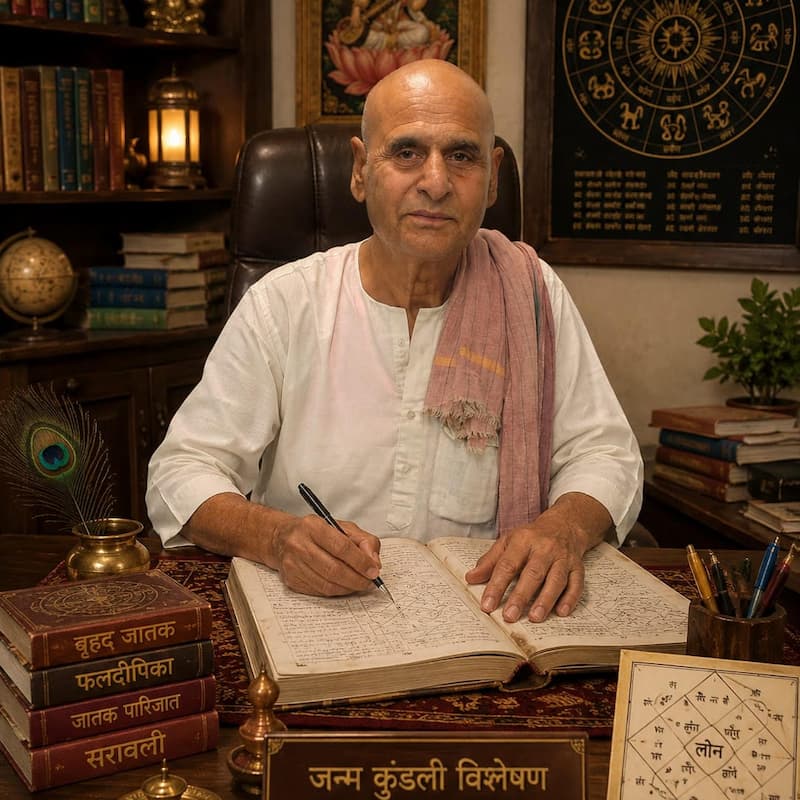
Narendra Kumar Chaubey is a Jyotisha Acharya with over 30 years of experience, based in Bihar and serving clients across India in Vedic astrology, mantra shastra, Vastu and ritual practice.
He completed his formal training at Kameshwar Singh Darbhanga Sanskrit University (KSDSU), one of India’s oldest and most respected institutions for Vedic and Sanskrit scholarship, where he studied Jyotisha shastra, mantra vidya and related classical sciences. KSDSU’s tradition of rigorous Sanskrit education tracing directly to the Mithila region’s centuries-old pandit lineage forms the foundation of his practice.
Over three decades, Narendra Kumar Chaubey has worked with thousands of individuals and families across Bihar and across India, offering guidance in:
- Kundli (birth chart) analysis: Identifying karmic patterns, planetary periods and life path guidance through classical Jyotisha
- Palmistry (Hasta Samudrika): Reading the hand according to the classical Samudrika Shastra tradition
- Vastu Shastra: Assessment and correction of living and working spaces according to directional and elemental principles
- Mantra and Pooja vidhi: Performing and guiding all categories of puja, havan, and mantra sadhana for personal, family and business situations
- Predictive Jyotisha: Transit analysis, muhurta (auspicious timing) selection and remedial guidance
He works across four languages Sanskrit, Hindi, English and Bhojpuri making classical knowledge accessible to practitioners across educational backgrounds and regions.
His writing for ABMantra brings the precision of classical Vedic training to practical mantra guidance: not general advice but specific prescriptions grounded in shastra, lineage and 30 years of direct practice with real situations.
For more info follow on: