
Quick Answer
How many Gayatri Mantras are there?
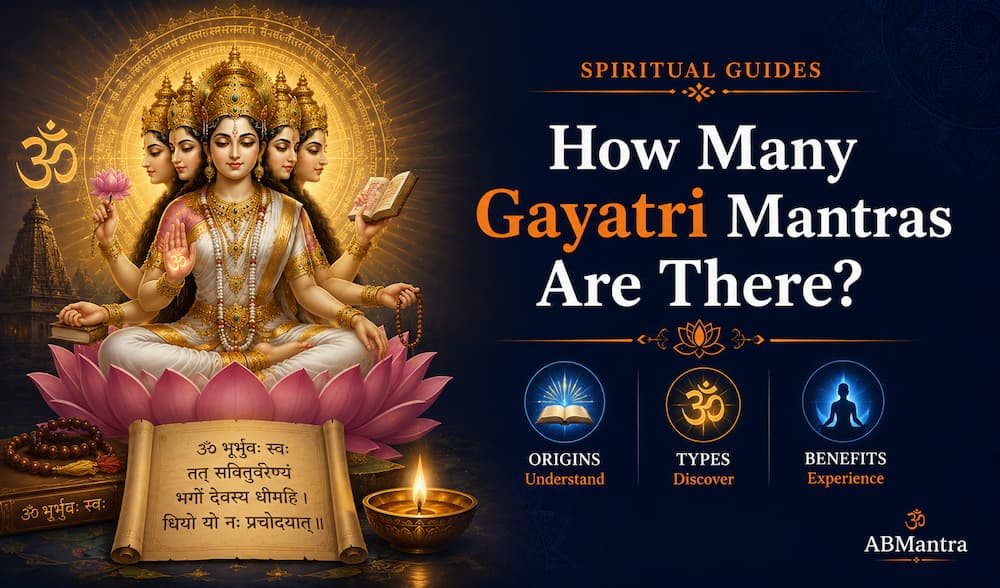
One original: The Gayatri Mantra from Rigveda 3.62.10 : Om Bhur Bhuvah Swah Tat Savitur Varenyam Bhargo Devasya Dhimahi Dhiyo Yo Nah Prachodayat. This is the Mula Gayatri, the root mantra. There is only one of these.
24 deity forms: The Gayatri metre (24-syllable structure: Vidmahe, Dhimahi, Prachodayat) has been used to compose mantras for 24 different deities. These follow the same structure but address different divine qualities. These are called the Sakam (with desire) Gayatris.
108 and beyond: Extended traditions list Gayatri mantras for every major and minor deity in the Vedic and Puranic tradition. Some compilations list 108, some list more.
Which one should you chant: For daily practice, the Mula Gayatri. For specific purposes, the deity-specific form matching your need. Both are valid. Both are described in the tradition.
Who This Article Is For
This article is for you if: you have heard that there are multiple Gayatri Mantras and want to know exactly how many and what the difference is | you want to know which of the 24 Gayatri forms matches your specific need | you want the classical source for the original Gayatri Mantra and why the other forms exist.
Also see: Gayatri Mantra meaning in Hindi: complete word by word guide and When to chant Gayatri Mantra: the three Sandhyas explained
The question of how many Gayatri Mantras exist has a precise answer, but it requires understanding three distinct levels of the tradition. Most people asking this question have heard that there are 24, or 108, or some larger number : and do not know which of these is correct or how they relate to each other. This article gives the complete answer.
Here is what most articles on this topic miss: the confusion arises because there are two completely different things called a Gayatri Mantra. The first is the specific mantra from the Rigveda dedicated to Savitr : this is the Mula Gayatri, and there is only one. The second is a category of mantras that follow the Gayatri metre (the 24-syllable Anushtup-adjacent metre with the three-part Vidmahe-Dhimahi-Prachodayat structure). There are 24 deity-specific mantras in this category, and the tradition uses both the specific mantra and the category under the same name : Gayatri Mantra : which creates the confusion.
Level 1: The One Original Gayatri Mantra
The Mula (Root) Gayatri Mantra : Rigveda 3.62.10
Complete form:
Om Bhur Bhuvah Swah
Tat Savitur Varenyam
Bhargo Devasya Dhimahi
Dhiyo Yo Nah Prachodayat
Devanagari:
ॐ भूर्भुवः स्वः
तत्सवितुर्वरेण्यम्
भर्गो देवस्य धीमहि
धियो यो नः प्रचोदयात्
Meaning: We meditate on the divine light of Savitr (the sun deity). May that divine light illuminate our intellect.
Source: Rigveda Mandala 3, Sukta 62, Verse 10. Attributed to the seer Vishwamitra of the Kaushika lineage.
The three-part structure:
Om Bhur Bhuvah Swah = the Mahavyahriti (the three cosmic planes: earth, atmosphere and sky)
Tat Savitur Varenyam Bhargo Devasya Dhimahi = the meditation: we meditate on the most adorable divine light of Savitr
Dhiyo Yo Nah Prachodayat = the request: may it illuminate our intellect
This is the Gayatri Mantra. When the tradition says “chant the Gayatri Mantra,” this is what it means. 24 syllables, composed in the Gayatri metre, dedicated to Savitr (the solar deity as creator and illuminator). This is the mantra chanted 108 times at Brahma Muhurta, this is what the Upanayana ceremony prescribes, this is what Vishwamitra received.
Level 2: The 24 Deity Gayatri Forms
The Gayatri metre : the specific three-part 24-syllable structure (Vidmahe… Dhimahi… Prachodayat) : has been used to compose mantras addressed to 24 different deities. These are called the Sakam Gayatris (desire-based Gayatris) because they invoke specific deities for specific benefits, unlike the Mula Gayatri which is a universal invocation of divine light.
The tradition holds that the 24 syllables of the Mula Gayatri correspond to 24 divine shaktis, and the 24 deity-specific Gayatris are invocations of those 24 divine powers through their corresponding deities.
| # | Deity Gayatri | Mantra | Chanted for |
|---|---|---|---|
| 1 | Ganesha Gayatri | Om Ekadantaya Vidmahe Vakratundaya Dhimahi Tanno Dantih Prachodayat | Removing obstacles, beginning new tasks |
| 2 | Vishnu Gayatri | Om Narayanaya Vidmahe Vasudevaya Dhimahi Tanno Vishnu Prachodayat | Sustaining power, preservation of what you have |
| 3 | Shiva Gayatri | Om Panchavaktraya Vidmahe Mahadevaya Dhimahi Tanno Rudra Prachodayat | Auspiciousness, spiritual elevation, pure thoughts |
| 4 | Brahma Gayatri | Om Chaturmukhaya Vidmahe Hansa Rudraya Dhimahi Tanno Brahma Prachodayat | Creative power, productivity, new beginnings |
| 5 | Rama Gayatri | Om Dashrathaye Vidmahe Sita Vallabhaya Dhimahi Tanno Rama Prachodayat | Ethical conduct, dharmic living, righteousness |
| 6 | Krishna Gayatri | Om Devaki Nandanaya Vidmahe Vasudevaya Dhimahi Tanno Krishna Prachodayat | Dynamic energy, intense sadhana, joy in action |
| 7 | Indra Gayatri | Om Sahasranetraya Vidmahe Vajrahastaya Dhimahi Tanno Indra Prachodayat | Protection from attack, strength against opposition |
| 8 | Saraswati Gayatri | Om Vageeshwaryai Vidmahe Vagwadeenyai Dhimahi Tannah Saraswati Prachodayat | Knowledge, speech, intelligence, academic success |
| 9 | Surya Gayatri | Om Bhaskaraya Vidmahe Divakaraya Dhimahi Tanno Suryah Prachodayat | Health, vitality, confidence, government success |
| 10 | Lakshmi Gayatri | Om Mahalakshmyai Vidmahe Vishnu Priyayai Dhimahi Tanno Lakshmi Prachodayat | Wealth, abundance, attracting prosperity |
| 11 | Durga Gayatri | Om Maheshwaryai Vidmahe Durgayai Dhimahi Tanno Devi Prachodayat | Protection, strength, overcoming fear |
| 12 | Hanuman Gayatri | Om Anjaneyaya Vidmahe Mahabalaya Dhimahi Tanno Hanumah Prachodayat | Strength, devotion, protection from enemies |
| 13 | Kuber Gayatri | Om Yakshaya Vidmahe Vaishravanaya Dhimahi Tanno Kubera Prachodayat | Wealth preservation, treasury growth |
| 14 | Shani Gayatri | Om Ravisutaya Vidmahe Manda Grahaya Dhimahi Tanno Shanih Prachodayat | Saturn pacification, Sade Sati relief |
| 15 | Kali Gayatri | Om Mahakaalyai Vidmahe Smashan Vaasinyai Dhimahi Tanno Kaali Prachodayat | Destruction of deep-rooted negativity |
| 16 | Baglamukhi Gayatri | Om Baglamukhyai Vidmahe Stambhinyai Dhimahi Tanno Bagla Prachodayat | Neutralising enemies, court cases |
| 17 | Dakshinamurthi Gayatri | Om Dakshinamurthaye Vidmahe Dhyana Sthaya Dhimahi Tanno Shivah Prachodayat | Deep understanding, teaching, integration of knowledge |
| 18 | Hayagriva Gayatri | Om Hayagrivaya Vidmahe Vagishwaraya Dhimahi Tanno Hayagrivah Prachodayat | Memory retention, scientific learning |
| 19 | Subrahmanya Gayatri | Om Tatpurushaya Vidmahe Mahasenaya Dhimahi Tanno Shanmukha Prachodayat | Victory, energy, spiritual evolution |
| 20 | Devi Gayatri | Om Mahadewiyei Vidmahe Vishnu Patnyei Dhimahi Tanno Devi Prachodayat | Universal mother energy, general divine grace |
| 21 | Narasimha Gayatri | Om Vajranakhaya Vidmahe Tivra Damshtraya Dhimahi Tanno Narasimha Prachodayat | Protection from evil, liberation from debt |
| 22 | Garuda Gayatri | Om Tatpurushaya Vidmahe Suvarnapakshaya Dhimahi Tanno Garuda Prachodayat | Antidote to poison, freedom from negativity |
| 23 | Rahu Gayatri | Om Shiro Rupaya Vidmahe Amriteshaya Dhimahi Tanno Rahu Prachodayat | Rahu Mahadasha pacification |
| 24 | Ketu Gayatri | Om Ashwadwajaya Vidmahe Soola Hastaya Dhimahi Tanno Ketu Prachodayat | Ketu Mahadasha pacification, spiritual detachment |
Level 3: The 108+ Extended Collection
Beyond the 24 standard deity Gayatri forms, the tradition has composed Gayatri mantras for virtually every deity, sub-deity and divine quality in the Vedic and Puranic tradition. Some compilations list 108 (the sacred number of completeness). Others list more.
These include Gayatri mantras for Dhanvantari (health), Annapurna (food and nourishment), Varuna (water, rain, forgiveness), Vayu (wind and breath), Agni (fire and transformation), Yama (death, justice and transition), Saraswati in her various forms, Parvati, and many more.
For daily practitioners, the relevant question is not how many exist in total but which one serves your specific need. The 24 forms above cover the full range of life situations most people face.
The Gayatri Metre: What Makes a Mantra a Gayatri
The reason so many mantras carry the Gayatri name is the metre, not the deity. Gayatri is one of the 13 classical Vedic metres, defined as a verse of 24 syllables arranged in three lines of 8 syllables each. Any mantra composed in this metre can be called a Gayatri mantra. The Mula Gayatri uses this metre addressed to Savitr. The 24 deity forms use the same metre addressed to different deities. The metre is what unifies them, not the deity.
| Feature | Mula Gayatri | Deity Gayatri Forms |
|---|---|---|
| Source | Rigveda 3.62.10 : oldest Vedic scripture | Post-Vedic Puranic and Tantric tradition |
| Deity addressed | Savitr : the divine light and creative power of the sun | Specific deity matching the practitioner’s need |
| Metre | Gayatri metre : 24 syllables in three 8-syllable lines | Same Gayatri metre : Vidmahe, Dhimahi, Prachodayat structure |
| Purpose | Universal illumination of intellect : the general mantra for all practitioners | Specific divine quality invoked for a specific life situation |
| When to use | Daily practice, morning Sandhya, foundation of all Vedic practice | When a specific need requires a specific deity’s grace |
| Authority | The highest : Shruti (directly revealed Vedic scripture) | Smriti and Agama (remembered tradition and temple scripture) |
Which Gayatri Form Should You Chant
The answer depends on what you are chanting for.
For daily practice with no specific focus: Chant the Mula Gayatri. Always. 108 times at Brahma Muhurta. This is the foundational Vedic practice that precedes everything else.
For a specific life situation alongside the daily Mula Gayatri: Add the relevant deity Gayatri. Do not replace the Mula Gayatri with the deity Gayatri : add it on top.
Practical examples: If you face obstacles in starting something new, add the Ganesha Gayatri on Wednesdays. If you are working on wealth preservation, add the Lakshmi Gayatri on Fridays. If you face enemies, add the Baglamukhi Gayatri on Tuesdays. If you are struggling with Saturn’s transit, add the Shani Gayatri on Saturdays.
From Our Practice
From Our Practice
Students preparing for competitive examinations often ask me which Gayatri Mantra they should chant. The question itself reveals a confusion: they have heard that there are 24 or 108 Gayatri Mantras and do not know which to choose.
My answer is always the same: begin with the Mula Gayatri at Brahma Muhurta. All 24 deity forms are, in the tradition’s understanding, expansions of the 24 syllables of the original Mula Gayatri. The Saraswati Gayatri addresses the 8th syllable of the Mula Gayatri. The Hayagriva Gayatri addresses the 18th. They are not separate mantras : they are specific invocations of the specific divine powers already present in the original.
Once a student has established the daily Mula Gayatri practice : minimum 21 days, ideally a full year : they can add the specific deity form that addresses their most pressing need. For a UPSC aspirant, that means adding the Saraswati Gayatri for expression and the Jupiter Mantra (Brihaspataye) for government service. For a medical student, the Hayagriva Gayatri for memory and the Dhanvantari Mantra for healing knowledge.
The Mula Gayatri is the root. The deity forms are the branches. You need the root before the branches can bear fruit.
Frequently Asked Questions
❓ Someone told me there is only one Gayatri Mantra. Another person said there are 24. Who is right?
Both are right in their own context. There is only one original Gayatri Mantra from the Rigveda, addressed to Savitr : this is the Mula Gayatri. The tradition also recognises 24 deity-specific Gayatri forms composed in the same 24-syllable metre, addressed to different deities. When someone says there is only one Gayatri Mantra, they mean the Mula Gayatri is the original and the authoritative one. When someone says there are 24, they mean the deity-specific family of mantras composed in the Gayatri metre. Both statements are accurate at their respective levels.
❓ Should I chant the Saraswati Gayatri or the Mula Gayatri for studies?
Both, in that order. Chant the Mula Gayatri 108 times at Brahma Muhurta as your daily foundation. Then add the Saraswati Gayatri (Om Vageeshwaryai Vidmahe Vagwadeenyai Dhimahi Tannah Saraswati Prachodayat) 108 times before your study period begins. The Mula Gayatri develops the general intellectual faculty. The Saraswati Gayatri specifically addresses expression, speech organisation and the clarity of communication that determines how well you can demonstrate what you know in examinations.
❓ Is the Gayatri Mantra found in the Rigveda, Yajurveda or both?
Both. The Gayatri Mantra appears in the Rigveda at 3.62.10 : this is its original source. It also appears in the Yajurveda at Chapter 36, Verse 3, in the Sandhyavandanam section. The Yajurveda version is the one most commonly used in the daily Sandhyavandanam ritual practice. The Rigvedic version is its original appearance. The mantra is the same in both : the source texts are different.
❓ Can I chant all 24 deity Gayatri Mantras daily?
Theoretically possible but practically unsustainable. The tradition prescribes choosing the Mula Gayatri as the daily foundation and the one or two deity Gayatri forms most relevant to your current life situation as additions. Chanting all 24 daily would take approximately 2 to 3 hours, which is not practical for most people. Chanting one general and one specific mantra consistently for months is far more effective than chanting 24 forms inconsistently for days.
❓ Why does the Gayatri metre use exactly 24 syllables?
The 24 syllables correspond to the 24 divine shaktis in the Shakta tradition, the 24 tattvas (principles of existence) in the Sankhya philosophical system, and the 24 hours of the solar day. The tradition’s understanding is that 24 is the number of the complete cosmic cycle : any invocation made in 24 syllables resonates with the completeness of the cosmic order. This is why the Gayatri metre was chosen for the most important Vedic invocation: because the metre itself carries the signature of completeness.
❓ Is the Om Bhur Bhuvah Swah part of the Gayatri Mantra or not?
Both answers are traditional. Strictly speaking, the 24-syllable Gayatri Mantra from Rigveda 3.62.10 begins with Tat Savitur Varenyam : the Om Bhur Bhuvah Swah (the Mahavyahriti) is the opening invocation that precedes it. In daily practice, the Mahavyahriti is always chanted before the 24 syllables and is considered an integral part of the complete mantra. The complete form (Om + Bhur Bhuvah Swah + the 24 syllables) is what is chanted in the Sandhyavandanam. The 24 syllables alone are the Gayatri in its technical definition.
Start With the One. Then Add the 24.
Tomorrow at Brahma Muhurta, chant the Mula Gayatri 108 times. Just that one. Do this every day for 21 days.
On Day 22, you will have a direct experience of what the Mula Gayatri produces in the quality of your mind and morning. From that experience, you will understand what it means to say that all 24 deity forms are expansions of its 24 syllables.
At that point, add the deity Gayatri most relevant to your situation: Saraswati for expression and learning, Lakshmi for prosperity, Ganesha for obstacles, Shani for Saturn’s transit. Add one. Keep the root practice. Let the branch grow from the root.
The tradition does not ask you to choose between the Mula Gayatri and the 24 forms. It asks you to understand their relationship and practice them accordingly: the root daily, the specific branch for the specific season.
Sources
- Various Gayatri Mantra Forms. Vedic Rishi. 24 types of Gayatri Mantras each for different purpose; Gayatri as Veda Mata; morning-noon-evening three forms
- 24 Different Forms of Gayatri Mantra. My Jyotish, June 2021. Sanskrit text of all 24 deity Gayatris; individual purpose of each form; Sakam Gayatri tradition
- Gayatri Devi in 24 Forms. Ramesh Rao, August 2015. 24 divine shaktis corresponding to 24 syllables; Rishis created 24 Sakam Gayatris from Mula Gayatri
- Gayatri Mantra: 24 Letters Explained. Scribd. Rigveda 3.62.10 as source; 24 syllables and the 14 sounds of Shiva’s damaru; Yajurveda Chapter 36 Verse 3 reference
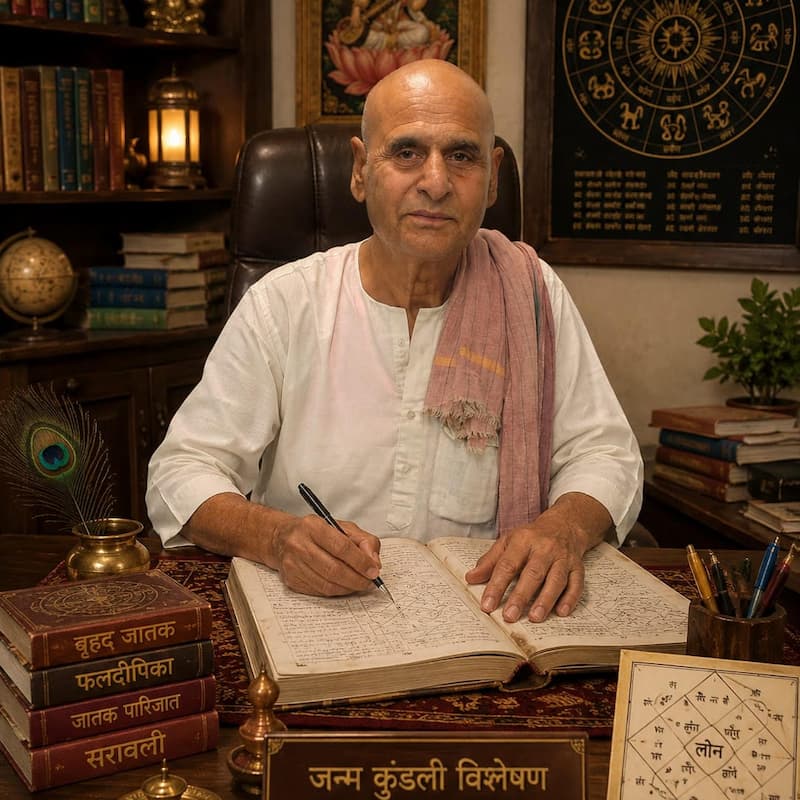
Narendra Kumar Chaubey is a Jyotisha Acharya with over 30 years of experience, based in Bihar and serving clients across India in Vedic astrology, mantra shastra, Vastu and ritual practice.
He completed his formal training at Kameshwar Singh Darbhanga Sanskrit University (KSDSU), one of India’s oldest and most respected institutions for Vedic and Sanskrit scholarship, where he studied Jyotisha shastra, mantra vidya and related classical sciences. KSDSU’s tradition of rigorous Sanskrit education — tracing directly to the Mithila region’s centuries-old pandit lineage — forms the foundation of his practice.
Over three decades, Narendra Kumar Chaubey has worked with thousands of individuals and families across Bihar and across India, offering guidance in:
- Kundli (birth chart) analysis — identifying karmic patterns, planetary periods and life path guidance through classical Jyotisha
- Palmistry (Hasta Samudrika) — reading the hand according to the classical Samudrika Shastra tradition
- Vastu Shastra — assessment and correction of living and working spaces according to directional and elemental principles
- Mantra and Pooja vidhi — performing and guiding all categories of puja, havan, and mantra sadhana for personal, family and business situations
- Predictive Jyotisha — transit analysis, muhurta (auspicious timing) selection and remedial guidance
He works across four languages — Sanskrit, Hindi, English and Bhojpuri — making classical knowledge accessible to practitioners across educational backgrounds and regions.
His writing for ABMantra brings the precision of classical Vedic training to practical mantra guidance: not general advice but specific prescriptions grounded in shastra, lineage and 30 years of direct practice with real situations.