
Quick Answer
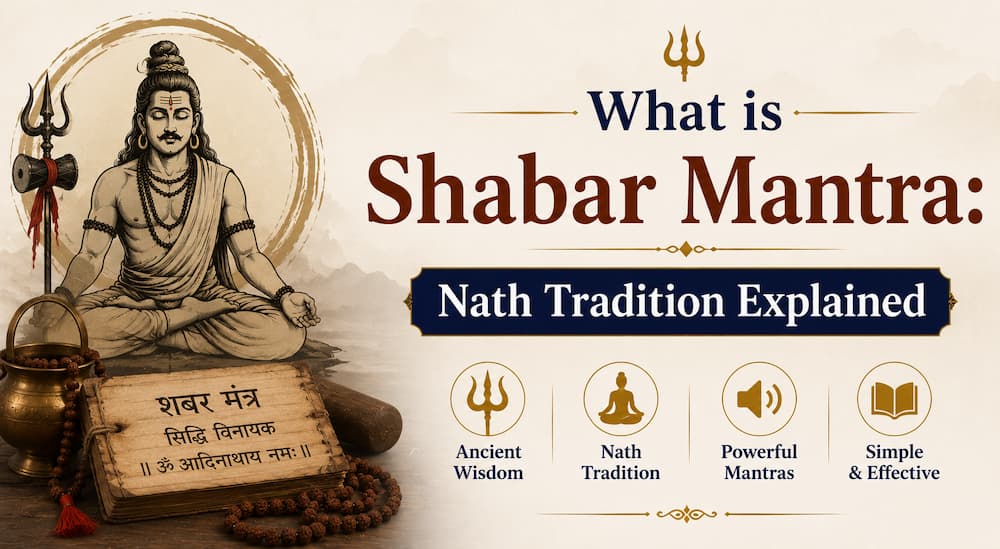
A Shabar Mantra is a mantra composed in the vernacular language of the Nath Sampradaya tradition, attributed to the Nine Nath Saints (Navnath), primarily Gorakhnath and Matsyendranath. Unlike Sanskrit mantras which use classical Sanskrit, Shabar Mantras are written in old forms of Braj, Rajasthani, Avadhi, Bhojpuri and other regional languages of North India.
Key characteristics: Simple language, not Sanskrit | Used for immediate practical results | Attributed to specific Nath saints | Often include the saint’s name as a guarantee of efficacy | More immediate in effect than classical Sanskrit mantras | Available without formal initiation for most forms
Common uses: Protection, healing, removing black magic, business success, court cases, and general obstacle removal
Who This Article Is For
This article is for you if you have encountered the term Shabar Mantra and want to understand what it is and how it differs from classical Sanskrit mantras | you want to know whether Shabar Mantras are legitimate within the Vedic and Tantric traditions | you want to understand the Nath Sampradaya tradition from which they come.
Also see: What is Beej Mantra: seed syllables and their power and What is Guru Mantra: the teacher’s transmission
If you have spent time searching for mantras for specific problems : protection, healing, court cases, business difficulties : you will have encountered Shabar Mantras. They look different from classical Sanskrit mantras: they are in languages you recognise fragments of (Braj, old Hindi, Bhojpuri), they often begin with invocations to Gorakhnath or Matsyendranath or Alakh Niranjan, and they frequently include phrases that feel more like spells than prayers. They are also claimed to produce immediate results without the lengthy sadhana (preparation period) that classical Sanskrit mantras require.
Here is what most articles about Shabar Mantras miss: they either dismiss them as superstition or present them as more powerful than Sanskrit mantras without context. The accurate position is more nuanced. Shabar Mantras have a legitimate lineage in the Nath Sampradaya tradition, are attributed to specific saints whose authority is recognised across the tradition, and work through a different mechanism than Sanskrit mantras : not superior or inferior but different. Understanding this difference is what allows a practitioner to use them correctly.
The Nath Sampradaya: The Source of Shabar Mantras
The Nath Sampradaya is one of the oldest and most influential ascetic traditions in India, tracing its origin to Adinath : Shiva in his primordial form as the first teacher (Adi Guru). Its primary human lineage begins with Matsyendranath (whose dates are debated but whose presence is documented from the 9th to 10th century CE) and his disciple Gorakhnath (10th to 12th century CE), the most significant figure in the Nath tradition.
Gorakhnath specifically is associated with the composition of the Shabar Mantras. The tradition holds that he composed these mantras in the vernacular language of the ordinary people he encountered : not in Sanskrit, which was the preserve of the educated brahmin class, but in the languages of farmers, traders, warriors and women. This democratising impulse is the Shabar Mantra’s most significant historical feature.
How Shabar Mantras Differ from Sanskrit Mantras
| Feature | Sanskrit Mantras | Shabar Mantras |
|---|---|---|
| Language | Classical Sanskrit : the language of the Vedas and Puranas | Vernacular Hindi, Braj, Avadhi, Bhojpuri, Rajasthani : languages of everyday North Indian life |
| Source | Vedic scriptures (Shruti) or Puranic texts (Smriti) | Attributed to specific Nath saints, primarily Gorakhnath and Matsyendranath |
| Initiation | Many require formal initiation from a qualified guru | Most can be used without initiation : accessibility was part of their design |
| Preparation period | Typically 21 to 40 day sadhana for Siddhi | Often immediate application : some work from the first use |
| Mechanism | Vibrational resonance of Sanskrit phonemes aligning with cosmic frequencies | The accumulated spiritual power (Shakti) of the saint who composed them, transmitted through the words they used |
| Best for | Sustained spiritual development, deep karmic work, long-term planetary remedies | Immediate practical needs, situations requiring quick results, accessible practice for those without Sanskrit knowledge |
Examples of Shabar Mantras and Their Uses
Gorakhnath Shabar Protection Mantra
Shabar text:
Alakh Niranjan Bolo Bhai, Sat Guru Ki Jai
Gorakhnath Ki Shakti, Raksha Karo Bhai
Meaning (in vernacular): Speak of the formless (Alakh Niranjan). Victory to the true teacher. With the power of Gorakhnath, protect me, brother.
Structure of a Shabar Mantra: Notice the features that characterise the form : “Alakh Niranjan” (the Nath Sampradaya’s name for the formless divine), the invocation of Gorakhnath’s name as the source of power, the direct imperative (Raksha Karo : protect), and the informal address (Bhai : brother). This informality, this directness, is the Shabar tradition’s deliberate departure from the formal Sanskrit model.
Are Shabar Mantras Legitimate?
This question is asked frequently because Shabar Mantras appear very different from the classical Sanskrit tradition and some people dismiss them as folk superstition without Vedic grounding. The answer from the tradition’s own perspective:
Yes, they are legitimate, but within a specific lineage and with specific understanding. The Nath Sampradaya is one of the oldest and most respected ascetic traditions in India. Gorakhnath is recognised across the tradition as a Siddha (perfected being) of the highest order. A mantra composed by a Siddha and transmitted through his lineage carries the accumulated spiritual power of that lineage : this is the mechanism of transmission recognised across all traditional schools of Indian spirituality.
However: their effectiveness depends entirely on the authenticity of the transmission. There are thousands of Shabar Mantras circulating online and in cheap booklets that have no verified lineage. Many were composed in the last century by anonymous authors without any connection to the Nath tradition. The proliferation of unverified Shabar Mantras in recent decades is a genuine problem. A Shabar Mantra with authentic lineage has power. A Shabar Mantra composed by an unknown author mimicking the form has none.
How to Identify an Authentic Shabar Mantra
- It contains the name of a specific Nath saint (Gorakhnath, Matsyendranath, Janakhnath) as the source of its power
- It includes the phrase Alakh Niranjan, which is the Nath Sampradaya’s invocation of the formless divine
- It is received from a practitioner with a verified connection to the Nath tradition or from a qualified Tantric teacher
- It is found in a recognised compilation of Nath tradition texts, not in an anonymous internet source
- The teacher or text it comes from can trace its lineage to a specific guru-disciple chain within the Nath Sampradaya
From Our Practice
From Our Practice
In my Jyotisha practice, I encounter clients who have tried Shabar Mantras they found online and are surprised that they produced no result. My response is always the same: the result depends entirely on the authenticity of the mantra’s lineage, not on the language it is in or the urgency with which it is chanted.
I grew up in Bihar, where the Nath tradition has a living presence that it no longer has in many other parts of India. My grandfather knew practitioners in the Nath lineage who used Shabar Mantras with documented effectiveness for healing, protection and the removal of black magic influences. What was common to all their practice was this: they knew exactly from whom they had received the mantra, that person’s teacher, and their teacher’s teacher, going back several generations in the lineage. The Shabar Mantra without this lineage is, in the Nath tradition’s own words, like a cheque without a bank account behind it. The form is correct but there is nothing backing it.
If you want to use Shabar Mantras authentically, seek out a genuine Nath tradition practitioner in your region : they still exist, particularly in Rajasthan, Uttar Pradesh, Bihar and Maharashtra. Receive the mantra from them in the traditional manner. That transmission is the mantra’s power, not the words themselves.
Frequently Asked Questions
❓ I found a Shabar Mantra online for my problem. Will it work?
Probably not, if it comes from an anonymous internet source with no verifiable lineage. This is not a dismissal of Shabar Mantras as a category : it is the recognition that the power of a Shabar Mantra comes from the lineage of its transmission, not from the words themselves. The same words with authentic lineage from a Nath practitioner have power. The same words copied from a random website have none. For practical results, use classical Sanskrit mantras with established written lineage (Maha Mrityunjaya from Rigveda, Baglamukhi from the Mahavidya tradition) where the source is clear and documented. These produce results through their own vibrational mechanism without requiring lineage transmission from a living teacher.
❓ What is the relationship between the Nath tradition and mainstream Hinduism?
The Nath Sampradaya sits within the broader Shaiva tradition (Shiva-focused Hinduism) but has historically maintained an independent position from brahmanical orthodoxy. Its rejection of caste restrictions, its use of vernacular language, and its emphasis on practical attainment (Siddhi) rather than ritual performance made it both popular with ordinary people and sometimes controversial with established religious authority. Today it is recognised as a legitimate and important part of the Indian spiritual tradition. Gorakhnath is revered across North India and has significant temples in Gorakhpur (Uttar Pradesh) and elsewhere. The Nath tradition is the direct precursor of many of India’s wandering ascetic (Baba) traditions.
❓ Who is Alakh Niranjan and why is he invoked in Shabar Mantras?
Alakh Niranjan is the Nath Sampradaya’s name for the formless absolute divine : the same reality that the Vedantic tradition calls Brahman and the Vaishnava tradition calls Narayana. Alakh means invisible, that which cannot be seen. Niranjan means pure, unstained, without blemish. Alakh Niranjan is the pure invisible formless divine. Nath practitioners greet each other with Alakh Niranjan rather than Jai Shri Ram or any deity-specific salutation, because their tradition emphasises the formless beyond all specific deity forms. Invoking Alakh Niranjan at the beginning of a Shabar Mantra places the entire practice under the protection and authority of this formless absolute, with Gorakhnath as the specific conduit.
❓ Are Shabar Mantras safe? I have heard warnings about them.
Authentic Shabar Mantras received from qualified practitioners are safe for the purposes they are designed for. The warnings in circulation are primarily about two things: (1) using Shabar Mantras for Abhichara (black magic, harm to others) : this is a genuine ethical and karmic risk, and (2) using unverified Shabar Mantras from unknown sources : these are not effective and therefore harmless but also useless. The Nath tradition itself is very clear that its practices are for self-protection, healing and liberation, not for causing harm. Using any Shabar Mantra to harm another person is specifically prohibited in the tradition and produces the karma of what was intended to be sent.
❓ Can Shabar Mantras be combined with Sanskrit mantra practice?
Yes. In the practice of many Indian spiritual teachers, Sanskrit mantras form the daily foundation practice (Gayatri, Maha Mrityunjaya, Om Namah Shivaya) and Shabar Mantras address specific situational needs when they arise. The two traditions complement each other: Sanskrit mantras for sustained spiritual development and long-term effect, Shabar Mantras (when received from authentic lineage) for immediate practical requirements. Do not substitute one for the other; use each for what it is designed for.
❓ Where can I learn authentic Shabar Mantras?
From a qualified practitioner within the Nath tradition. In practical terms: Nath temples and ashrams, particularly in Gorakhpur (Uttar Pradesh), Jodhpur (Rajasthan) and in the Nath strongholds of Bihar and Maharashtra. The Navnath tradition has practitioners in Maharashtra who work with Shabar Mantras within their tradition’s protocols. Online or print sources without verifiable lineage are not reliable for this specific tradition. The Nath tradition itself teaches that the mantra must come through the guru-disciple relationship to carry the power of its lineage.
Begin With a Classical Sanskrit Mantra
If you are looking for a mantra for a specific practical problem : protection, healing, court cases, business : use a classical Sanskrit mantra with a documented Vedic or Tantric source. Its lineage is the written tradition itself, which is both verifiable and unbroken. The Maha Mrityunjaya comes from Rigveda 7.59.12. The Baglamukhi Mula Mantra comes from the Shakta Tantric tradition. These do not require a living teacher for their basic home practice.
If you want to explore the Shabar Mantra tradition specifically, approach it through a living Nath practitioner rather than through online sources. The tradition’s accessibility : its design for ordinary people without Sanskrit knowledge : is genuine. But that accessibility requires the living teacher, not the internet.
Sources
- Wikipedia : Nath Sampradaya: historical overview of the Nath tradition, Gorakhnath and Matsyendranath
- Wikipedia : Gorakhnath: primary Nath saint associated with Shabar Mantra composition, dates and temple presence
- Gold, Daniel. The Lord as Guru: Hindi Sants in the North Indian Tradition. Oxford University Press, 1987. The Nath tradition’s use of vernacular language and its significance in Indian devotional practice.
- Lorenzen, David. The Kapalikas and Kalamukhas. University of California Press, 1972. Historical documentation of the Shaiva ascetic traditions including Nath.
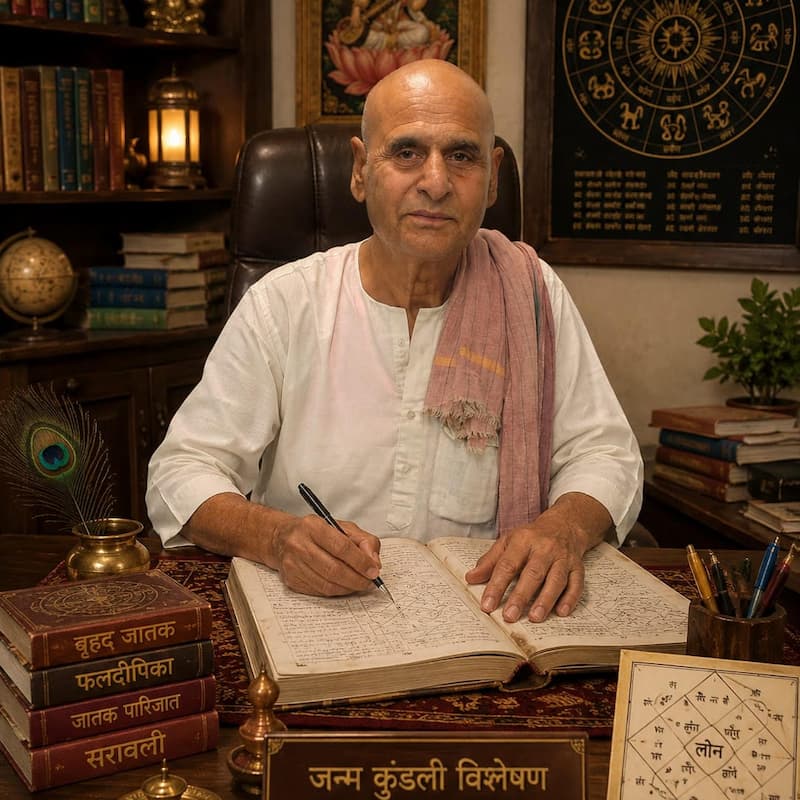
Narendra Kumar Chaubey is a Jyotisha Acharya with over 30 years of experience, based in Bihar and serving clients across India in Vedic astrology, mantra shastra, Vastu and ritual practice.
He completed his formal training at Kameshwar Singh Darbhanga Sanskrit University (KSDSU), one of India’s oldest and most respected institutions for Vedic and Sanskrit scholarship, where he studied Jyotisha shastra, mantra vidya and related classical sciences. KSDSU’s tradition of rigorous Sanskrit education tracing directly to the Mithila region’s centuries-old pandit lineage forms the foundation of his practice.
Over three decades, Narendra Kumar Chaubey has worked with thousands of individuals and families across Bihar and across India, offering guidance in:
- Kundli (birth chart) analysis: Identifying karmic patterns, planetary periods and life path guidance through classical Jyotisha
- Palmistry (Hasta Samudrika): Reading the hand according to the classical Samudrika Shastra tradition
- Vastu Shastra: Assessment and correction of living and working spaces according to directional and elemental principles
- Mantra and Pooja vidhi: Performing and guiding all categories of puja, havan, and mantra sadhana for personal, family and business situations
- Predictive Jyotisha: Transit analysis, muhurta (auspicious timing) selection and remedial guidance
He works across four languages Sanskrit, Hindi, English and Bhojpuri making classical knowledge accessible to practitioners across educational backgrounds and regions.
His writing for ABMantra brings the precision of classical Vedic training to practical mantra guidance: not general advice but specific prescriptions grounded in shastra, lineage and 30 years of direct practice with real situations.
For more info follow on: