
Quick Answer
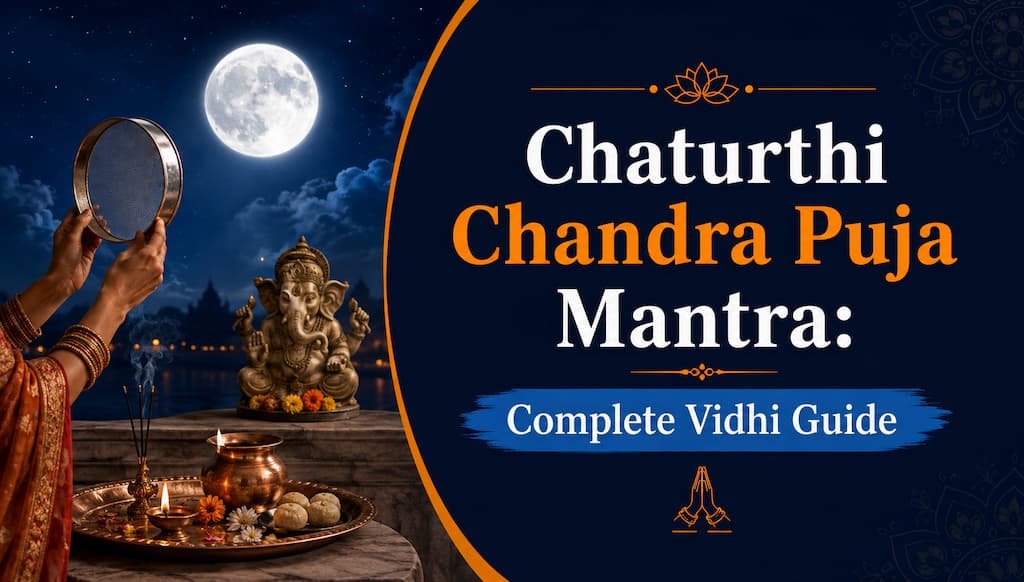
The Chaturthi Chandra Puja (also called Chaurchan Puja or Chouth Chand Puja) is performed on Bhadrapada Shukla Chaturthi : the 4th day of the bright fortnight of the Bhadrapada month (August-September). On this day, looking at the moon is traditionally prohibited due to Ganesha’s curse. The puja is performed to seek forgiveness if the moon has been seen accidentally, and to invoke the blessings of Chandra Dev for prosperity, longevity of spouse, and family welfare.
Primary Chandra Darshan Mantra (chanted when seeing the moon):
सिंह प्रसेन मवधीत्सिंहो जाम्बवताहत:। सुकुमारक मा रोदीस्तव ह्येष स्यमन्तक:।।
Simha Prasena Mavadhit Simho Jambavata Hatah. Sukumaraka Ma Rodis Tava Hyesha Syamantakah.
Festival date 2025: Bhadrapada Shukla Chaturthi : check your regional Panchang for the exact date as it falls in August or September each year.
Who This Article Is For
This complete guide is for Hindu families : especially from Bihar, Mithila, Jharkhand, Eastern Uttar Pradesh and the Madhesh region of Nepal : who observe the Chaturthi Chandra Puja (Chaurchan Puja). It covers the complete puja samagri, step-by-step vidhi, all Sanskrit mantras with Devanagari and transliteration, and the mythology behind this important vrat.
The Chaturthi Chandra Puja Mantra is chanted on Bhadrapada Shukla Chaturthi, the tradition prohibits looking at the Chaturthi Chandra : the fourth-night moon : because of a specific curse by Lord Ganesha. Those who see the moon on this day are said to receive a false accusation or face an undeserved scandal, just as Lord Krishna himself once faced false accusations despite being innocent. The remedy and protection is the Chaturthi Chandra Puja Mantra : the ritual of worshipping the Bhadrapada Chaturthi moon with the specific mantras, offerings and vrat katha that the tradition prescribes to remove this curse.
This puja is especially observed in the Mithila tradition of Bihar and the Madhesh region of Nepal, where it is called Chaurchan Puja (चौरचन पूजा or चौठचन्द्र पूजा). Married women, widows and unmarried women all observe this vrat, though the specific puja mantras and some aspects of the vidhi differ for married women (Sadhavas) and widows (Vidhwas).
The Mythology: Why Looking at the Moon on Chaturthi Is Forbidden
The story begins with Ganesha and the Syamantaka Mani : the divine gem of the Sun god.
One day, Ganesha was riding his vehicle : the small mouse : when the mouse stumbled over a snake at night, and Ganesha fell. The Chaturthi moon witnessed this undignified fall and laughed mockingly at Ganesha’s round belly and his unusual appearance. Ganesha was deeply hurt by this ridicule. In his anger, he cursed the moon: “Whoever sees you on this night : Bhadrapada Shukla Chaturthi : will face false accusations. They will be blamed for something they have not done, as I am now mocked for something that was not my fault.”
The curse’s power became evident when Lord Krishna himself : who had accidentally glanced at the moon on Bhadrapada Chaturthi : faced the accusation of having stolen the Syamantaka Mani from Prasena. The gem had actually been taken by a lion, which was killed by Jambavan, who then kept the gem in his cave. Despite being completely innocent, Lord Krishna was publicly accused of theft. He had to descend into Jambavan’s cave, battle Jambavan for 28 days, and finally receive the gem from him along with the hand of his daughter Jambavati in marriage.
The Chandra Darshan Mantra prescribed for this day : Simha Prasena Mavadhit Simho Jambavata Hatah, Sukumaraka Ma Rodis Tava Hyesha Syamantakah : is directly drawn from this story. Chanting it upon seeing the Chaturthi moon is the traditional antidote to the curse because it retells the truth of what actually happened to the gem, thereby declaring one’s own innocence in advance.
Chaurchan Puja Samagri: Complete Materials List
Arrange all of these items before beginning the evening puja:
| Item | Hindi / Maithili name | Purpose |
|---|---|---|
| Curd (fresh) | दही | Primary offering : placed in the Dali (wicker basket) for Chandra Darshan |
| Puri (fried bread) | पूरी | Naivedya : food offering to Chandra Dev |
| Kheer (rice pudding) | खीर | Naivedya : the moon’s favourite offering, linked to Amrita (nectar) which the moon carries |
| Seasonal fruits | फल | Fruit offering placed in the Dali |
| Chandrota (circular flat bread) or Thekua | चन्द्रोत्ता / ठेकुआ | Specific Mithila tradition offering for Chaurchan Puja |
| White flowers | उजर / सफेद फूल | Chandra Dev’s flower : white symbolises the moon’s colour and purity |
| Duba grass (Durva) | दूब / दूर्वा | Offered to Chandra Dev in each puja step |
| Belpatra (Bilva leaves) | बेलपात | Offered at each step of the puja |
| Earthen lamps (Diyas) | मिट्टी के दीपक | The Kalash Dipa offered to Chandra Dev : ideally 5 or 11 diyas |
| Ghee | घी | For lighting the lamp |
| White sandalwood paste | चन्दन | Anointing Chandra Dev : Chandana is specifically prescribed for moon worship |
| Akshat (unbroken rice) | अक्षत | Offered at each mantra step |
| Yajnopavita (sacred thread) | यज्ञोपवीत / जनेऊ | Offered to Chandra Dev as per puja vidhi |
| White cloth | उजर वस्त्र | Offered to Chandra Dev |
| Tambula (betel nut + leaf) | पान-सुपारी / ताम्बूल | Offered at closing stages of puja |
| Copper Kalash (pot) | कलश | Used for Kalash Sthapana and Arghya (water offering) |
| Milk | दूध | For the Dugdharghya : the milk offering specifically for Chandra Dev |
| Conch shell (Shankha) | शंख | Used for offering flowers, fruit and milk in the closing Arghya |
| Aripan (Alpana) | अरिपन / अल्पना | Traditional Mithila floor design drawn before the puja space |
| Dali (wicker basket) | डाली | The basket held up when seeing the moon : contains curd, fruits and offerings |
| Kusha grass + sesame seeds + water | कुश + तिल + जल | For Sankalpa and purification |
| Dakshina (monetary gift) | दक्षिणा | Offered to the officiating priest or elder at the close of puja |
Chaturthi Chandra Puja Vidhi: Complete Step-by-Step Method
When to begin: On the evening of Bhadrapada Shukla Chaturthi : after the first appearance of the evening. The vrati (one observing the vrat) should bathe before sunset and be ready with all samagri arranged before the puja begins.
Step 1: Pavitrikaran : Purification of Self and Offerings
Sit on the puja asana. Hold Kusha grass or a gold/silver ring (Pavitri) on the right hand. Take water in the palm. Sprinkle water on yourself and all the puja materials while chanting:
Pavitrikaran Mantra (पवित्रीकरण मंत्र)
Sanskrit / Devanagari:
नमः! अपवित्रः पवित्रोवा सर्वावस्थां गतोपिवा।
यः स्मरेत् पुण्डरीकाक्षं सबाह्याभ्यन्तरः शुचिः।।
नमः! पुण्डरीकाक्षः पुनातु।
Transliteration:
Namah! Apavitrah Pavitro Va Sarvavastha Gatopi Va.
Yah Smaret Pundarikaksham Sabahyabhyantarah Shuchih.
Namah! Pundarikakshah Punatu.
Meaning: O Lord Pundarikaksha (Vishnu : the lotus-eyed one)! Whether pure or impure, in whatever state one may be : one who remembers you becomes pure both inside and out. O Pundarikaksha, purify us now.
Sprinkle water on yourself and all offerings after this mantra.
Step 2: Sankalpa : Taking the Sacred Resolve
Hold Kusha grass, sesame seeds and water in the right palm. State the Sankalpa mantra, inserting your gotra (lineage) and name at the appropriate places (Amuka = your name/gotra):
Sankalpa Mantra (संकल्प मंत्र)
Devanagari:
नमोऽस्यां रात्रौ भाद्रे मासि शुक्ल पक्षे चतुर्थ्यां तिथौ
अमुक गोत्राया: मम अमुकीदेव्या:
सकल कल्याणोत्पत्तिपूर्वक धनधान्यादि समृद्धि
सकल मनोरथ सिद्ध्यर्थं यथाशक्ति गंधपुष्पधूपदीपताम्बूल
यज्ञोपवित वस्त्र नानाविध नैवेद्यादिभि:
रोहिणीसहित भाद्र शुक्ल चतुर्थी चंद्रपूजनं
तत्कथाश्रवणं चाहं करिष्ये।
Transliteration:
Namo’syam Ratrau Bhadre Masi Shukla Pakshe Chaturthi Tithau
Amuka Gotraya Mama Amukidevi
Sakala Kalyanotpattipurvak Dhanadhanyadhi Samriddhim
Sakala Manoratha Siddhi Artham Yathasakhti Gandhapushpa Dhupadipa Tambula
Yajnopavita Vastra Nanavidha Naivedyadibhi
Rohini Sahit Bhadra Shukla Chaturthi Chandrapujanam
Tat Katha Shravanam Chaham Karishye.
Meaning: On this night, in the Bhadra month, on the Chaturthi tithi of the Shukla Paksha : I, [name], of the [gotra] lineage, for the attainment of all auspiciousness, wealth, prosperity and fulfilment of all sincere desires : hereby resolve to perform the worship of the Bhadra Shukla Chaturthi Chandra (moon) together with Rohini, with offerings of gandha, flowers, incense, lamp, tambula, sacred thread, cloth and various naivedya, and to listen to the vrat katha.
Release the water, kusha and sesame into the offering vessel after chanting.
Step 3: Ganapati and Panch Devata Pujan
Take akshat (unbroken rice) and invoke the Panch Devatas (five presiding deities) on a betel leaf placed to one side:
Panch Devata Invocation
Invocation:
नमो गणपत्यादि पंचदेवता: इहागच्छत इह तिष्ठत।
Namo Ganapati Adi Panchadevata Ihagachchhata Iha Tishthata.
Meaning: O Ganesha and the five presiding deities : come here, be present here.
(Place akshat on the betel leaf)
Arghya:
एतानि पाद्यादीनि एषोऽर्घ्य: नमो गणपत्यादि पंचदेवता भ्यो नम:।
Etani Padyadini Esho’rghyah Namo Ganapati Adi Panchadevata Bhyo Namah.
(Offer water)
Chandana (sandalwood):
इदमनुलेपनं नमो गणपत्यादि पंचदेवता भ्यो नम:।
(Apply sandalwood on flowers, then offer)
Akshat: इदमक्षतं नमो गणपत्यादि पंचदेवता भ्यो नम:।
Flowers: इदं पुष्पं नमो गणपत्यादि पंचदेवता भ्यो नम:।
Bilva patra: इदं विल्वपत्रं नमो गणपत्यादि पंचदेवता भ्यो नम:।
Durva grass: इदं दूर्वादलम् नमो गणपत्यादि पंचदेवता भ्यो नम:।
All offerings together: एतानि गंधपुष्पधूपदीपताम्बुलयथाभाग नानाविध नैवेद्यानि नमो गणपत्यादि पंचदेवता भ्यो नम:।
Step 4: Gauri Puja (For Married Women) / Vishnu Puja (For Widows)
For married women (Sadhava) : Gauri Puja:
Gauri Puja Mantras (Sadhava Women)
Invocation: नमो गौरि इहागच्छ इह तिष्ठ। (Namo Gauri Ihagachchha Iha Tishtha)
Arghya: एतानि पाद्यादीनि नमो गौर्ये नम:।
Chandana: इदमनुलेपनं नमो गौर्ये नम:।
Sindoor: इदं सिन्दूरं नमो गौर्ये नम:।
Akshat: इदमक्षतं नमो गौर्ये नम:।
Flowers: इदं पुष्पं नमो गौर्ये नम:।
Durva: इदं दूर्वादलम् नमो गौर्ये नम:।
Bilva: इदं विल्वपत्रं नमो गौर्ये नम:।
All offerings: एतानि गंधपुष्पधूपदीपताम्बुलयथाभाग नानाविध नैवेद्यानि नमो गौर्ये नम:।
For widows (Vidhwa) : Vishnu Puja:
नमो भगवत् भगवान श्रीविष्णो इहागच्छ इह तिष्ठ।
Namo Bhagavat Bhagavan Shri Vishno Ihagachchha Iha Tishtha.
Then offer water, flowers, tulsi patra and panchopachar (five offerings) following the same pattern.
Step 5: Chaturthi Chandra Puja : The Main Worship of the Moon
This is the central act of the entire puja : the direct worship of Rohini Sahit (together with Rohini, the moon’s favourite consort) Bhadra Shukla Chaturthi Chandra.
Chandra Dev Invocation Mantra (चंद्र देव आवाहन)
Take Akshat and chant:
नमो रोहिणीसहित भाद्र शुक्ल चतुर्थी चंद्र इहागच्छ इह तिष्ठ।
Namo Rohini Sahit Bhadra Shukla Chaturthi Chandra Ihagachchha Iha Tishtha.
Meaning: O Chandra (Moon) of the Bhadrapada Shukla Chaturthi, accompanied by Rohini : come here, be present here.
(Place the akshat on the puja patra/leaf)
Chandra Dhyana Mantra (ध्यान मंत्र : Meditation Verse)
Sanskrit / Devanagari:
श्वेतांबरं स्वच्छतनुं सुधांशु चतुर्भुजं हेमविभूषणाढ्यम्।
वरं सुधां दिव्यकमण्डलुञ्च करैरभीतिञ्च दधानमीडे।।
Transliteration:
Shvetambaram Swachchhatanum Sudhamanshu Chaturbhujam Hemavibhushanadyam.
Varam Sudham Divyakamandalu Cha Kairaibhitim Cha Dadhanam Ide.
Meaning: I meditate upon Chandra Dev : clad in white garments, of pure and radiant form, the nectar-rayed one, four-armed, adorned with golden ornaments, holding the boon-gesture, divine amrita (nectar), a sacred kamandalu vessel, and the abhaya mudra (fear-not gesture) in his four hands.
Take white flowers and offer while chanting: एष पुष्पाञ्जलि: (Esha Pushpanjalih)
Chandra Arghya Mantra (अर्घ्यदान : Water Offering)
Devanagari:
सोमाय सोमेश्वराय सोमपतये सोमसम्भवाय गोविन्दाय नमो नम:।
एतानि पाद्यादीनि एषोऽर्घ्य: नमो रोहिणीसहित भाद्र शुक्ल चतुर्थी चंद्राय नम:।
Transliteration:
Somaya Someshvaraya Somapataye Somasambhavaya Govindaya Namo Namah.
Etani Padyadini Esho’rghyah Namo Rohini Sahit Bhadra Shukla Chaturthi Chandraya Namah.
Meaning: Salutations again and again to Soma (the moon), to Someshwara (lord of the moon), to Somapati (master of Soma), to Somasambhava (born of the cosmic nectar), to Govinda. These paadya (foot-washing water) and arghya (offering water) : I offer them to the Bhadra Shukla Chaturthi Moon, accompanied by Rohini.
Offer water from the arghya vessel at this point.
Step 6: Detailed Offerings to Chandra Dev : Each With Its Mantra
- Chandana (sandalwood): मलयाद्रिसमुद्भूतं श्रीखंडं त्रिदशप्रियम्। सर्वपापहरं सौख्यं चंदनं मे प्रगृह्यताम्।। इदमनुलेपनं नमो रोहिणीसहित भाद्र शुक्ल चतुर्थी चंद्राय नम:।
- Akshat: इदमक्षतं नमो रोहिणीसहित भाद्र शुक्ल चतुर्थी चंद्राय नम:।
- White flowers: त्रैलोक्यमोदकं पुष्पं शुक्लपुष्पं मनोहरम्। दिव्यौषधि क्षपानाथ गृह्यतां च प्रसीद मे।। एतानि पुष्पाणि नमो रोहिणीसहित भाद्र शुक्ल चतुर्थी चंद्राय नम:।
- Bilva patra: इदं विल्वपत्रं नमो रोहिणीसहित भाद्र शुक्ल चतुर्थी चंद्राय नम:।
- Durva grass: इदं दूर्वादलम् नमो रोहिणीसहित भाद्र शुक्ल चतुर्थी चंद्राय नम:।
- Yajnopavita (sacred thread): सुसंस्कृतं चतुर्वेदैर्द्विजानां भूषणं वरम्। यज्ञोपवीतं देवेश कृपया मे प्रगृह्यताम्।। इमे यज्ञोपविते बृहस्पतिदैवते नमो रोहिणीसहित भाद्र शुक्ल चतुर्थी चंद्राय नम:।
- White cloth: तन्तुसंतानसम्भूतं कलाकौशलकल्पितम्। सर्वाङ्गभूषणश्रेष्ठं वसनं परिधीयताम्।। इदं वस्त्रं बृहस्पतिदैवतं नमो रोहिणीसहित भाद्र शुक्ल चतुर्थी चंद्राय नम:।
- Naivedya (food offering : kheer, puri, fruits): नैवेद्यं गृह्यतां देव भक्तिं मे ह्यचलां कुरु। ईप्सितं मे वरं देहि परत्र च परांगतिम्।। एतानि गंधपुष्पधूपदीप सदधिपक्वान्नादि नानाविध नैवेद्यानि नमो रोहिणीसहित भाद्र शुक्ल चतुर्थी चंद्राय नम:।
- Tambula (betel): पूगीफलं महद्दिव्यं नागवल्लीदलैर्युतम्। कर्पूरादिसमायुक्तं ताम्बूलं प्रतिगृह्यताम्।।
- Dhupa (incense): गन्धभारवहं दिव्यं नानावस्तुसमन्वितम्। सुरासुरनमानन्दं धूपं देव गृहाण मे।। एष धूप: नमो रोहिणीसहित भाद्र शुक्ल चतुर्थी चंद्राय नम:।
- Kalasha Dipa (lamp in copper pot): मार्तण्डमण्डलाखण्डचन्द्रबिम्बाग्निदीप्तिमान्। विधात्रा देवदीपोऽयं निर्मितस्तेऽस्तु भक्तितः।। एष कलशदीप: नमो रोहिणीसहित भाद्र शुक्ल चतुर्थी चंद्राय नम:।
- Dugdharghya : milk offering (in conch shell with flowers and fruit): अत्रिनेत्रसमुद्भूत क्षीरोदार्णवसम्भव। गृहाणार्घ्यं मया दत्तं रोहिण्या सहितप्रभो।। इदं दुग्धार्घ्यं नमो रोहिणीसहित भाद्र शुक्ल चतुर्थी चंद्राय नम:।
Step 7: Chandra Darshan : Seeing the Moon and Chanting the Key Mantra
Take the Dali (wicker basket) containing curd, fruits, kheer, puri and white flowers. Go outside and look at the Chaturthi Chandra (the fourth-night moon). Hold the Dali up toward the moon and chant:
Chandra Darshan Mantra (चंद्र दर्शन मंत्र) : The Most Important Mantra of This Puja
Sanskrit / Devanagari:
सिंह: प्रसेन मवधीत् सिंहो जाम्बवता हत:।
सुकुमारक मा रोदीस्तव ह्येष स्यमन्तक:।।
Transliteration:
Simhah Prasenama Vadhit Simho Jambavata Hatah.
Sukumaraka Ma Rodis Tava Hyesha Syamantakah.
Meaning: The lion killed Prasena; the lion was then killed by Jambavan. O dear child (Sukumaraka), do not weep : for this Syamantaka gem is truly yours (implying: you are innocent, the gem belongs to its rightful owner and the truth is known).
Why this mantra protects: This verse was chanted by the public of Dwarka when Lord Krishna was clearing his name from the false accusation of stealing the Syamantaka gem. Chanting it at the moment of seeing the Chaturthi Chandra declares one’s own innocence : it invokes the same divine clearing of false accusation that Krishna experienced : and thus counteracts the curse of the moon on this night.
Step 8: Pranam Mantras : Salutations to Chandra Dev
Pranam Mantra 1
Devanagari:
नम: शुभ्रांशवे तुभ्यं द्विजराजाय ते नम:।
रोहिणीपतये तुभ्यं लक्ष्मीभ्रात्रे नमोऽस्तु ते।।
Transliteration:
Namah Shubhramsave Tubhyam Dvijarajaya Te Namah.
Rohinipataye Tubhyam Lakshmibhratre Namo’stu Te.
Meaning: Salutations to the radiant-rayed one (Chandra). Salutations to the king of the twice-born (the moon who rises twice, waxing and waning). Salutations to you, O lord of Rohini. Salutations to you, O brother of Lakshmi (both Chandra and Lakshmi emerged from the churning of the cosmic ocean).
Pranam Mantra 2 : Chanted While Offering Dahi (Curd)
Devanagari:
दिव्यशंखतुषाराभं क्षीरोदार्णवसम्भवम्।
नमामि शशिनं भक्त्या शम्भोर्मुकुटभूषणम्।।
Transliteration:
Divyashankhathusharabhum Kshirodarnava Sambhavam.
Namami Shashinam Bhaktya Shambhor Mukuta Bhushanam.
Meaning: I bow with devotion to the moon : white as a divine conch and fresh snow, born from the ocean of milk (Kshirasagara), and who serves as the crown ornament of Lord Shiva (Shambhu).
Step 9: Prarthana : Prayer to Chandra Dev
Prarthana Mantra (प्रार्थना)
Devanagari:
मृगाङ्क रोहिणीनाथ शम्भो: शिरसि भूषण।
व्रतं सम्पूर्णतां यातु सौभाग्यं च प्रयच्छ मे।।
रूपं देहि यशो देहि भाग्यं भगवन् देहि मे।
पुत्रान् देहि धनन् देहि सर्वान् कामान् प्रदेहि मे।।
Transliteration:
Mriganka Rohini Natha Shambhoh Shirasi Bhushana.
Vratam Sampurnatam Yatu Saubhagyam Cha Prayachchha Me.
Rupam Dehi Yasho Dehi Bhagyam Bhagavan Dehi Me.
Putran Dehi Dhanam Dehi Sarvan Kaman Pradehi Me.
Meaning: O Mriganka (the moon bearing the mark of the deer), O Lord of Rohini, O ornament on Shiva’s crown : may this vrat be completed fully. Grant me good fortune (saubhagya). O divine one : grant me beauty, grant me fame, grant me good destiny. Grant me worthy children, grant me wealth, and fulfil all my sincere desires.
Step 10: Vrat Katha Shravana
After the puja, listen to or recite the Syamantaka Mani Katha : the story of how Lord Krishna was falsely accused of stealing the gem, how Jambavan possessed it, and how Lord Krishna cleared his name through truth and perseverance. This katha is the essential conclusion of the Chaturthi Chandra Puja. The puja is considered incomplete without hearing this story.
Step 11: Visarjan : Farewell to the Deities
After the katha, release each deity who was invoked with gratitude:
- Panch Devata: नमो गणपत्यादि पंचदेवता: पूजिता: स्थ क्षमध्वं स्वस्थानं गच्छत।
- Gauri (Sadhava): नमो गौरि पूजितासि प्रसीद क्षमस्व।
- Vishnu (Vidhwa): नमो विष्णो पूजितोऽसि प्रसीद क्षमस्व।
- Chandra Dev: नमो रोहिणीसहित भाद्र शुक्ल चतुर्थी चंद्र पूजितोऽसि प्रसीद क्षमस्व स्वस्थानं गच्छ।
Namo Rohini Sahit Bhadra Shukla Chaturthi Chandra Pujito’si Prasida Kshamasva Swasthanam Gachchha.
Meaning: O Bhadra Shukla Chaturthi Chandra, accompanied by Rohini : you have been worshipped. Be pleased, forgive any errors, and return to your divine abode.
Step 12: Dakshina and Prasad Distribution
Sprinkle water on the Dakshina (monetary offering) with sesame seeds and offer it to the officiating priest (or eldest male member of the family if no priest is present). The closing Dakshina mantra:
नमोऽस्यां रात्रौ कृते तद्रोहिणीसहित भाद्र शुक्ल चतुर्थी चंद्र पूजन तत्कथा श्रवण कर्म प्रतिष्ठार्थं मेतावद्द्रव्यमूल्यक हिरण्यमग्निदैवतं यथानामगोत्राय ब्राह्मणाय दक्षिणामहं ददे।
After the Dakshina, break the Marrod (the ritual mud pot that was set up at the beginning of the puja) and distribute Prasad : the kheer, puri, fruits and other naivedya : to all family members.
The Mithila Tradition: Specific Customs of Chaurchan Puja
In the Mithila tradition (Bihar, Jharkhand, Madhesh-Nepal), the Chaurchan Puja has specific local customs that go beyond the general Chaturthi Chandra Puja:
- The Aripan (Alpana): A traditional Mithila floor design : the Aripan : is drawn with rice paste on the puja surface before the puja begins. This Aripan has a specific pattern for the Chaurchan Puja.
- The Dali: A specific wicker basket (Dali) is prepared with curd, kheer, puri, Chandrota (a circular flat bread resembling the moon), fruits and flowers. The Dali is held up toward the moon during the Chandra Darshan and carried as a votive offering.
- Chandrota: This is a regional specialty : a circular flatbread specific to the Mithila Chaurchan Puja, representing the full moon. Making Chandrota is itself part of the day’s preparation.
- The family pandit: Where possible, a family priest (Kul-Pandit) officiates the puja and chants the mantras. Where no priest is available, the eldest knowledgeable male family member (father, husband, son or brother) can perform the puja.
- Post-puja Katha: The Syamantaka Mani Katha must be heard after the puja : either recited by the pandit or read from a Vrat Katha book. The vrat is incomplete without the katha.
From Our Practice
From Our Practice
I am from the Mithila region of Bihar, and the Chaurchan Puja is one of the pujas I grew up observing in our household. My grandmother would begin preparing from the afternoon : making the Chandrota, arranging the Dali, drawing the Aripan on the courtyard floor where the puja would be held that evening.
What I remember most clearly is the Chandra Darshan moment: stepping out into the courtyard after the indoor puja was complete, holding the Dali up toward the fourth-night moon, and chanting the Syamantaka mantra together as a family. There is something about that mantra : Simha Prasena Mavadhit : that carries the specific weight of declaring one’s innocence publicly, before the sky, before the moon that was cursed for laughing when it should not have.
The tradition’s wisdom in this puja is precisely this: it does not ask you to avoid looking at the moon entirely. It provides the remedy for those who look : accidentally or unavoidably. The remedy is not denial but declaration of truth. The mantra does not say “I did not see the moon.” It says “the truth is known: the gem is with the one who earned it, and innocence is established.” This is the Vedic tradition’s approach to the problem of false accusation: not avoidance but the active invocation of truth.
Frequently Asked Questions
❓ What happens if I accidentally see the moon on Bhadrapada Chaturthi?
If you accidentally see the Chaturthi Chandra, chant the Chandra Darshan Mantra immediately: Simha Prasena Mavadhit Simho Jambavata Hatah, Sukumaraka Ma Rodis Tava Hyesha Syamantakah. This is the prescribed remedy for accidental moon-sighting. Then perform the complete Chaturthi Chandra Puja that same evening. The tradition holds that the Chandra Darshan Mantra, chanted sincerely at the moment of seeing the moon, counteracts the curse. Do not panic : the puja and mantra are specifically provided for this situation.
❓ Can men also observe the Chaturthi Chandra Puja or is it only for women?
The Chaturthi Chandra Puja can be observed by both men and women. The Bhadrapada Chaturthi moon’s curse applies to all who see it : as illustrated by Lord Krishna himself, who is neither female nor ordinary, being affected. Women observe the vrat most prominently in the Mithila tradition, but men who have accidentally seen the moon, or who wish to perform the puja for the household’s protection, can and do perform the complete puja. The mantras do not have gender restrictions.
❓ Is the Chaturthi Chandra Puja the same as Ganesh Chaturthi?
They fall on the same day : Bhadrapada Shukla Chaturthi : but they are different observances. Ganesh Chaturthi is the celebration of Lord Ganesha’s birthday, with grand puja, idol installation and community festivities. The Chaturthi Chandra Puja (Chaurchan Puja) is the specific worship performed to seek protection from the Chaturthi Chandra’s curse : the curse that originated because the moon laughed at Ganesha on this very night. The two are connected by the mythology but are distinct ritual observances. Ganesh Chaturthi is primarily a joyful celebration; Chaurchan Puja is a protective vrat performed in the evening with the mantras prescribed specifically for this purpose.
❓ How do I break the fast after Chaturthi Chandra Puja?
The fast is broken after the complete puja vidhi is performed and the Chandra Darshan has been done : i.e., after the moon has been seen and the Chandra Darshan Mantra has been chanted. After the Visarjan and Dakshina are complete, take the Prasad : kheer, puri and fruits from the Dali and Naivedya : as your first food. This Prasad itself is the prescribed fast-breaking food. Eat it with the intention of receiving Chandra Dev’s blessings for the welfare of your family and the protection from false accusation that the puja is specifically designed to provide.
❓ What is the Syamantaka Mani Katha and why must it be heard?
The Syamantaka Mani Katha is the story of the divine jewel (Mani) given to Satrajit by the Sun god. When the gem went missing after Prasena took it into the forest and was killed by a lion, Lord Krishna : who had accidentally seen the Chaturthi Chandra : was falsely accused of stealing it. He had to descend into Jambavan’s cave and battle for 28 days before Jambavan recognised Lord Krishna as the supreme deity and returned both the gem and his daughter Jambavati. The katha must be heard because it is the narrative proof of the curse’s reality and the complete demonstration of how truth ultimately prevails. Hearing it at the close of the puja is itself a purification : it completes the energetic arc of the puja from establishing the problem (the curse) to declaring its resolution (truth and innocence vindicated).
❓ If it is cloudy and the moon is not visible on Chaturthi, what should I do?
If the moon is not visible due to clouds or weather, perform the complete puja indoors with the Chandra invocation mantras, make the Dali offering, and chant the Chandra Darshan Mantra toward the direction of the moon (generally east or northeast after sunset, depending on the time and location). The tradition holds that the mantra and the sincere intention of the worship are what matter : the physical visibility of the moon is the ideal but not the absolute requirement. The Chandra Darshan Mantra is chanted toward where the moon would be, and the puja is considered complete. This is the guidance given by elder family pandits in the Mithila tradition for overcast Chaturthi nights.
Perform the Puja This Chaturthi
The Chaturthi Chandra Puja is one of the few Hindu rituals that directly addresses the experience of false accusation : one of the oldest and most painful human experiences. The mythology does not pretend the curse does not exist. It provides the remedy: truth spoken aloud, before the sky, in the form of the Syamantaka mantra.
Begin your preparation from the afternoon of Bhadrapada Shukla Chaturthi. Make the Chandrota. Arrange the Dali. Draw the Aripan. As the evening comes, bathe, wear clean white or traditional attire, light the lamp and take the Sankalpa. Follow each step with its mantra. When the moon appears : hold up your Dali, face the sky, and chant: Simha Prasena Mavadhit Simho Jambavata Hatah. Sukumaraka Ma Rodis Tava Hyesha Syamantakah.
The moon was cursed for laughing at the wrong moment. The mantra tells the truth. Truth is always the complete protection.
Sources
- Wikipedia : Bhadrapada: the Hindu lunar month, Shukla Chaturthi and its associated festivals and observances
- Wikipedia : Syamantaka: the complete story of the Syamantaka gem, Prasena, Jambavan, and Lord Krishna’s clearance of the false accusation : the foundational mythology of the Chaturthi Chandra Puja
- Srimad Bhagavata Purana, Skandha 10 : the Syamantaka Mani Katha: classical source for the Bhadrapada Chaturthi moon curse, Lord Krishna’s false accusation and the tradition of chanting the Chandra Darshan Mantra as remedy
- Mithila traditional puja paddhati : Chaurchan Puja mantra texts: the Pavitrikaran, Sankalpa, Ganapati, Gauri, Chandra pujan and Visarjan mantra sequence preserved in the oral and written tradition of Maithil Brahmin households (Apan Gaam Apan Bat, September 2021)
Also Read on ABMantra
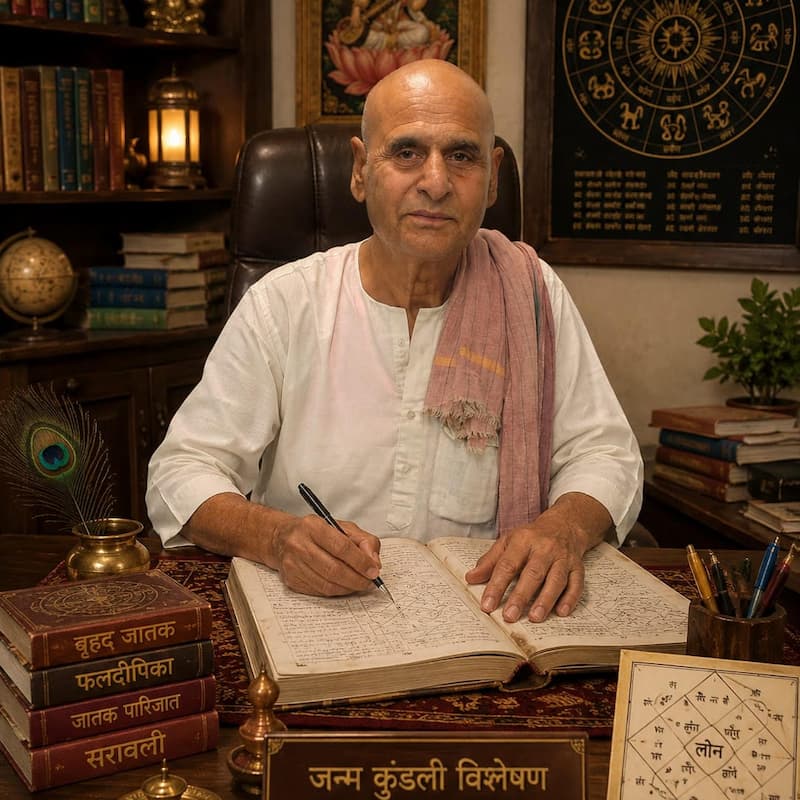
Narendra Kumar Chaubey is a Jyotisha Acharya with over 30 years of experience, based in Bihar and serving clients across India in Vedic astrology, mantra shastra, Vastu and ritual practice.
He completed his formal training at Kameshwar Singh Darbhanga Sanskrit University (KSDSU), one of India’s oldest and most respected institutions for Vedic and Sanskrit scholarship, where he studied Jyotisha shastra, mantra vidya and related classical sciences. KSDSU’s tradition of rigorous Sanskrit education tracing directly to the Mithila region’s centuries-old pandit lineage forms the foundation of his practice.
Over three decades, Narendra Kumar Chaubey has worked with thousands of individuals and families across Bihar and across India, offering guidance in:
- Kundli (birth chart) analysis: Identifying karmic patterns, planetary periods and life path guidance through classical Jyotisha
- Palmistry (Hasta Samudrika): Reading the hand according to the classical Samudrika Shastra tradition
- Vastu Shastra: Assessment and correction of living and working spaces according to directional and elemental principles
- Mantra and Pooja vidhi: Performing and guiding all categories of puja, havan, and mantra sadhana for personal, family and business situations
- Predictive Jyotisha: Transit analysis, muhurta (auspicious timing) selection and remedial guidance
He works across four languages Sanskrit, Hindi, English and Bhojpuri making classical knowledge accessible to practitioners across educational backgrounds and regions.
His writing for ABMantra brings the precision of classical Vedic training to practical mantra guidance: not general advice but specific prescriptions grounded in shastra, lineage and 30 years of direct practice with real situations.
For more info follow on: