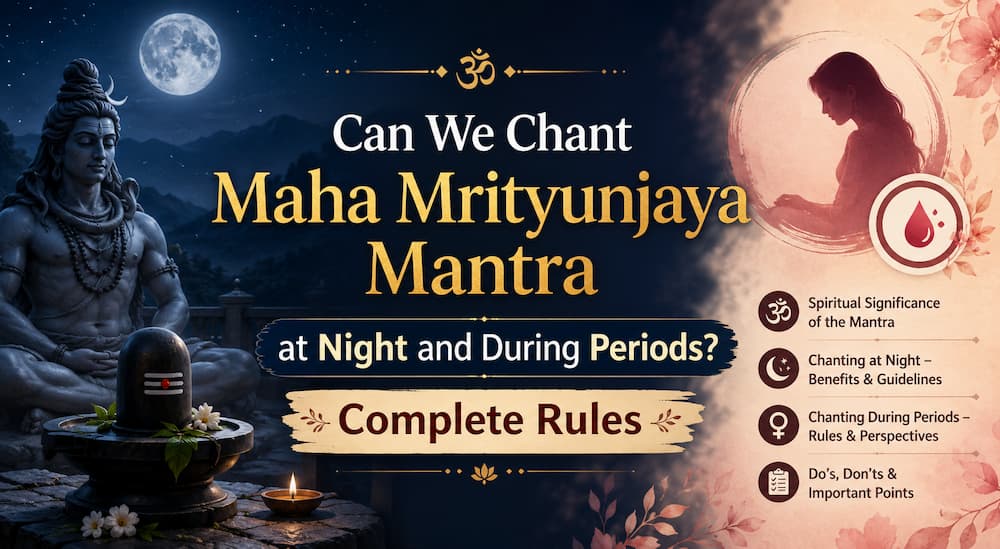

| Can we chant Maha Mrityunjaya Mantra at night? Yes, with one distinction. Quiet personal chanting before sleep (11 times) is beneficial and has no classical prohibition. Full formal sadhana (108 repetitions in a dedicated ritual sitting) is traditionally reserved for morning hours. The mantra itself was composed precisely for moments of danger and crisis, which do not observe a morning-only schedule. |
| Can we chant Maha Mrityunjaya Mantra during periods? Yes. No classical Vedic text specifically prohibits this mantra during menstruation. The traditional guidance to pause sadhana during periods applies to structured 40-day anushthan vows, not to personal daily chanting. Chanting it for illness, fear or distress continues at all times. |
These two questions are among the most searched about the Maha Mrityunjaya Mantra and most online answers are either vague or flatly wrong. This article gives you the complete picture with the actual traditional reasoning behind each rule, so you can make an informed decision about your own practice.
The Traditional Rules for Maha Mrityunjaya Mantra — What They Actually Say
The mantra itself is Om Tryambakam Yajamahe Sugandhim Pushtivardhanam, Urvaarukamiva Bandhanaan Mrityormukshiya Maamritaat drawn from the Rigveda (7.59.12) and the Yajurveda (3.60). It is specifically a mantra for liberation from fear, illness and the bondage of death. This context matters for understanding its rules.
Unlike purely devotional mantras that have specific ritual requirements, this is a sankat (crisis) mantra and a healing mantra. Its primary purpose is to be available in exactly the situations where ritual purity and timing are hardest to observe. This is why its rules are more flexible than many other Vedic mantras.
Source: Rigveda 7.59.12 and Yajurveda 3.60 — the two Vedic sources of the mantra. Classical Shaiva texts on mantra practice rules.
Chanting Maha Mrityunjaya Mantra at Night: The Complete Picture
What the Traditional Guidance Actually Says
The traditional preference for morning practice specifically Brahma Muhurta (4:35 to 5:23 AM) is based on the quality of consciousness at that hour. The world is quiet, the mind is fresh from sleep, and the sattvic quality of the atmosphere peaks before sunrise. For any mantra practice, morning produces deeper results.
The caution about night chanting does not appear as a prohibition in classical texts. It appears as a preference morning is better. This distinction matters significantly. You are not breaking a rule if you chant at night. You are choosing a less-optimal time.
When Night Chanting Is Specifically Appropriate
• Chanting 11 times before sleep: Beneficial and specifically recommended by many teachers for reducing nighttime anxiety and establishing Shiva’s protective presence through the night.
• During illness: When someone is critically ill and the family is chanting in rotation through the night, this is one of the most ancient and documented uses of the mantra. Night chanting for a sick person has no prohibition and has classical precedent.
• During sudden fear or distress at night: Chanting silently in the moment of fear is always appropriate. This is precisely the situation the mantra was composed for.
• After a nightmare or disturbing sleep: Chanting 11 times after waking from a disturbing dream settles the nervous system and re-establishes protective energy before returning to sleep.
From our practice: Our mother was admitted to intensive care in 2021 for a week following a respiratory crisis. Our family maintained a continuous chanting rotation taking turns in the hospital corridor through the night and in the room during visiting hours. The night chanting was not less sincere than the morning chanting. It was different in quality more urgent, more direct. The mantra responded to that urgency. She recovered fully.
Chanting Maha Mrityunjaya Mantra During Periods: The Complete Picture
What the Traditional Guidance Actually Says
The guidance to pause sadhana during menstruation appears in classical texts as a rule about ritual purity during structured religious practice yajna, 40-day anushthan vows, formal temple worship. The reasoning is about maintaining the energetic continuity of a committed vow, not about the mantra being harmful.
Specifically: if a woman has undertaken a 40-day Maha Mrityunjaya Mantra sadhana and her cycle begins during that period, she may pause the formal count and resume after the period ends — restarting the count from where she paused, not from the beginning. This is the classical guidance as described in multiple Dharmashastra texts.
For personal daily practice not a formal vow most teachers make no distinction at all. Chanting 108 times every morning is a personal spiritual practice, not a ritual vow. It continues through the menstrual cycle.
Source: Bilaspur Swamiji’s commentary on women’s spiritual practice. Multiple Dharmashastra texts on sadhana and menstrual pause. Sri Sri Ravi Shankar on women’s mantra practice — no absolute prohibition.
The Counterintuitive Reality
Here is what most articles on this topic fail to mention: this mantra is most commonly chanted by women during exactly the situations where menstruation causes the most physical distress severe cramps, pain, associated anxiety and low energy. Chanting this mantra during painful periods is a common traditional practice precisely because it addresses exactly those qualities: pain, fear, physical suffering.
Telling a woman in physical pain not to chant this healing mantra because of that physical condition is the opposite of what the mantra tradition intends.
Maha Mrityunjaya Mantra During Pregnancy
Pregnancy is one of the situations where the Maha Mrityunjaya Mantra is most actively encouraged. The mantra’s qualities protection from harm, nourishment of vitality (Pushtivardhanam), removal of fear are precisely what a pregnant woman and developing child need.
• The mantra’s documented effect on the parasympathetic nervous system (reducing cortisol, calming the stress response) benefits the developing child through the mother’s physiology.
• Classical Ayurvedic texts recommend mantra chanting during pregnancy as a garbha sanskar (prenatal cultural practice) shaping the child’s qualities through sound and intention.
• No classical text prohibits Maha Mrityunjaya Mantra during pregnancy. Multiple traditions actively prescribe it.
• Chanting should be calm and gentle not intense or loud. The peaceful sustained vibration of quiet chanting is what benefits both mother and child.
Quick Reference: Maha Mrityunjaya Mantra Timing Rules
| Situation | Can Chant? | Notes |
| Morning (Brahma Muhurta to noon) | Yes — Best Time | The ideal window for formal sadhana. Brahma Muhurta is the peak time. |
| Afternoon | Yes | Fully acceptable. Noon is a traditional secondary time. |
| Evening (before 9 PM) | Yes | Sunset sandhya is a traditional Shiva mantra time. |
| Night (before sleeping) | Yes | 11 times before sleep beneficial, no prohibition. |
| Late night (after 10 PM) | Generally avoided for full sadhana | For crisis/illness situations, night chanting is fully appropriate. |
| During periods | Yes | No classical prohibition for personal practice. Pause 40-day anushthan vows only. |
| During pregnancy | Yes — encouraged | Actively recommended. Calms mother, benefits child through nervous system effect. |
| For a sick person | Yes — at any time | This is one of the primary uses of the mantra. Night or day, periods or not. |
Conclusion
The Maha Mrityunjaya Mantra was composed for exactly the moments when ideal conditions are unavailable when someone is sick at 3 AM, when a woman is in physical pain during her cycle, when fear arrives at midnight. The tradition’s preference for morning practice reflects optimal conditions, not a prohibition on all other times.
If you need this mantra, chant it. The time of day and the state of your body are secondary to the sincerity of the need and the depth of the attention you bring to it.
For the complete Maha Mrityunjaya Mantra with full Sanskrit, meaning and benefits, see the Mahamrityunjaya Mantra guide. For the complete guide to chanting counts for this mantra, see: How Many Times to Chant Maha Mrityunjaya Mantra.
Frequently Asked Questions
Can we chant Maha Mrityunjaya Mantra at night before sleeping?
Yes, with some caveats. Chanting 11 times before sleep is a common and beneficial practice it settles the mind, reduces anxiety and invokes Shiva’s protective presence through the night. The traditional caution against night chanting applies to full formal sadhana (108 repetitions in a dedicated sitting) rather than to quiet personal chanting before sleep. If you wake at night in fear or distress, chanting silently is always appropriate and beneficial.
Can we chant Maha Mrityunjaya Mantra during periods?
Yes. The Maha Mrityunjaya Mantra is a prayer for liberation from fear and death — Om Tryambakam Yajamahe Sugandhim Pushtivardhanam. No classical text specifically prohibits women from chanting this mantra during menstruation. Many teachers and traditions make no distinction at all. Where traditional guidance suggests pausing structured sadhana during menstruation, this applies to 40-day anushthan vows not to personal daily chanting. Chanting this mantra for a sick family member, for personal distress or as a protective practice continues without interruption through the menstrual cycle.
Can pregnant women chant Maha Mrityunjaya Mantra?
Yes, and it is actively encouraged. The Maha Mrityunjaya Mantra asks for protection from harm, removal of suffering and graceful liberation from what binds. These are qualities that benefit both mother and child during pregnancy. Many Ayurvedic and classical texts recommend mantra chanting during pregnancy specifically as a calming and protective practice. The vibration of the mantra also has a documented calming effect on the nervous system reduced cortisol, parasympathetic activation which benefits the developing child directly through the mother’s physiological state.
Can we chant Maha Mrityunjaya Mantra after sunset?
Yes. The traditional preference is morning Brahma Muhurta (4:35 to 5:23 AM) through sunrise. But the Maha Mrityunjaya Mantra is specifically a mantra for situations of danger, illness and crisis which do not observe a schedule. Evening chanting (before 9 PM) is fully acceptable. The sunset sandhya (twilight hour) is also a recognised time for Shiva mantra practice in many traditions. Late night chanting of a full formal sadhana is what the traditional caution refers to not quiet personal practice.
Is there any situation where Maha Mrityunjaya Mantra should not be chanted?
Classical texts offer no absolute prohibition this mantra is specifically designed for difficult and crisis situations, meaning there is almost no circumstance in which it is inappropriate. The one contextual guidance: this mantra should not be chanted casually or for trivial purposes, in the same way that you would not call an ambulance for a minor inconvenience. It is a prayer that invokes the liberating force of Shiva, best chanted with genuine need, genuine attention and genuine surrender.
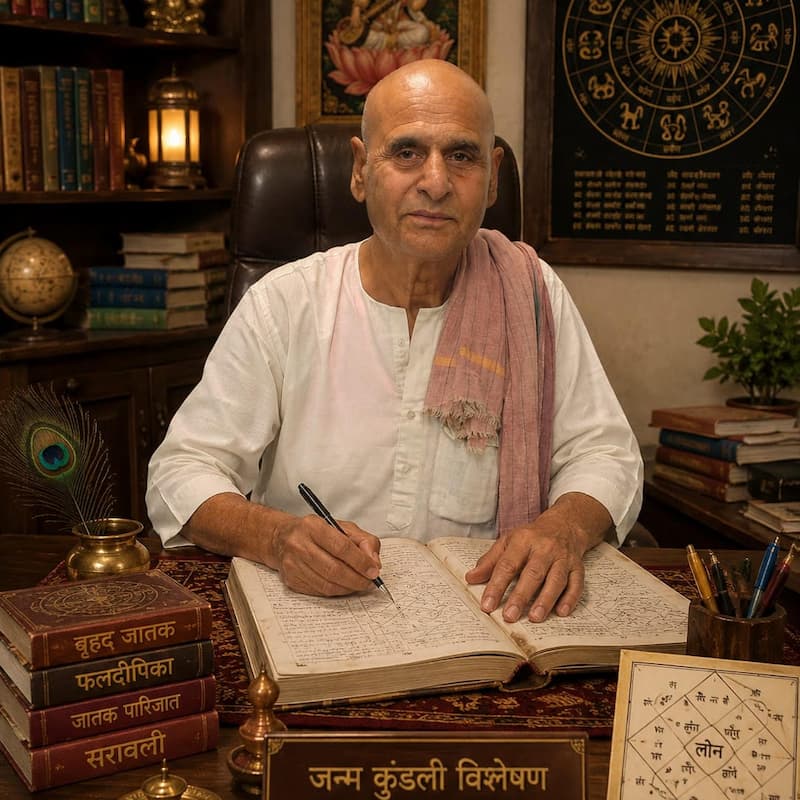
Narendra Kumar Chaubey is a Jyotisha Acharya with over 30 years of experience, based in Bihar and serving clients across India in Vedic astrology, mantra shastra, Vastu and ritual practice.
He completed his formal training at Kameshwar Singh Darbhanga Sanskrit University (KSDSU), one of India’s oldest and most respected institutions for Vedic and Sanskrit scholarship, where he studied Jyotisha shastra, mantra vidya and related classical sciences. KSDSU’s tradition of rigorous Sanskrit education tracing directly to the Mithila region’s centuries-old pandit lineage forms the foundation of his practice.
Over three decades, Narendra Kumar Chaubey has worked with thousands of individuals and families across Bihar and across India, offering guidance in:
- Kundli (birth chart) analysis: Identifying karmic patterns, planetary periods and life path guidance through classical Jyotisha
- Palmistry (Hasta Samudrika): Reading the hand according to the classical Samudrika Shastra tradition
- Vastu Shastra: Assessment and correction of living and working spaces according to directional and elemental principles
- Mantra and Pooja vidhi: Performing and guiding all categories of puja, havan, and mantra sadhana for personal, family and business situations
- Predictive Jyotisha: Transit analysis, muhurta (auspicious timing) selection and remedial guidance
He works across four languages Sanskrit, Hindi, English and Bhojpuri making classical knowledge accessible to practitioners across educational backgrounds and regions.
His writing for ABMantra brings the precision of classical Vedic training to practical mantra guidance: not general advice but specific prescriptions grounded in shastra, lineage and 30 years of direct practice with real situations.
For more info follow on: